
From classrooms to connectivity: Wadada’s development footprint in Karu reinforces vision for new Nasarawa

By Sam Israel
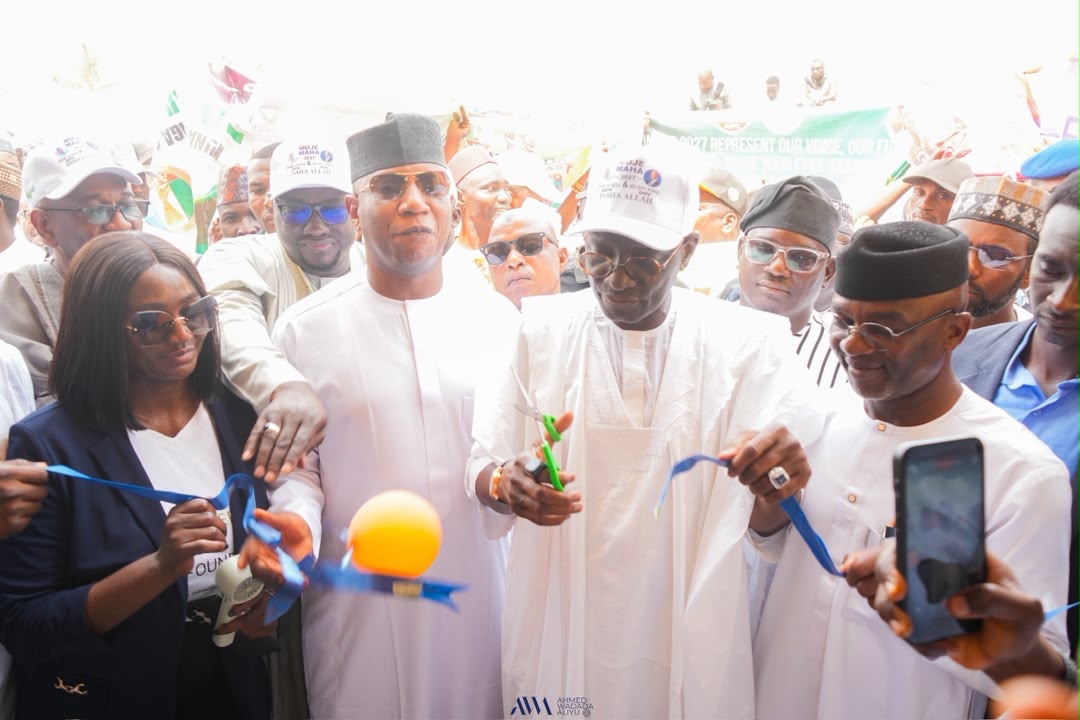
The true measure of leadership is not merely the promises made during political campaigns but the tangible impact of governance on the lives of ordinary people. It is measured by the quality of schools provided for children, the infrastructure that connects communities, the opportunities created for young people and the deliberate commitment to ensuring that no community is neglected. This philosophy of practical leadership was brought into focus on Friday, October 30, 2026, when Senator Ahmed Wadada Aliyu, the All Progressives Congress (APC) governorship candidate for Nasarawa State in the 2027 election, commissioned a five-classroom block, a science laboratory and an access bridge in Karu Local Government Area.
The commissioning of these projects represents more than the formal opening of public infrastructure. It provides an opportunity to examine the development philosophy of a politician whose aspirations for Nasarawa State are increasingly being articulated through his commitment to education, grassroots development, infrastructure and human capital investment. For Wadada, leadership must translate into visible interventions that improve the daily experiences of the people.
At Government Secondary School, Mararaban Gurku, the commissioning of a five-classroom block and a science laboratory sends a strong message about the importance of education in building a prosperous society. Education remains the foundation upon which sustainable development, technological advancement and economic transformation are built. A society that neglects its schools risks compromising the future of its children and the capacity of its young people to compete in an increasingly knowledge-driven world.
The science laboratory is particularly significant. At a time when science, technology, engineering and innovation are shaping the global economy, providing students with opportunities for practical learning is an investment in the future. Young people must not only acquire theoretical knowledge but also develop the scientific skills, curiosity and creativity required to confront contemporary challenges. Wadada’s intervention therefore speaks to the need to prepare the next generation for greater responsibilities and opportunities.
Equally important is the access bridge commissioned at Sabon Gari. Although bridges may appear to be ordinary infrastructure, their importance to rural and developing communities cannot be overstated. They connect people, facilitate movement, improve access to markets and essential services, and strengthen economic activities. For residents of Sabon Gari, the bridge represents an intervention that addresses a practical community need and demonstrates why grassroots infrastructure must occupy an important place in development planning.
What makes these interventions particularly noteworthy is their connection to Wadada’s HEART Agenda, which provides the framework for his development vision for Nasarawa State. The agenda places human development, education, agriculture, rural development, transportation and infrastructure, alongside other essential development priorities, at the centre of governance.
The HEART philosophy recognises that development cannot be achieved through isolated projects or political rhetoric. It requires a coordinated approach that places people at the centre of public policy. It requires investment in schools, healthcare, agricultural productivity, rural roads, transportation, security and the economic empowerment of citizens. More importantly, it demands a government that understands the different needs of communities and responds to them without discrimination.
Wadada’s emphasis on inclusive governance is also an important dimension of his political philosophy. Nasarawa State is a diverse society with communities whose development needs differ considerably. From the urban centres of Karu, Keffi and Lafia to the rural settlements across the state’s 13 local government areas, every community deserves attention. The promise of inclusive governance must therefore be reflected in the equitable distribution of development opportunities and essential infrastructure.
For young people, the message is particularly encouraging. The combination of improved educational facilities and infrastructure demonstrates the relationship between human capital development and economic empowerment. Young people need quality education, practical skills, access to opportunities and an environment in which their talents can flourish. A government that invests in these areas is investing in the productivity and prosperity of the next generation.
There is also a significant political dimension to these interventions as Nasarawa State gradually approaches the 2027 governorship election. Voters are increasingly interested in the capacity, ideas, experience and development priorities of those seeking to occupy public office. Beyond political affiliations and campaign slogans, the fundamental question is what each candidate intends to contribute to the future of the state.
For Senator Ahmed Wadada Aliyu, the Karu commissioning provides an opportunity to communicate his development priorities through practical examples. His message is that leadership must be judged by its commitment to addressing the needs of the people. His insistence that development must go beyond political promises is a principle that deserves serious consideration in the ongoing conversation about the future of Nasarawa State.
Wadada also used the occasion to commend President Bola Ahmed Tinubu for infrastructural development initiatives across Northern Nigeria, particularly ongoing road construction projects. His position reflects his belief in continuity, national development and the importance of collaboration between federal and state governments. Indeed, effective governance requires different levels of government to work together in delivering infrastructure and opportunities that improve the lives of citizens.
His call for the people of Nasarawa State to support President Tinubu’s re-election bid in 2027 further underscores his commitment to the continuity of the administration’s development programmes. According to the Senator, sustaining ongoing national infrastructure projects and development initiatives is important to the country’s long-term progress.
However, the larger significance of the Karu projects lies in the development conversation they have generated. They bring attention to the importance of education, practical science learning, community connectivity and youth development. These are not peripheral issues; they are central to the future of any state that desires sustainable economic growth and social advancement.
As the APC governorship candidate, Wadada has an opportunity to present a compelling vision for a Nasarawa State where every child has access to quality education, every community receives meaningful development attention, farmers enjoy improved support, young people have opportunities to become productive, and infrastructure serves as a catalyst for economic growth.
The challenge before every political aspirant is to demonstrate how such aspirations can be translated into measurable outcomes. Wadada’s HEART Agenda provides a framework for that conversation, while the commissioning in Karu offers an example of the type of interventions that form part of his development message.
Ultimately, the future of Nasarawa State must be built on more than political calculations. It must be built on sound policies, accountable leadership, institutional strength, inclusive development and the courage to prioritise the needs of the people.
From the classrooms of Mararaban Gurku to the access bridge at Sabon Gari, Senator Ahmed Wadada Aliyu has used the occasion to reinforce a central message: development must reach the grassroots, education must empower the next generation, and governance must work for everyone.
As Nasarawa looks towards 2027, the debate should not merely be about who wants to govern, but who has the clearest development vision, the capacity to translate ideas into action and the commitment to build a state where no community and no citizen is left behind. That is the conversation Wadada’s HEART Agenda seeks to place at the centre of Nasarawa’s political future.
Israel JP is the Senior Special Assistant on media to Senator Wadada
