
International Press Centre urges professional, accountability-focused journalism ahead of 2027 elections

By Joseph Adahnu, Yola
The International Press Centre (IPC) has called on journalists and media organisations to prioritise professional, issue-based, and accountability journalism in the lead-up to Nigeria’s 2027 general elections
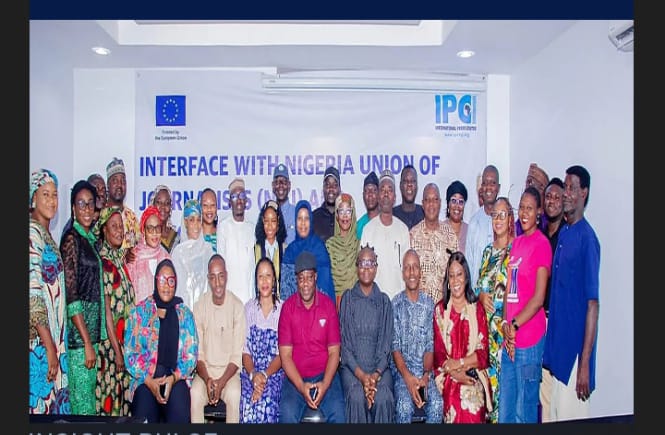
Speaking at an interface with members of the Nigeria Union of Journalists (NUJ), editors, and publishers in Yola, Adamawa State, the Executive Director of IPC, Dr Lanre Arogundade, represented by Programme Manager Mrs Stella Nwofia, said that the media has a critical role in promoting democratic accountability.
This, he said, requires providing citizens with accurate, reliable, inclusive, and public-interest information before, during, and after the electoral process.
Dr Arogundade noted that elections go beyond campaigns, rallies, candidates, and results. They also reflect citizens’ aspirations, concerns, and expectations of leadership.
He urged journalists to move beyond event-driven coverage and instead pursue issue-based reporting that interrogates campaign promises, verifies political claims, and monitors the performance of elected officials.
He called for greater focus on critical national issues—including the economy, education, healthcare, security, employment, and infrastructure—while ensuring adequate representation of women, youth, persons with disabilities, and other vulnerable groups in electoral discourse.
Warning against the dangers of sensationalism, unverified reports, inflammatory language, and the spread of misinformation and disinformation, he emphasised that such practices can undermine public confidence, deepen social divisions, and weaken democratic institutions. Media organisations were urged to strengthen fact-checking and verification systems, with accuracy, fairness, balance, and conflict-sensitive reporting remaining core principles of electoral journalism.
Dr Arogundade also highlighted the dual nature of digital platforms: while they expand opportunities for information sharing and public participation, they also facilitate the rapid spread of false information, manipulated content, hate speech, and divisive narratives.
He advised journalists not to sacrifice accuracy for speed, particularly on politically sensitive matters, and stressed the need to protect journalists’ safety and professional independence from intimidation, harassment, or unlawful interference.
The success of such engagements, he added, should be measured not by attendance alone but by the quality of stories published, claims verified, citizens’ concerns amplified, and accountability questions raised ahead of the 2027 elections.
Additional Contributions
Dr Shedrack Idi, Head of the Department of Public Relations at Taraba State University, Jalingo, presented a paper titled “2027 General Elections in the Context of Democratic and Accountability Reporting: Scanning the Electoral Environment and Reporting Citizens’ Priority Concerns.” The presentation focused on the need for journalists to identify and report issues that directly affect the electorate.
Olusola Oludiran of the Nigeria Democratic Report (NDR) delivered a session on integrity and fact-checking for democratic and accountability reporting, including practical demonstrations of fact-checking tools and techniques, notably Info-Verify.
In his remarks, NUJ Adamawa State Council Chairman Abdullahi Ibrahim commended IPC for organising the capacity-building engagement. He described it as an opportunity to deepen journalists’ understanding of their professional responsibilities and urged practitioners in the state to promote informed public participation, hold political office seekers accountable, and ensure citizens’ priority concerns receive adequate media attention.
The engagement, organised under Component Four (Support to Media) of the European Union Support to Democratic Governance in Nigeria (EU-SDGN III) Programme, featured interactive sessions on electoral reporting strategies, scenario planning for 2027, practical case studies, and professional obligations.
IPC expressed appreciation to the NUJ for facilitating the programme, the resource persons, and the European Union for its funding support.
