
BOA moves to end farmers’ exploitation, introduces Guaranteed Minimum Pricing scheme

By Samuel Torlumun, Abuja
The Bank of Agriculture (BOA) has intensified efforts to improve farmers’ profitability, strengthen agricultural value chains and address the longstanding exploitation of farmers by middlemen through the introduction of its Guaranteed Minimum Pricing (GMP) initiative and other farmer-centred financing programmes.
The initiative, alongside other interventions targeting women and young people in agriculture, is designed to ensure that farmers derive maximum economic benefits from their hard work while contributing more effectively to Nigeria’s food security and agricultural development.
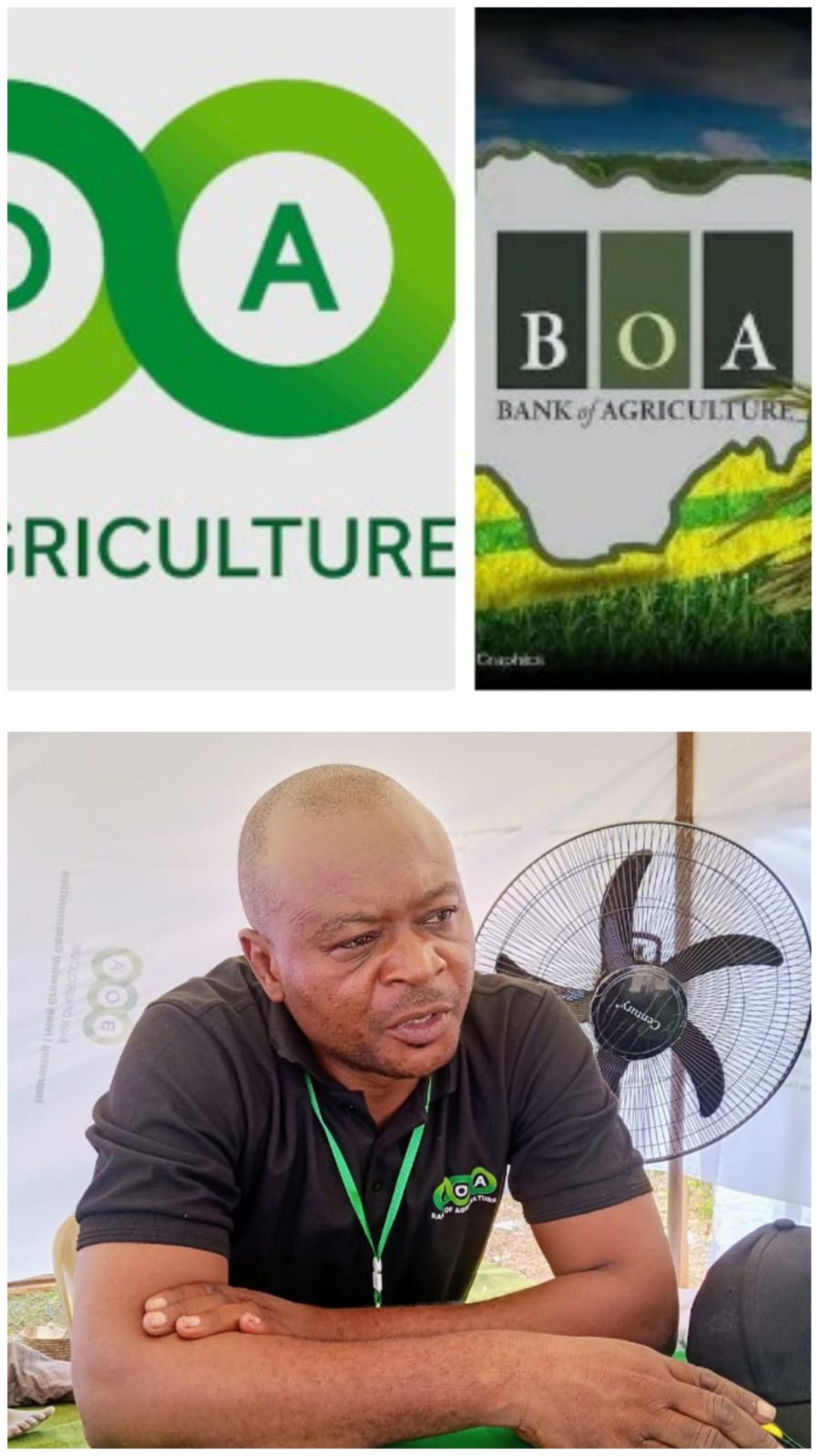
Acheme Ogbaju Anthony, branch manager of the Bank of Agriculture in Toto, Nasarawa State, disclosed this in an interview with Apex News Exclusive at the recently concluded National Agricultural Show, where the bank engaged farmers, agricultural entrepreneurs and other stakeholders on its financial products, intervention programmes and evolving operations.
Anthony explained that the bank’s participation in the agricultural exhibition was primarily aimed at bridging the information gap between financial institutions and farmers, particularly smallholder farmers who often struggle to understand the requirements and procedures for accessing agricultural loans and other support facilities.
According to him, the National Agricultural Show provides an important platform for the bank to interact directly with farmers, explain its programmes and address misconceptions surrounding access to agricultural financing.
“We are here to ensure that we engage participants because this show offers us the opportunity to interact with farmers from different entities. Through platforms like this, we educate farmers. It is one thing for farmers to come asking for loan facilities and another for them to understand the requirements for accessing such facilities,” he said.
He noted that although many farmers were interested in obtaining agricultural loans, a significant number remained inadequately informed about the opportunities available through the BOA and the procedures for accessing them.
Anthony said the bank had undergone significant transformation, particularly through digitalisation, which had made banking operations and access to its facilities more convenient for farmers.
“The BOA has transformed and is now fully digitalised. I want farmers to understand that banking with BOA and accessing our facilities can be done with digital convenience, without necessarily having to visit the bank physically,” he explained.
He observed that the digital transformation was particularly important for farmers in rural communities who often live considerable distances from banking facilities, making physical visits difficult and expensive.
He therefore urged farmers to take advantage of agricultural exhibitions and similar knowledge-sharing platforms to familiarise themselves with available opportunities, interact with relevant institutions and obtain firsthand information about government and private-sector interventions.
According to him, the National Agricultural Show remains an important meeting point for farmers, financial institutions, government agencies, development partners and agricultural service providers.
He described the exhibition as an inclusive platform that provides smallholder farmers with access to information and opportunities they might otherwise find difficult to obtain.
TACKLING FARMERS’ EXPLOITATION THROUGH GUARANTEED MINIMUM PRICING
One of the major interventions Anthony highlighted was the bank’s Guaranteed Minimum Pricing initiative, which he said was designed to address the longstanding challenges farmers face in marketing their produce and obtaining fair returns on their investments.
He lamented that despite the enormous labour and resources farmers invest in cultivation, many end up earning very little because of the activities of middlemen who buy their produce at relatively low prices immediately after harvest and subsequently resell it at significantly higher rates.
He described the situation as one in which farmers work like elephants but harvest like ants, while intermediaries reap the greatest benefits from their labour.
“For many years, farmers have gone through a lot of labour, but after harvesting, those who benefit meet them at the gate. These middlemen buy their products at cheaper rates and keep them until prices become very high, making them the major beneficiaries of the farmers’ labour,” he said.
Anthony explained that through the GMP initiative, the BOA was working to reduce the influence of exploitative intermediaries by connecting farmers with recognised and approved off-takers who could purchase their produce at more favourable prices.
He disclosed that the bank was currently involved in aggregation activities, which provide farmers with organised channels to store and market their agricultural commodities rather than being compelled to sell immediately after harvest at unfavourable prices.
Under the arrangement, farmers are encouraged to take their harvested produce to designated aggregation centres and approved warehouses, where they can access recognised market channels and obtain better value for their investments.
He advised farmers against rushing to sell their produce when market conditions were unfavourable, urging them instead to explore the bank’s aggregation arrangements.
“If you take your goods to an intermediary market and the market forces are not favourable, making you sell at a cheaper rate, don’t sell them. Take them to our aggregation point, where you can sell at a good price,” he advised.
He maintained that the initiative would not only improve farmers’ earnings but also encourage them to increase production, knowing that reliable market arrangements existed for their harvested commodities.
According to him, recognising and rewarding farmers for their contributions to national food security is essential to building a sustainable agricultural economy.
WOMEN AND YOUTHS AT THE CENTRE OF AGRICULTURAL DEVELOPMENT
Beyond improving farmers’ access to markets, Anthony disclosed that the BOA was also implementing targeted programmes to expand the participation of women and young people in agriculture.
He identified the bank’s women’s empowerment programme as one of the initiatives designed to strengthen women’s economic participation in the agricultural sector by improving their access to financing and other forms of support.
He also highlighted the Youths in Agricultural Revolution of Nigeria programme, which focuses on addressing the financing and other operational needs of young people interested in agriculture.
He said the initiatives were particularly important given agriculture’s enormous capacity to generate employment and stimulate economic activity across the country.
According to him, agriculture remains one of the most accessible sectors for employment creation, particularly for young Nigerians who may not have the opportunity to secure jobs in other sectors of the economy.
He warned that failure to adequately educate and empower young people to explore opportunities in agriculture could deny the country the benefits of their productive energy and entrepreneurial potential.
Anthony stressed that agriculture should no longer be viewed merely as subsistence farming but as a viable economic enterprise capable of providing sustainable livelihoods and contributing significantly to national development.
BEYOND LOANS: BOA’S INTEGRATED AGRICULTURAL SUPPORT SYSTEM
The BOA branch manager further explained that the bank’s responsibilities extended beyond providing loans to farmers, noting that access to credit was only one component of the institution’s broader agricultural development mandate.
He said the bank was equally concerned about how farmers utilised the funds made available to them, their productivity, post-harvest management and the eventual marketing of their produce.
According to him, providing credit without addressing other challenges confronting farmers would not adequately achieve the desired impact on agricultural productivity and profitability.
He explained that the bank’s aggregation initiative was part of this broader strategy to ensure that farmers had access to appropriate storage facilities and organised markets after harvesting.
He noted that the current management of the BOA had introduced several initiatives aimed at improving the institution’s effectiveness and making its services more responsive to the needs of agricultural producers.
He expressed optimism that farmers across the country would increasingly benefit from the ongoing transformation as the bank expanded awareness of its programmes and strengthened its operational capacity.
BOA OPENS DOOR TO PARTNERSHIPS AND DEVELOPMENT FINANCING
Anthony also identified collaboration with state governments, development partners and other financial institutions as important components of the bank’s strategy for expanding agricultural financing and supporting inclusive development.
He explained that under its collaboration arrangement, the BOA was willing to partner with state governments and organisations that had agricultural initiatives capable of benefiting the wider population.
He said such partnerships would involve assessing proposed programmes to establish their relevance, developmental value and consistency with the bank’s operational policies before proceeding.
“If a state wants to partner with BOA and has a new initiative, all we have to do is come together and examine that initiative to determine whether it will benefit the larger society and whether it is apolitical. If it meets the necessary requirements, we can go ahead and partner with the state or organisation,” he said.
He added that the bank also operated an on-lending arrangement through which microfinance banks could approach it with proposals for financing agricultural programmes.
Under the arrangement, interested microfinance banks submit their proposals to the BOA for assessment. Where such proposals align with the bank’s policies and objectives, partnerships can be established to support financing programmes that benefit farmers and other agricultural stakeholders.
He said the arrangement would help expand the reach of agricultural financing by leveraging the grassroots presence and networks of microfinance institutions.
AGRICULTURAL EXHIBITIONS AS PLATFORMS FOR TRANSFORMATION
Reflecting on the importance of the National Agricultural Show, Anthony urged farmers, particularly smallholder producers, to make participation in such exhibitions a regular feature of their agricultural activities.
He said the benefits of agricultural exhibitions went beyond displaying farm produce and machinery, stressing that they provided opportunities for farmers to acquire knowledge, establish business relationships, access financial institutions and discover innovations capable of improving their operations.
He noted that many farmers remained unaware of certain agricultural financing opportunities and institutional support programmes, adding that direct engagement at exhibitions could help bridge the gap.
He maintained that the BOA’s participation was part of its commitment to bringing financial services closer to farmers and ensuring that they understood the opportunities available to them.
With its focus on digital banking, improved access to agricultural credit, aggregation, guaranteed minimum pricing, women’s empowerment, youth participation and strategic partnerships, the bank is seeking to strengthen its role in Nigeria’s agricultural financing landscape.
For millions of Nigerian farmers whose major challenges extend beyond cultivation to include inadequate financing, poor storage facilities, weak market access and exploitation by intermediaries, the effectiveness of these interventions could make a significant difference in determining whether agriculture becomes a more profitable and sustainable enterprise.
Ultimately, the success of the initiatives will depend on effective implementation, accessibility to genuine farmers and the bank’s ability to translate its programmes into measurable improvements in farmers’ incomes, productivity and livelihoods.
