
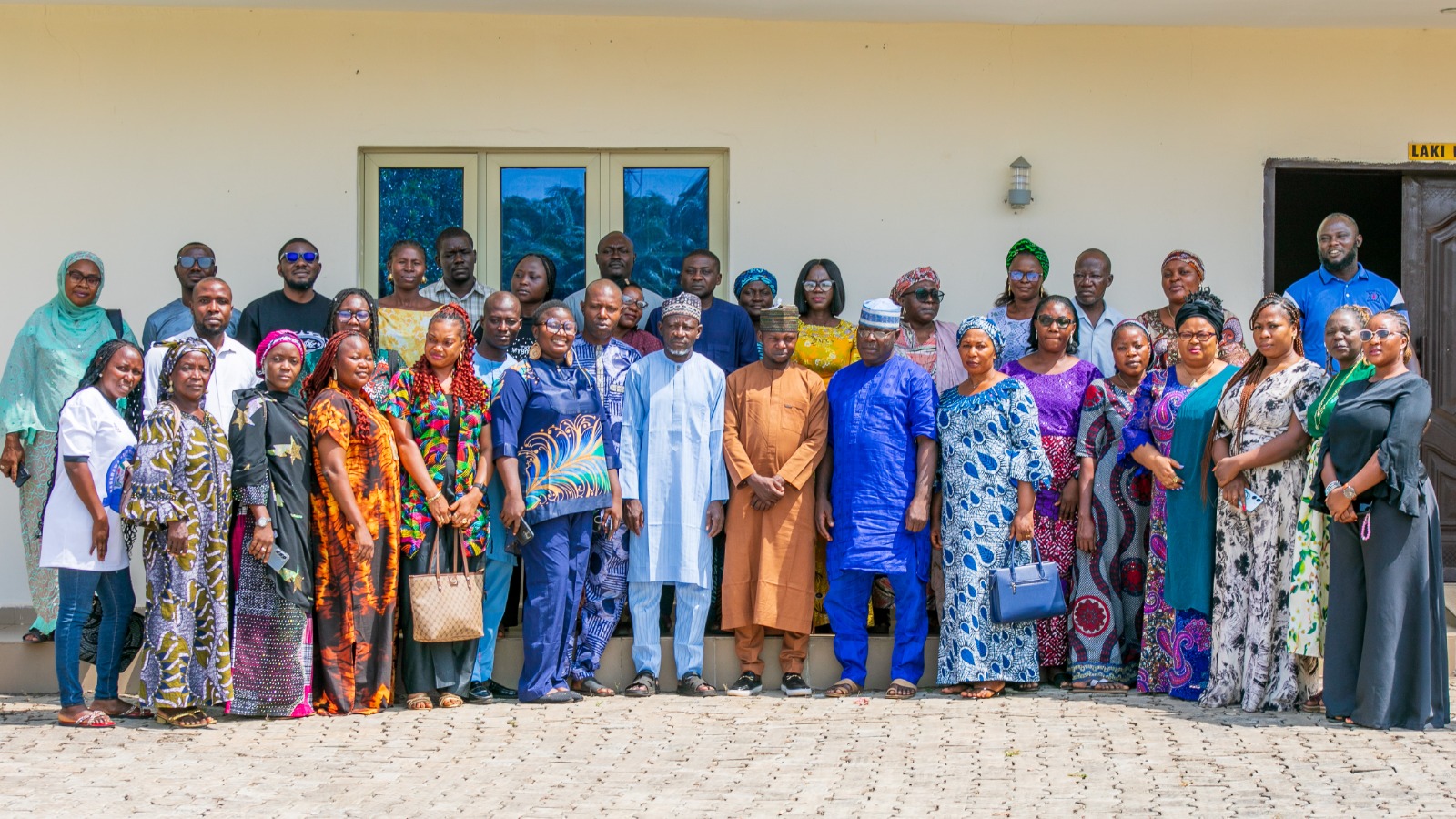

The Women Environmental Programme (WEP), a non-governmental organisation, has called on policymakers and institutional actors in Nasarawa State to remove structural barriers that limit women’s economic participation.
Mr John Baaki, Co-Executive Director of WEP, made the call on Thursday in Lafia at a two-day Capacity-Building Workshop for policymakers and Institutional Actors on Women’s economic rights and Structural Barriers to Women’s economic participation.
The workshop was organised under the Transforming Her Resilience, Inclusion and Value in Economies(THRIVE) Project, with support from Christian Aid.
Baaki said the workshop was convened because those in government hold the power to change the narrative for women in the state.
“You are here because you hold the pen, the budget, the gavel and the mandate. Women’s economic participation does not depend on women’s effort alone. It depends on whether laws, policies and institutions open doors or keep them shut,” he said.
He noted that women in Nasarawa State farm, trade and build enterprises while facing barriers they did not create, including limited access to finance, land and markets, and gaps in laws and enforcement.
According to him, the goal of the workshop is to ensure that knowledge gained translates into policies, programmes and laws that allow women to fully participate in the state’s economy.
He said WEP is encouraged by its recent engagement with the Ministry of Women Affairs on domesticating the National Women’s Economic Empowerment Policy, and looks forward to building on that momentum.
Also speaking, the Project Officer for the THRIVE Project, Ms Blessing Mafai, said the workshop was organised to address economic barriers preventing women in Nasarawa from realising their full potential.
Mafai explained that stakeholders were brought together because they have the mandate to ensure women have access to finance and other opportunities to scale up their businesses.
“We want to equip them with knowledge to understand women’s economic rights so that they can go back to their various institutions and come up with policies or strategic work plans that can help women in the state attain better economic status,” she said.
She urged participants to pay attention to the training, noting that understanding women’s economic rights would help them formulate inclusive work plans and ensure budgets meant for women are fully implemented.
In her presentation, “Understanding Women’s Economic Rights, the Policy and the Legal Framework,” Comrade Hauwa Mustapha harped on women’s inclusion, noting that policies and practices that exclude women from economic participation deny the communities the right to full development.
Prof. Magdalene Duru, in her presentation, ” Identifying Structural Barriers to Women’s Economic Participation in Nasarawa State”, called on policymakers to deepen women’s inclusion economically, politically, in the policymaking process and in implementation.
Mr Salle Barde – Keana, Executive Chairman of the Nasarawa State Disability Rights Commission and a Participant, said the major challenge facing persons with disabilities was not lack of policies, but non-compliance by Ministries, Departments and Agencies.
He said State law mandates a 5 per cent employment reservation for persons with disabilities, noting that Gov. Abdullahi Sule had issued a directive through the Head of Civil Service for enforcement, but there was gross non-compliance.
Another participant, Mr Aisha Jibrin, a Social Welfare Officer representing the Director of Women Affairs at the Ministry of Women Affairs and Social Development, said the state Government would deepen inclusion of women in policymaking and economic participation.
Similarly, Mrs Asaba Averson, Deputy Director, Planning, Research and Statistics at the Ministry of Budget and Economic Planning, said that, as a key policymaking ministry, they are committed to fully integrating women into policies and decision-making processes.
