
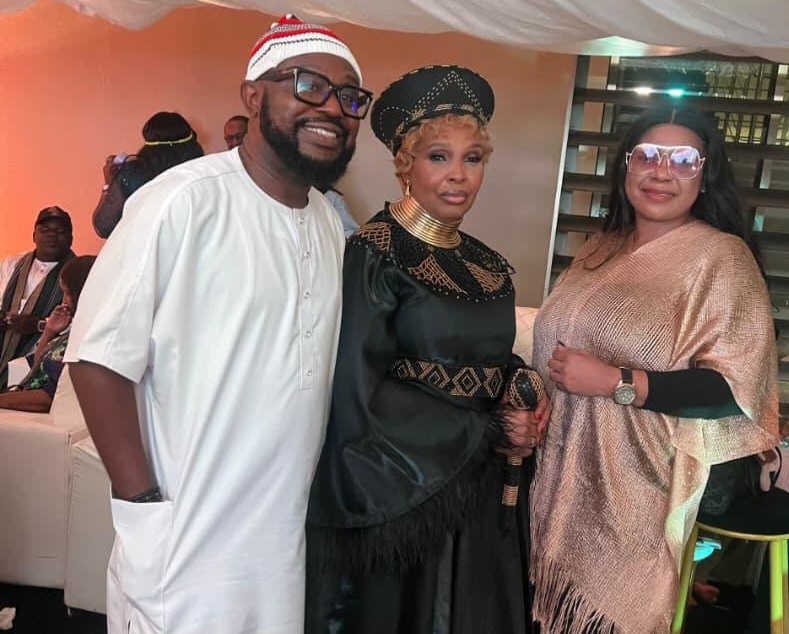

South Africa has reaffirmed its enduring ties with Nigeria, declaring that the two countries must continue to draw strength from their shared history, culture and African identity despite challenges that have occasionally strained relations between their peoples
The Deputy High Commissioner of South Africa to Nigeria, Ambassador Lindy Mminele, stated this in Abuja at the 2026 Heritage Day celebration hosted by the South African High Commission, where she said her country had chosen unity and Ubuntu as guiding principles for its relationship with Nigeria and the wider African continent.
Mminele told diplomats, government officials, tourism stakeholders and South Africans resident in Nigeria that the philosophy of Ubuntu — broadly expressed in the belief that “I am because you are” — remained central to South Africa’s national identity and its relations with other African countries.
“Therefore, we choose unity. We choose Ubuntu. We choose the ties that bind us together,” she said.
The celebration, held under the theme “Celebrating Our Living Heritage: Strengthening the Ties That Bind Us,” provided the envoy an opportunity to highlight the historical, cultural and people-to-people connections between Nigeria and South Africa.
Mminele recalled that Nigeria’s support for the struggle against apartheid predated the emergence of democratic South Africa, describing the relationship between the two countries as one rooted in a shared history of the continent.
“South Africa’s bilateral relations with Nigeria predate our democracy,” she said, adding that the contribution of Nigeria, other African countries and international friends of South Africa ultimately helped in the emergence of the democratic South Africa of today.
Her comments underscored the longstanding role played by Nigeria in opposing apartheid and supporting the liberation struggle in Southern Africa through diplomatic, political and material assistance.
Mminele said the relationship had since evolved beyond political solidarity to encompass culture, entertainment, tourism and extensive people-to-people exchanges.
She particularly identified Nollywood, Afrobeats, Amapiano, music and film as powerful contemporary bridges between Nigerians and South Africans.
According to her, Nigerian films are widely appreciated in South Africa, while cultural institutions in both countries continue to collaborate under a Memorandum of Understanding on cultural cooperation.
She said South Africa participates in Nigeria’s Zuma International Film Festival, while Nigerian filmmakers participate in South African festivals, including those held in Durban.
Describing the relationship between the cultural institutions as “tight and ongoing,” the envoy said the creative industries had become an important channel for strengthening relations between the two countries.
She also described Nigeria’s cultural heritage as a vibrant mosaic comprising more than 250 ethnic groups, noting that Nollywood and Afrobeats had helped project Nigerian stories and cultural expressions to audiences across the world.
The cultural exchange, she noted, was particularly visible among young people, with Nigerian Afrobeats enjoying popularity in South Africa while South Africa’s Amapiano has gained a substantial following in Nigeria.
Artists from both countries have also increasingly collaborated, creating a shared entertainment space that cuts across national boundaries.
On tourism, Mminele urged Nigerians to explore South Africa’s diverse attractions, including Table Mountain, the Garden Route and Kruger National Park, as well as the country’s beaches, cultural sites, cities and wine regions.
She said South Africa also offered adventure activities ranging from hiking and surfing to safaris and shark cage diving.
“So our offerings of Mpumalanga or any other province of South Africa for tourism are open for business,” she said.
The envoy encouraged diplomats and their families serving in Nigeria to visit South Africa before completing their tours of duty, saying South African Tourism was ready to welcome them.
She commended South African Tourism for supporting the annual Heritage Day celebration and acknowledged its representative, Thekiso Rakolojoane, and his team.
She also recognised Nigerian tourism and cultural partners, including the Department of Culture and Tourism, the National Association of Nigerian Travel Agencies (NANTA), Nigeria Association of Tour Operators (NATOP) and the Federation of Tourism Associations of Nigeria (FTAN), describing them as important enablers of people-to-people cooperation.
Welcoming guests to “Ekhaya”, meaning home, Mminele described the High Commission as South Africa’s “home away from home” and thanked the Nigerian government for hosting her country.
She said the celebration was also an opportunity to reflect on South Africa’s long and difficult journey towards democracy and the importance of preserving the country’s diverse heritage.
Recalling former President Nelson Mandela’s 2002 Heritage Day address, she said the occasion remained important to nation-building and the consolidation of a national identity founded on “unity within diversity.”
She also cited President Cyril Ramaphosa’s recent Heritage Day message, which celebrated South Africa’s languages, music, food, clothing, stories and customs as expressions of the country’s living heritage.
