


|
Getting your Trinity Audio player ready...
|
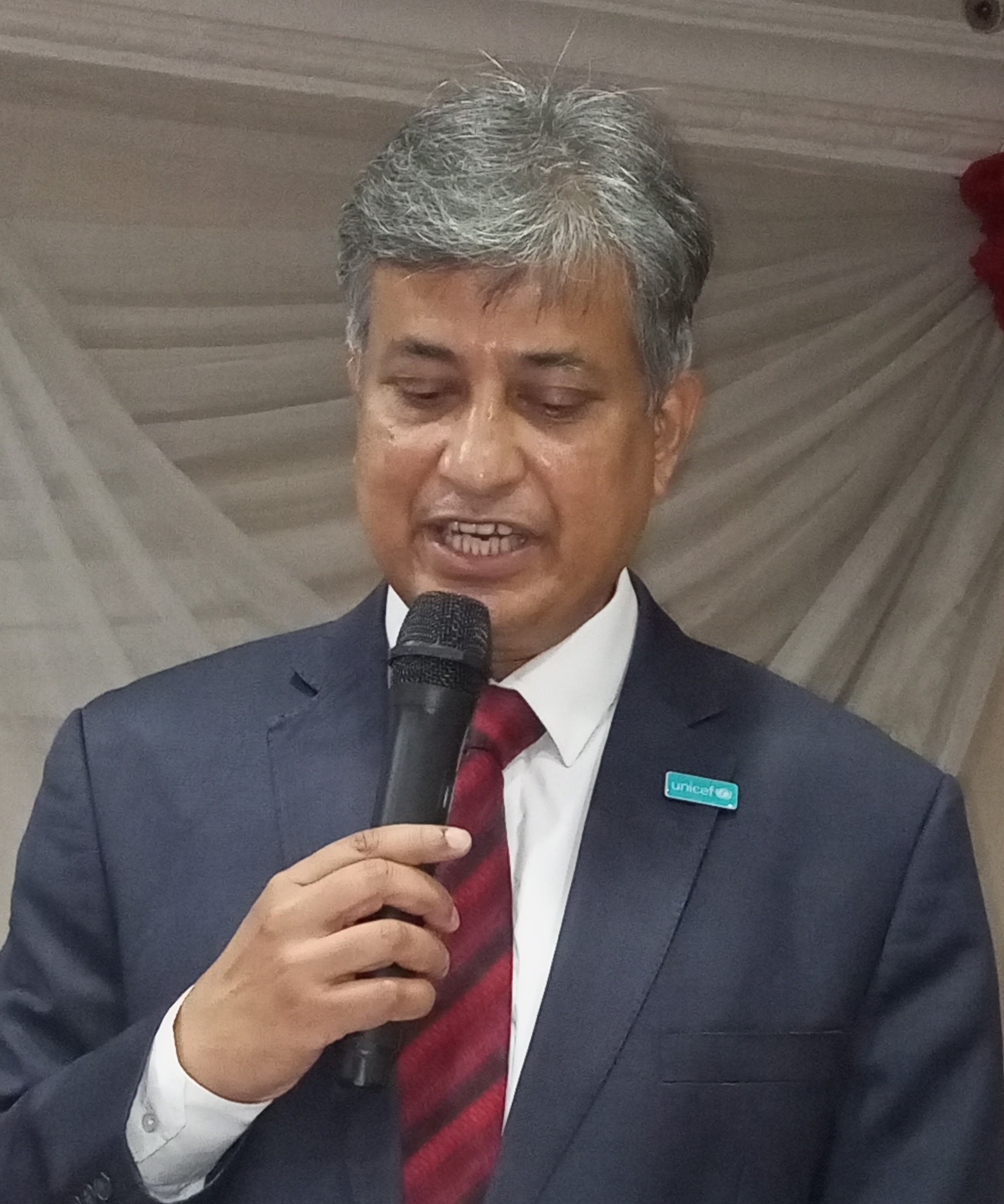
Dr. Tushar Rane, Chief, UNICEF Field Office, Bauchi
By Akanji Alowolodu, Bauchi
Despite the benefits of educating the girl-child, over 10 million children in Nigeria — 60 percent of whom are girls — are out of school.
This is just as the Foreign, Commonwealth and Development Office (FCDO) of the UK has embarked on funding the Girl-child Education Project Phase 3 (GEP3) project since 2012 which has enabled no less than 1.4 million girls in Northern Nigeria to access education.
The disclosure was made by the Chief, UNICEF Field Office, Bauchi, Dr Tushar Rane while speaking at the opening of a Media Dialogue on Girls’ Education held at Chartwell Hotel, Bauchi on Wednesday.
He emphasized that the education of the girl child is critical to transforming communities, reducing inequalities, and strengthening economies saying that, “additionally, when we educate the girl child, child marriage and child mortality rates reduce” .
According to the UNICEF Chief, the situation with girls’ education has been worsened by attacks on schools which have made learning environment insecure and discouraged parents and caregivers from sending their wards, particularly girls, to schools.
The GEP3 initiative was designed to enhance the enrollment drive for girls, improve learning outcomes for girls and strengthen government’s policy making for continued support to girl child education.
The project was implemented in 6 states in northern Nigeria — Bauchi, Kano, Katsina, Niger, Sokoto and Zamfara.
He disclosed that UNICEF, with funding support from development partners, is collaborating with government to build the capacity of school-based management Committees (SBMCs) and Community-based Management Committees (CBMCs) on school safety and security, and to make communities more resilient.
In Bauchi State, for example, through the Girls’ Education Project3 (GEP3) funded by the Foreign, Commonwealth and Development Office (FCDO) of the UK.
The project effectively increased the enrollment of girls with a total of 650,265 girls enrolled into pre-primary and Integrated Qur’anic Education.
The Girl4Girl and HeForShe activities of the project empowered about 9,000 girls and boys in Bauchi state to use peer support mechanism to create demand for girl child enrollment in their communities.
Strengthening the capacity of teachers is crucial for the retention of girl children who enroll in schools.
The GEP3 project implemented various capacity building initiatives for teachers while a total of 11,000 teachers have received training on topics such as leadership skills to enable effective running of schools, Early Grade Reading pedagogies to enable early grasp of literacy skills and other key topics essential for effective service delivery.
The project successfully strengthened school governance systems through the facilitation of eight annual school census, strengthening school record keeping, developing Local Education Sector Operational Plan to align with the state Education Sector Plan, and improving the functionality of SBMCs and CBMCs.
He then said that UNICEF is grateful for the support from the government, and local partners, who made these successes possible, therefore getting more girls to school. We believe that the partnership will enhance the sustainability of the project’s successes beyond the implementation timeframe.
“Nonetheless, there is more to be done. We must not relent. The media has a critical role to play in advancing the education of the girl child”, he added.
Tushar Rane said that, “We all — the government at national and sub-national levels, development partners, the media, parents, communities, traditional and religious leaders, — can achieve more by enrolling more girls in schools, and ensuring they complete their full education” .
“Therefore, we must step up our investment in the younger generation, especially girls. I urge you, the media, to continue using your platforms to advocate for increased funding and adequate public resources to the education sector, especially adequate allocation, and the release of what has been appropriated”, he stressed.
He observed that there are barriers for example, child marriage, that affect girl child education stressing however that the media must lead the advocacy to remove these barriers.
He said that, “To ensure safe, conducive, inclusive, and enabling environment for all children to learn, we must work together to: advocate for policies that promote access to education and in turn increase enrolment, retention, and transition for all children especially the girl child”.
It must also Advocate for increased budgetary allocation to education to ensure availability of modern-day ICT/technological innovations to promote digitalization of the education system as well as Advocate to ensure the availability of schools to promote continuous transition of students
Highlight the importance of recruiting more teachers into the teaching scheme, especially female teachers.
The project is funded by the Foreign, Commonwealth and Development Office (FCDO) of the UK with focus on the UNICEF Girl Education Project Phase 3, (GEP3) supported by the Foreign and Commonwealth Development Office (FCDO) of the United Kingdom (UK).
As the UN agency for children, UNICEF collaborates with the government, partners and Civil Society Organizations (CSOs) to help children survive, thrive and attain their full potentials, and the media plays a very important role as a critical ally in helping UNICEF fulfil this mandate.
