

|
Getting your Trinity Audio player ready...
|
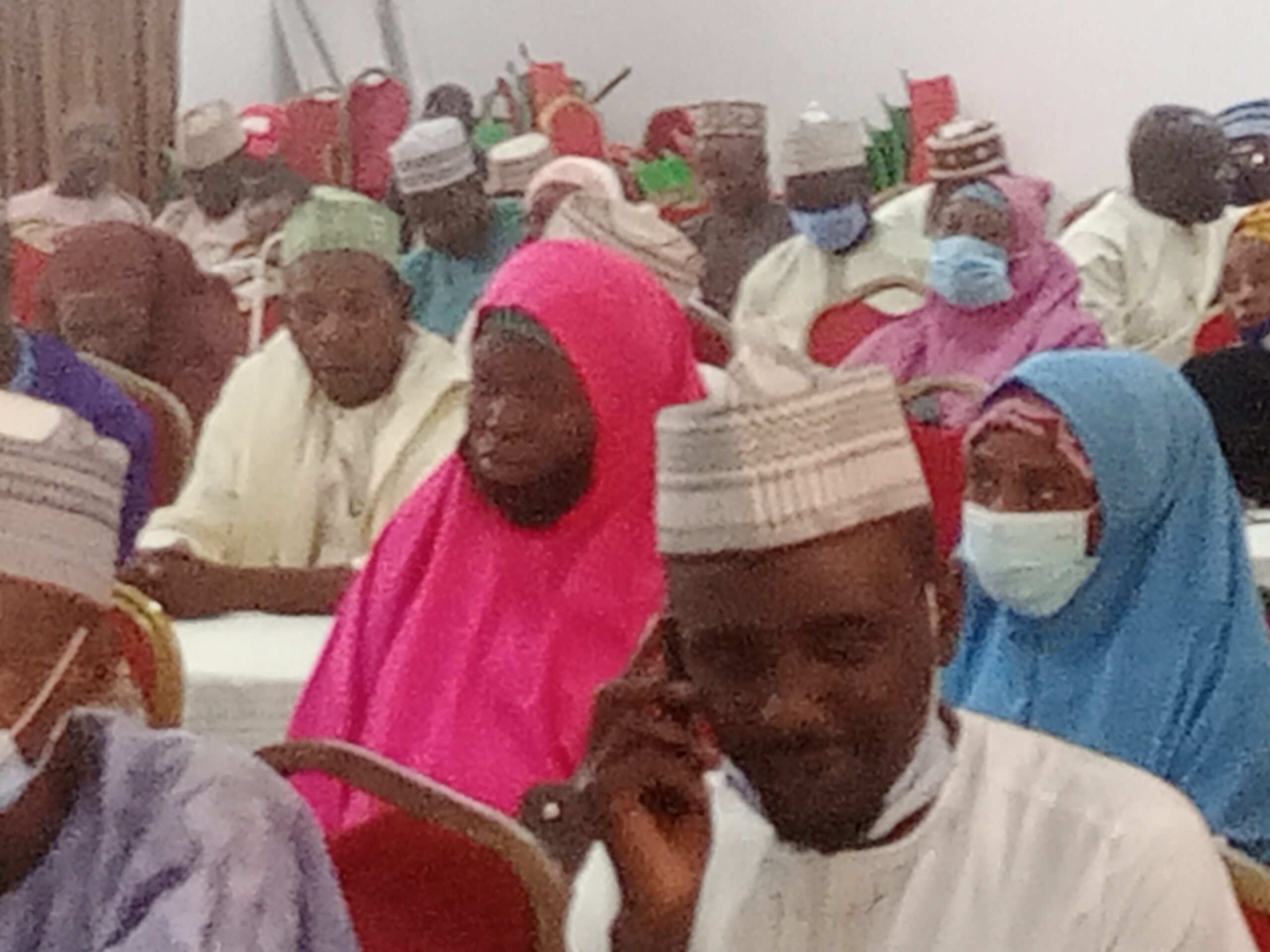
Participants at the 2021 world handwashing day
By Akanji Alowolodu, Bauchi
Reports by United Nations Children’s Fund (UNICEF) indicated that Bauchi State is a leading State in the implementation of water, sanitation and hygiene (WASH) related interventions in Nigeria.
Also, Dass and Warji are one of the first LGAs to attain and sustain open defecation (ODF) status, four other LGAS have achieved similar fit While four LGAs of Toro, Bauchi, Katagum and Zaki will require the Bauchi State Government support to achieve similar result before the end of 2021.
The declaration was made by the Chief of Field Office, UNICEF, Nigeria Bauchi, Mr Tushar Rane at the commemoration of the 2021 Global Hand Washing Day, Friday, October 15, 2021 in Bauchi.
Represented by Mr Amose Kudzala, WASH Specialist, Tushar Rane said that to give development partners strong signals to provide more funding support for WASH interventions in the 20 LGAs of Bauchi State, suggested to the Bauchi State Government do the following:
Consistently release of project capital cost in form of counterpart contribution to proposal to convert the WASH Units into WASH Departments; provide WASH facilities for all communities, schools, and primary health centers and Facilitate monthly release of operational fund to the LGA WASH Approve the Units/Departments by Ministry.
He assured that UNICEF on its part will continue to work with government; development partners; non-governmental organizations; religious and traditional leaders and communities, to ensure the fulfillment of the rights of children and women of Bauchi State, and indeed Nigeria.
The UNICEF Chief of Office observed that With the ongoing efforts to stop the spread of the COVID-19 virus, and deal with cholera, the handwashing program is a unique opportunity for the world to leverage to communicate the importance of handwashing with soap and running water.
According to him, “Global response efforts to the pandemic have created an unprecedented time for hand hygiene. Yet progress remains far too slow for the most vulnerable, underserved communities,” said UNICEF WASH Director Kelly Ann Naylor, “Hand hygiene cannot be viewed as a temporary provision to manage COVID-19” .
He also said that, “Further long-term investment in water, sanitation and hygiene can help prevent the next health crisis from coming. It also means fewer people falling ill with respiratory infections, fewer children dying from diarrheal diseases, and more pregnant mothers and newborns protected from preventable conditions like sepsis.”
The latest data show that some progress has been achieved since 2015, For example, the global population with access to basic hand hygiene at home has increased from 5 billion to 5.5 billion, or from 67 per cent to 71 per cent.
However, if current trendspersist, 1.9 billion people will still not have access to basic hand hygiene by the end of the decade.
in Nigeria, 21 per cent of Nigerians had access to basic handwashing facilities at home in 2018, compared to 16 per cent in 2019, indicating a worrying downward trend.
According to the latest estimates: . Globally, 3 in 10 people-or 2.3 billion- do not have access to basic handwashing facilities with water and soap at home, including 670 million people without any facility at all.
In the least developed countries, more than 6 in 10 people lack basic hand hygiene facilities at home. 2 in 5 schools worldwide do not have basic hygiene services with water and soap, affecting 818 million students, of which 462 million attend schools with no facility at all. In the least developed countries, 7 out of 10 schools have no place for children to wash hands. In Nigeria, 9 out of 10 schools have no place for children to wash their hands.
1 in 3 healthcare facilities worldwide does not have hand hygiene facilities at points of care where the patient, healthcare worker, and treatment involve contact with the patient. In Nigeria, this figure is 4 in 5 healthcare facilities.
UNICEF urged governments to commit to providing hand hygiene, not as a temporary response to the pandemic, but as an investment in public health and economic resilience.
The latest joint UNICEF and WHO report identifies five accelerators that can enable governments to rapidly scale up access to hand hygiene, including good governance, smart public finance, capacity building, consistent data, and innovation.
UNICEF will strengthen partnerships and explore areas for collaboration with the Bauchi State Government as recently exhibited in the development of the Bauchi State Open Defecation Free (ODF) Road Map designed to end open defecation in 2025, and subsequently contribute to the Sustainable Development Goals related to Water, Sanitation and Hygiene which has been presented through the Bauchi State Ministry of Water Resources, and is presently awaiting approval and funding to commence implementation.
He said that the first Global Handwashing Day was commemorated in 2008. Since that date, millions of people show every year the great importance of handwashing on 15th of October.
This year’s event is yet another opportunity to promote handwashing with soap to motivate and mobilize people around the world to improve their handwashing habits.
