

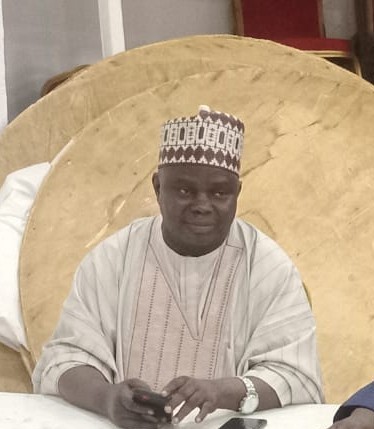

Hon Iliya Habila, Executive Chairman of Bogoro Local Government Area
By Akanji Alowolodu, Bauchi
The social media has been described as a double-edged sword which If used properly, will engender peace, security, social harmony and development but if used otherwise, will endanger the path to peace, progress, social harmony and development.
The assertion was made by the Executive Chairman of Bogoro LGC, Iliya Habila while speaking as a 3-day retreat for Zaar Youths held on Thursday at Crest Hotel, Jos saying that, “As predicted then and as if I was in the realm of vision for the future, our society has been willy-nilly polarised courtesy of the wrong use of the social media”.
He added that, “Imaginary enemies and ideologies have been created among ourselves through the wrong use of the social media. It is by the grace of God and wise counsel of elders that our youths have not yet taken weapons as a result of wrong messages in the media”.
He lamented that, “as enlightened as we are, we have unconsciously bowed to the negative use of the social media. Just like any other technological material culture”.
He therefore urged the youths to restraint themselves from using the social media to create and widen barriers, denigrate leaders and reduce the hard earned integrity of the elites saying, “Rather, we should use the social media to promote brotherliness, self and community development”.
Iliya Habila said that, “The vibrant youths of Zaar, ours was never a struggle fought in vain, but one that was premised on the spirit of human resilience and an unwavering quest for freedom and emancipation. As we march forward, crafting a sustainable future for those that will come after us, we are committed to rise to the occasion and not be found wanting in the pursuit of the ideal of youth development and emancipation”.
This according to him can be achieved through youth empowerment which enjoins them to take action in order to improve their access to resources and transform their consciousness via their belief, values and attitudes.
He opined that here are six dimensions of youth empowerment: Psychological empowerment which aims to create self-confidence and give youth the skills to acquire knowledge; Community empowerment which focuses on enhancing the community through leadership development, improving communication, and creating a network of support to mobilize the community to address concerns and Organizational empowerment which aims to create a base of resources for a community which aim to protect, promote and advocate for the powerless.
He further said that Economic empowerment teaches entrepreneurial skills, how to take ownership of their assets and how to have income security while Social empowerment teaches youth about social inclusion and literacy as well as helping kids find the resources to be proactive in their communities.
Iliya Habila also said that Cultural empowerment aims to recreate cultural practices and redefine cultural rules and norms for youth saying that “A cursory look at all perspectives of empowerment reveals an interrelated variable, thus the inspiration and capacity building of the actors in a society to face their developmental challenges” .
According to him, “In a contemporary developing society such as ours, which is full of challenges, occasioned by our history and root, the most vibrant segment that will engineer social change and development is the Youth. And so, that justifies the conscious and deliberate choice of the participants”.
He stressed that, “You or we are youths chosen from our respective communities, different divides, shades of opinions, educational status and other minor differences. But we are here gathered under one roof and canopy of Zaar ethnic nationality. We are here to brainstorm on what makes a Zaar youth, what are his or her challenges as well as expectations in the crave for development”.
According to him, The Zaar race since time immemorial has some inherent values which are known by the neighbours and those who come in contact with them pointing out that, “Notable among them are respect for elders and leaders or constituted authorities, honesty, hard work, dedication to duty, hospitality, lover of peace and security, self defence, integrity, among others” .
He stressed that, “A Zaar man is proud to be seen as having provided for his family. And so, he values dignity of labour as against getting his daily bread from cheap labour or cheating. I am glad to state that these values have largely contributed to the successes Zaar Nation recorded in the journey to civilisation, progress and development”.
“It is as a result of these values that we have witnessed the glorious ascension of Zaar persons to high elective and appointive positions of authority both at the state and Federal levels. Over the years too, our sons and daughters are now found in ministries, departments and agencies that we never dreamt of being employed. In almost all facets of life and disciplines, Zaar men have excelled and made indelible marks and still counting”, he said with pride.
The Council Boss said that Education has played a tremendous role in the attainment of these feats “rising from a males dominated society, the female folks in our communities have swiftly joined their colleagues in other societies to occupy the A-positions in the academic cycle” .
“However, with all these achievements, it appears that we need some kind of empowerment, retreat, symposia and other brainstorming sessions to tell ourselves the truth about factors that mitigate appreciable development. That explains the rationality of a retreat like this”, he stressed.
He concluded that, “The future of our land lies in our hands and now is the best and most appropriate time to secure it. We must work tirelessly and have sleepless nights to secure the future or we will pay dearly when we are supposed to be enjoying the future” .
