


By Gabriel Omimi
Precisely, on February 3, 1976, Abuja officially became Nigeria’s capital, a planned city meant to symbolize unity, order, and hope for the nation.
Sadly, February 3, 2026, will mark half a century with no plan to celebrate the Golden Jubilee, to showcase major infrastructure projects, urban renewal plans, and symbolic campaigns like the “Flame of the Forest” tree-planting initiative aimed at greener spaces across the capital.
Flash back, when Abuja marked its 30th anniversary in 2006, the city stood as a clearer reflection of its original vision as a purpose-built capital. A significant share of this progress is often associated with the tenure of Mallam Nasiru El-Rufai, whose administration as Minister of the Federal Capital Territory (2003–2007) coincided with the jubilee period.
Under his leadership, the Abuja Master Plan was vigorously enforced, restoring order to a city that had begun to drift under years of unchecked development. Illegal structures were removed, green areas reclaimed, and zoning regulations reasserted. These decisions that were ab -initio controversial at the time but widely acknowledged as necessary to preserve Abuja’s long-term sustainability.
Infrastructure development also gained momentum. Major road networks, inter-district linkages, and key government districts were either expanded or completed, thereby improving mobility and reinforcing Abuja’s status as Nigeria’s administrative hub.
The systematic development of satellite towns and housing estates, such as the 1,000 Housing Units in Pegi community in Kuje Area Council, helped decongest the city centre and accommodated a rapidly growing population.
Equally notable was Abuja’s emergence as a diplomatic and conference capital, hosting international summits and housing an increasing number of foreign missions. This enhanced Nigeria’s global image and positioned Abuja as a symbol of national unity. As a matter of fact, by its 30th anniversary, Abuja had earned recognition as one of the fastest-growing and most orderly capital cities in Africa.
While debates around style and impact persist, Abuja @30 reflected a city regaining direction, largely shaped by firm policy choices and urban discipline.
In retrospect, the El-Rufai administration left behind enduring institutional and physical foundations that continues to influence Abuja’s growth trajectory decades later.
Today, as the Federal Capital Territory (FCT) marks its 50th anniversary, Abuja finds itself at a crossroad, caught between celebration and critical public scrutiny over governance, service delivery, and mounting socio-economic tensions.
What was once envisioned as a model capital city has grown into a sprawling metropolis grappling with deep systemic challenges that many residents blame on poor leadership and policy missteps by the present FCT Administration under the leadership of Minister Nyesom Wike
Minister Wike has repeatedly assured residents of unprecedented infrastructure delivery ahead of the celebrations, including road construction linking key districts and hybrid solar street lighting designed to improve security.
The FCT Administration also unveiled a 50 per cent fertilizer subsidy for farmers and water supply expansion initiatives in satellite towns like Bwari amid these efforts.
In official statements, the FCT leadership has called for unity and greater cooperation from residents, describing 2025 as a year in which “great strides were made” and pledging further progress in 2026.
Despite these plans, many Abuja residents and civil society voices argue the city’s progress narrative masks deep governance problems.
Urban planners have warned that years of haphazard growth have overwhelmed Abuja’s original master plan. Housing developments often flout codes, green areas continue to shrink, and essential services lag far behind population growth — undermining the city’s sustainability.
Workers in key government agencies, including staff of the Federal Capital Territory Administration and Federal Capital Development Authority, recently initiated an indefinite strike, shutting down major offices and demanding resolution of unpaid promotions, welfare issues and stalled wage awards.
The Nigeria Labour Congress (NLC) has thrown its full backing behind the strike, sharply criticizing the FCTA leadership for alleged pension mishandling and labour abuses.
In a sign of wider institutional tension, contractors protesting over alleged unpaid debts totalling over N5.2 billion were met with teargas when they demonstrated outside the FCTA Secretariat late last year.
Teachers, too, have clashed with authorities over long-standing salary arrears in the FCT Area Councils, raising concerns about education quality even as the Golden Jubilee is being celebrated.
Undoubtedly, security remains a perennial concern. Although hybrid solar streetlights and other innovations aim to curb crime, Abuja still faces challenges with unplanned urban expansion that can strain policing and emergency responses.
Given the above scenario, residents are divided in their assessment of the FCT Administration’s performance. Some praise infrastructure investments as tangible proof of progress and alignment with national development agendas.
Others argue that such projects cannot mask shortcomings in service delivery and leadership accountability. Many are of the candid opinion that asphalt and concrete should not take the place of good governance — pointing to deepening hardship, labour unrest, and the city’s uneven growth.
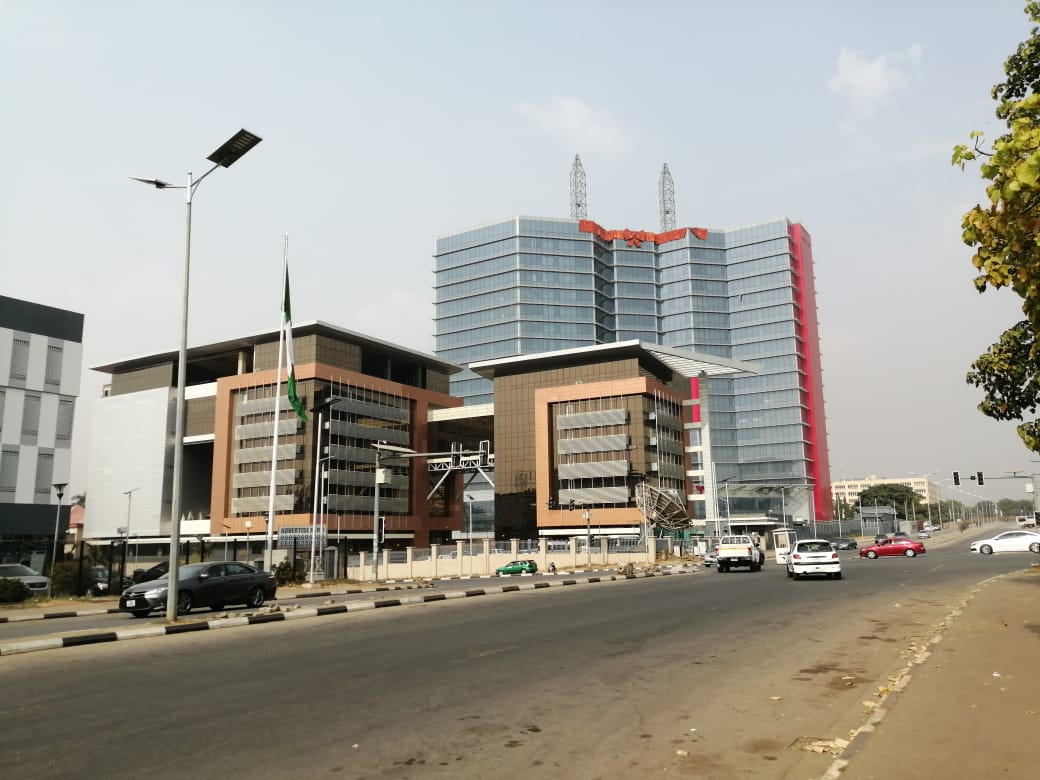
As Abuja celebrates five decades of existence, the city embodies both promise and paradox. Its skyline grows, its symbolism endures, but its people continue to demand effective governance that translates projects into sustainable livelihoods and equitable services.
For many, the Golden Jubilee is not just a time for festivity, but an urgent call for reflection, reform, and renewed leadership, one capable of steering the capital city toward the unity and excellence of its founding fathers.
Omimi wrote from Abuja

Comments are closed, but trackbacks and pingbacks are open.