
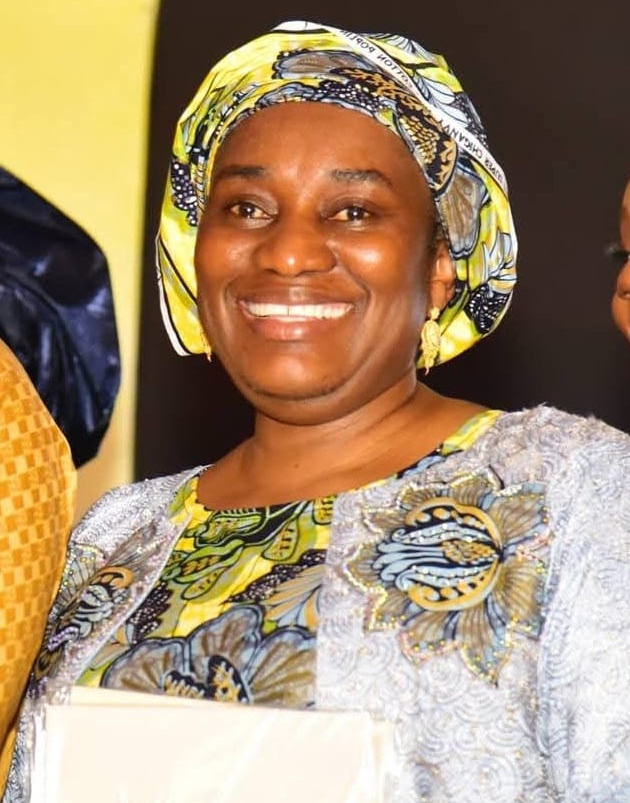

By Jumai Ahmadu PhD
For over five decades, since the creation of Abuja as Nigeria’s Federal Capital, the original inhabitants have borne the heaviest cost of the nation’s unity project.
Their ancestral lands were taken in the name of national progress, with promises of resettlement, compensation, and full integration into the new city.
Half a century later, much of that promise remains unfulfilled.
Across the Federal Capital Territory (FCT), indigenous communities continue to experience displacement, loss of farmlands, cultural erosion, and economic uncertainty. While Abuja has grown into a modern global capital, many of its original hosts remain spectators to prosperity built on their former homes.
As one elder in Gwagwalada put it: “We gave Nigeria our land so the country could be one. But fifty years later, we are still waiting to be treated as equal stakeholders.”
It is within this injustice that calls for political inclusion , particularly the right of first refusal in both elective offices and political appointments , must be understood. This is not ethnic entitlement. It is restorative justice.
From inception, Abuja’s development plan anticipated large-scale resettlement and compensation. Yet population figures were underestimated, implementation faltered, and thousands of families were left in limbo. Entire communities were absorbed by urban expansion; others faced repeated displacement without full compensation.
Advocacy groups now estimate that over two million indigenous people across nine tribes and 17 chiefdoms have been affected by this systemic neglect.
Despite legislative interventions and recurring promises, one truth remains:
the resettlement and compensation process was never completed.
This struggle is not merely emotional , it is constitutional. Section 299 of the 1999 Constitution states that the Constitution shall apply to the FCT “as if it were one of the States of the Federation.”
In addition, Section 14(3) , the Federal Character Principle , mandates that governance and appointments must reflect fairness, inclusion, and a sense of belonging among all groups in Nigeria.
Together, these provisions mean two things clearly:
The FCT is constitutionally equal to other states, its indigenous people must not be politically marginalised, while indigenes across Nigeria can contest elections in their home states and enjoy priority in appointments,
Abuja’s original inhabitants have no alternative political homeland.
The FCT is their only ancestral home , and paradoxically, the place where they are most excluded.
A youth leader in Kuje captured it simply: “Every Nigerian has a state politically. We only have Abuja , yet even here, we are treated like strangers.”
To be fair, the current FCT leadership has made commendable efforts in rural infrastructure development, deliberately extending roads and community projects to long-neglected indigenous areas. These interventions have restored hope and demonstrated that responsive governance is possible.
However, infrastructure alone cannot replace structural justice. For progress to endure, inclusion must be institutionalised through sustained political representation, transparent completion of resettlement, and deliberate inclusion of indigenous people in appointments and elections. Development must be anchored in policy, not personality.
In a democracy, leadership determines budgets, policies, and protection. For Abuja’s original inhabitants, political inclusion is no longer symbolic , it is essential for survival.
Without representation:
- Resettlement stalls
- Compensation lacks transparency
- Development displaces without safeguards, and
- Indigenous voices vanish from decision-making.
Hence the call for affirmative political inclusion , priority in elections and appointments until historical obligations are fulfilled.
This is not about domination. It is about fairness.
As a traditional ruler from Karu explained: “We are not asking to rule Abuja forever. We are asking for justice while the promises made to our people remain unpaid.”
A Bridge to Healing
The proposal is simple and reasonable:
Grant political priority until:
1) Resettlement is completed, 2)Compensation is fully paid, 3)Communities are properly integrated, and 4)Constitutional equality is reflected in practice.
Political inclusion should serve as a corrective bridge , not a permanent monopoly.
The Moral Test of a Capital at 50
Abuja was built to symbolise unity. But unity cannot thrive on unresolved injustice.
Fifty years on, Nigeria must decide whether its capital will merely shine with infrastructure or stand on a foundation of fairness.
Until resettlement and compensation are completed , and until Sections 299 and 14(3) of the Constitution are meaningfully applied , granting Abuja’s original inhabitants priority in both political appointments and elections remains the most just path toward healing, inclusion, and lasting peace.
Dr. (Mrs.) Jumai is the Ag. Director, FCTA Reform Coordination and Service Department, and President, Helpline Social Support Initiative (HSSI), Abuja

Comments are closed, but trackbacks and pingbacks are open.