
Bauchi, UNFPA review, validate Family Planning Costed Plan 2026-2030 to reduce maternal death, promote family health

|
Getting your Trinity Audio player ready...
|
By Akanji Alowolodu, Bauchi
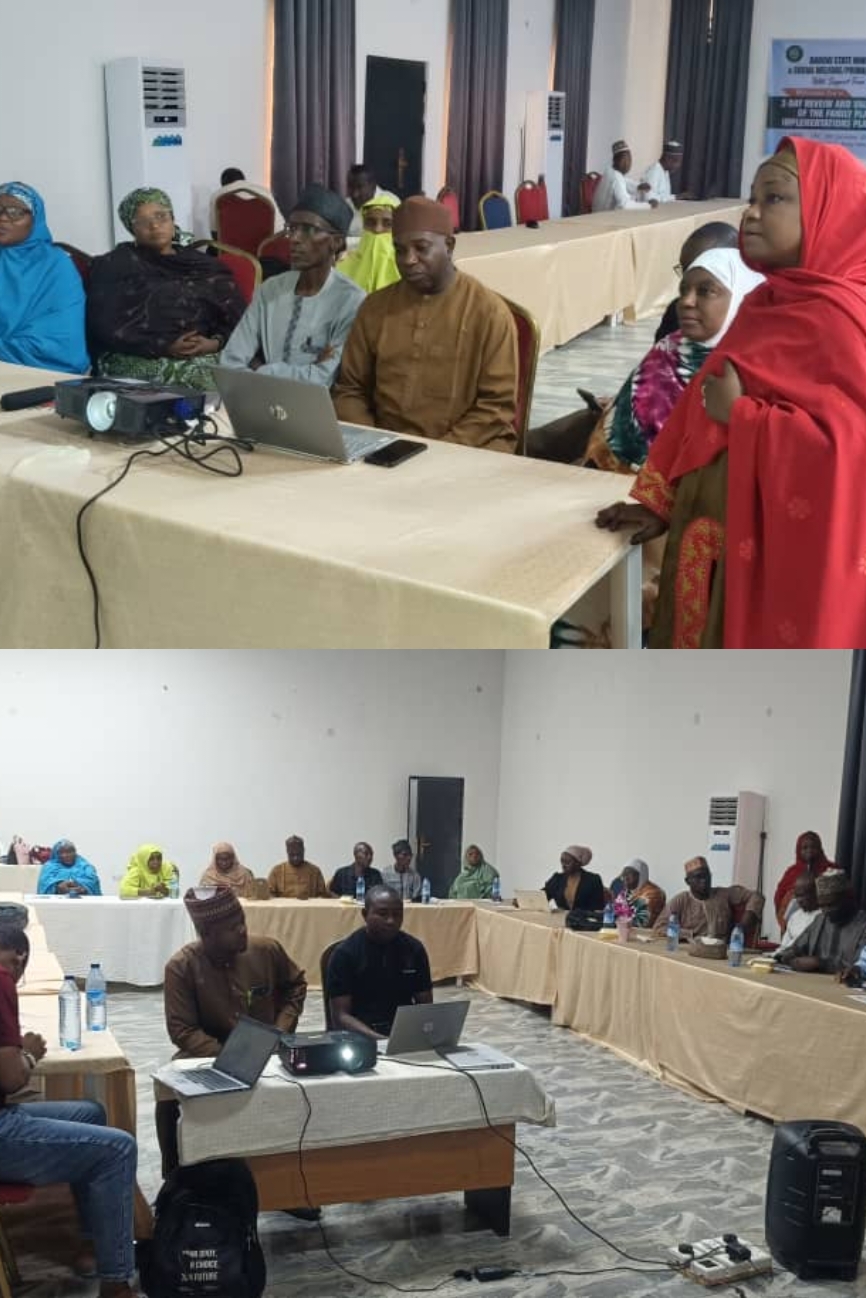
Bauchi State Ministry of Health and Social Welfare in collaboration with the State Primary Healthcare Development Board with support from the United Nations Population Fund (UNFPA), have reviewed and validated the Family Planning Costed Implementation Plan (CIP 2026-2030), with the aim of making child spacing services more available and affordable for women of child bearing age and Adolescents.
While leading the review and validation meeting, State Commissioner of Health and Social Welfare, Dr Sani Mohammed Dambam, stressed that the new document, when approved by the State Executive Council (SEC), it will give a policy direction on how to effectively provide FSP services.
Represented by the Permanent Secretary of the Ministry, the Commissioner commended UNFPA for its support in the area of family planning support commodities in the State.
He assured that the Ministry will not hesitate in presenting the validated documents to the SEC for deliberation and subsequent approval for immediate implementation.
Also speaking, Executive Chairman of Bauchi State Primary Healthcare Development Board, Dr Rilwanu Mohammed, stated that, “We’ve also received consignment from UNFPA last two weeks for family planning and Child-Spacing, and we really appreciate that.
According to him,”Bauchi State government has actually given its counterpart for procurement process. The last year was N15 million. Now, remaining N17 million, we are still fighting for the N17 million to be released, so that that fund will be used to actually procure more commodity for our mothers.”
“We really appreciate the kind of support we are receiving from the Governor of Bauchi State, the kind of support we are receiving from our local government Chairpersons, the kind of support we are receiving from our traditional rulers and regional leaders. The media, who actually consistently inform the public about the importance of family planning,” he added.
Rilwanu Mohammed added that, “And it has cost a lot of money. Most people are coming out to look for this commodity. There is more demand generation than there was in the beginning. And maybe it is still there on the ground. And when we get the N15 million, when Deborah Tabara, brought the commodity, I just laughed. It was just a small amount. So, what we are giving is just a small support from our side.”
The EC further stated that,”And as part of sustainability, we should be studying now. If not, when they run away like the way USAID ran away, we are just locked up. We don’t know what to do. Where do we start? All our commodity just on our last mile distribution, we could not do. We could not even last a mile distribution. Just about N9 million they are looking for. We have to beg and beg.”
He added that,”And then the 3PL were able to distribute the commodity at N1million plus. And that’s how we are able to. And we got the support from where? From the MSI, from the same UNEPA. They divide the money into 2.5, 2.5. We will not forget this support.”
According to him,”UNFPA, you have done a lot of jobs, and the job is on ground. We are going to carry out activities, particularly creating an environment by making sure about 5 or 6 facilities, we are going to upgrade them in primary healthcare. One of the facilities is in my hometown. So, we really appreciate UNFPA.”
He disclosed that, ‘They have a 72-hour makeover. They are going to do that, and they are able to give support for both the renovation and upgrading, and then for the commodity. Though the money is small, but it is able to do the work that we require for that activity.”
Rilwanu Mohammed added that, “Then remaining. We need the traditional rulers, the religious leaders to decide who are going to do the door to door advocacy. Why is the door that is going to be opened? And that is very important in the way we want to do 72-hour makeover. But we don’t mind, tomorrow 72-hour makeover.”
According to him,”We can do our activities to make sure that we provide this facility, confidentiality for them to be able to get the support of family planning space. Now, many mothers are dying, and then dying silently. And the presence of the family planning has provided support to reduce the morbidity and mortality that are affecting our mothers.”
He stressed that, “And you will never know until when you let your wife have multiple pregnancies in between one pregnancy to another. I’m assuring you that you will see that one day she will be, the uterus will burst. Because there is no relaxation for the mother. So the mother needs to relax in between rounds of another pregnancy.”
He added that, “So, the child spacing, we are using it to actually advocate that even if we are not going to do family planning like 100 percent, we now go for child spacing so that we are able to make our mothers alive and our child alive, because they are the ones that we maintain tomorrow.”
According to him, “Our consultant has been our friend, our senior colleague in this profession. We really appreciate your support. And the Commissioner of Health, thank you for the leadership. DMMA, continue to guard our drugs, continue to make them healthcare for our people, continue to give affordable drugs.”
He concluded, “MSI, who are here also supporting us on this line. We really appreciate your support and our staff. And then, one of the most important things is the consultants, who actually took time from the beginning of this process to now. They’ve done a lot of work.”
In her message, the UNFPA Country Representatives, Muriel Mafico appreciated the commitment of Bauchi State government through the Ministry of Health and Social Welfare and the Primary Healthcare Development Board in ensuring the validation of the Bauchi State Costed Implementation plan for Child Spacing 2026-2030.
She declared that, “This is a great achievement in the family planning programme for Bauchi.”
Muriel Mafico stressed that, “For UNFPA, the document is strategic in meeting our transformative agenda of ensuring Zero unmet need for family planning and zero maternal death.”
The UNFPA Country Representative also stressed that, “The implementation of the N4.38 billion costed implementation plan for Child Spacing is a good Buy, a right investment in the right direction as with a dividend of over N10 billion return on investment.”
“We call on the State Government and stakeholders to utilize it as an advocacy tool to achieve the health outcomes for the state towards achieving the FP 2930 goals,” She concluded.
Also speaking during the meeting, Dr. Mohammed Liman, a Consultant engaged to support the development of the Bauchi State Child Space and Costed Implementation Plan 2026-2030, stated that the exercise was necessary to achieving the objectives.
According to him, “At this point, we have come to the final stage of the development of the document. We are here validating the Costed Implementation Plan, ready for approval by the government.”
On what it means for the state government, particularly on the issue of family planning, he stressed that, “Child spacing is very, very important to our population, because it helps reduce maternal deaths and also improves child health.”
According to him, “Essentially, it is one of the key high-impact interventions that will help the State to reduce the prevailing deaths that is happening among women of reproductive age, especially pregnant mothers or adolescent mothers who are getting ready to get pregnant.”
Mohammed Liman added that,”In addition to that, we know the high mortality rate, especially among children also, is prevalent across the country, several States, including Bauchi. So, child spacing will help reduce, especially infant mortality, that is the deaths happening before one year, because a lot of it is related to birth intervals and other causes related to pregnancy and delivery.”
Speaking of planning and costing, he said that,”We will be talking about data. What data is available during this planning? I think we have a lot of information. We have the first plan that was developed and expired many years ago, expired in 2020. Following that, we have a gap in terms of really understanding what the situation, what the landscape is. We have done a situation analysis last year to help inform the development of this policy.”
The Consultant added that,”That situation analysis is driving data from the National Demographic Survey, the Bauchi Child Spacing Programme data, and a lot of other so-called surveys and researches have informed us.”
According to him, “For instance, the National Demographic Survey has shown us that the trend in the uptake of modern contraceptives in Bauchi has significantly improved from 2002 to date. We’ve seen the data moving from 2% in 2008, for instance, to now 10.6% in 2024.”
“That’s significant improvement. But we want to move further, because that’s not where we want to see ourselves. Because if you look at the demand for child spacing, especially the demand among those who are already ready to take these services, but they haven’t accessed the services. We call it the unmet need. So the unmet need is quite huge,” he added.
He stressed that, “Up to 22% of these women who have been sensitized, they know the importance, but they cannot access child spacing services. So we want to cover that gap. And then, essentially, if you look at the overall users, it has increased, of course, from around 24,000 in 2012 to almost 188,000 in 2024.”
He added that,”So that means that we’ve made progress, but there’s still a huge number of women there, especially in our remote communities, who have not accessed these services. So we want to use this plan to reach those with the unmet needs, as well as to identify other women who need these services. So that would help contribute to the reduction of maternal mortality in both states.”
On the aspect of family planning as it concerns the issue of adolescence, he said that,”So the plan captures very well strategies that target adolescence. Various issues affect adolescence. We know, ranging from malnutrition to health issues, a lot of other issues, and then issues related to pregnancy. So we, in this plan, have given a very, very strong recommendation to implement strategies that will target adolescent mothers, especially a lot of, a huge number of women in the reproductive age are adolescent mothers.”
He stressed that,”So, they will be targeted for interventions for them to access child-sparing services. And then there are a lot of interventions that target the establishment of Youths and adolescent-friendly services, so that they will be freely able to go to health facilities, access information that will help them improve their lives.”
On what people expect from the 2026 to 2030 plan, he said that,”So we expect the people of Bauchi State to actually access more services, establishing more additional facilities that will provide child-sparing services across the population groups, including the PWDs.”
According to him, “So the plan has targeted the upgrading of additional 125 centres that provide these services. So that’s quite a huge investment as far as expansion is concerned. And then there is going to be wide-scale demand generation, so that people will be mobilized across our communities, so that fathers, mothers will be able to understand the benefits of child-sparing, and be able to access services whenever they need it and wherever they need it.”
He added that,”In addition to that, of course, there is a very strong case for government committing to ensuring that there are uninterrupted supplies of commodities, because that’s key. When you create demand generation, you expect the population to probe into health facilities.”
He concluded that, “And so, if we cannot match the needed commodities with the needs, then there will be a problem. So the plan has carefully outlined that forecasted for the five years, what quantum of commodities will be required, and it has costed that.”

Comments are closed, but trackbacks and pingbacks are open.