

|
Getting your Trinity Audio player ready...
|
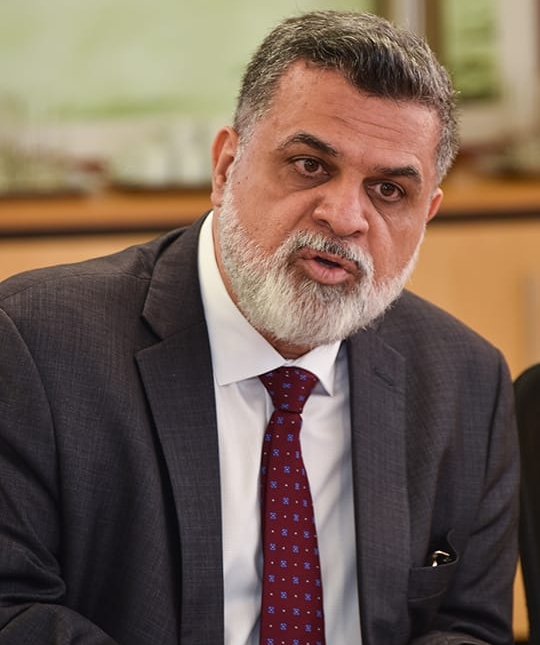
The Minister of Superior Labour Court of Brazil, Lelio Bents Correa, has called for joint effort between Brazil and Nigeria in tackling industrial relations for the benefit of both countries.
Correa, who spoke to newsmen after meeting with the management of the Industrial Arbitration panel (IAP) in Abuja on Friday, added that both countries need to work and develop the environment for the future generation.
He said “in Brazil, we believe a good labour relations system revolves around labour jurisdiction, but is not limited to that. Judges gave the responsibility to make sure that labour right are not something merely stated in the laws.
“The real purpose of the labour system as a whole can only be achieved when we have proper institutions of mediation and arbitration. Nothing can surpass the power of common understanding,” he said.
He told the IAP management that the work they do by means of mediating in the conflicts between parties is certainly something we would pay attention to in Brazil, adding that “we have a lot in common in culture and our position in the geopolitics of the world is quite similar. We all come from a part of the world that is more than overlooked by economically strong and developed countries “but we are developing fast and we are showing the world that we can achieve economic development with social justice and environmental responsibility.
He said his visit to Nigeria has exposed him to a lot of good experience and excellent opportunity to be enlightened and at the same time to seek important cooperation with Nigeria that he would return to Brazil with, adding that Nigeria is promoting a harmonious coherent environment for labour relations.
“This is something definitely we should be thinking of repeating in Brazil. Mediation is of essential importance to promote direct understanding between the sectors. Direct understanding is always the best solution that can be achieved. The parties involved are convinced that it is the best solution.
“Arbitration is so weak in my country. We have overwhelming labour cases that could easily be solved by well-trained non legible arbitrators as those I met here in Nigeria. These are important lessons. And I hope we can develop even further our relationship with Nigeria and exchange these experiences and learn from each other,” he stressed.
On specific areas to explore, Correa said the main concern for both countries should be to promote an environment where development comes hand to hand with social justice, adding that the environment is important for our countries.
Correa said both countries are coming from parts of the world that are progressing in terms of economic development, adding that “we can show the rest of the world that it is achievable. We can develop by being at the center of the development.”
Speaking earlier, the Chairman of the Industrial Arbitration Panel (IAP), Barrister Batulu Koguna told the visiting Brazil’s minister that most advanced economies in Europe, Asia and America are now resorting to alternative disputes methods such as Mediation, Conciliation, Arbitration and Social instead of dialogue abandoning the use of regular courts to settle labour disputes
She said it was in response to this that the IAP was being transformed into the National Commission for Arbitration (NCA )to play a critical role in the Renewed Hope Agenda of President Bola Tinubu Administration.
Represented by Arbitrator (Mrs.) Juliana Adebambo, Barr. Koguna said “This reform aims to institutionalize independence and professionalism, creating a more efficient and responsive mechanism that serves as a robust pillar for national social dialogue.
“To meet the demands of a modern labour market, Nigeria is currently reforming its dispute resolution framework. As a proactive step towards preparing IAP for the envisaged new roles under the reforms, the agency has undergone a lot of transformation in recent time including capacity building of its members and staff, creation of Zonal offices in the six (6) geopolitical zones of the country to bring our services closer to the stakeholders and building national and international linkages with relevant labour stakeholders and donor agencies.”
The IAP chairman argued that “without industrial peace and harmony, there will be no favorable atmosphere for improved workers’ productivity and national development. Indeed, no investor will be willing to invest in an economy characterized by conflicts and crisis such as strikes, work stoppages and lockouts.
“Thus, the industrial relations atmosphere of a country is important in attracting direct investment to its economy,” just as she told the minister that his visit would afford both countries areas of collaboration to strengthen the use of ADR, particularly arbitration services in the dispute resolution mechanism in Nigeria.
Also, the Chief Registrar of the IAP, Barr A A Ibrahim, who described the Minister’s visit as appropriate and timely, said a peaceful and harmonious industrial relations atmosphere plays a critical role in organizational productivity and national development.
He said “today, it is generally accepted that no organization can make progress and sustain higher productivity in an atmosphere of chaos and crisis characterized by strikes, work stoppages and lockouts. Industrial peace and harmony is therefore a key indicator for sustainable development of any economy.
The Chief Registrar said the IAP which is a tripartite body made up of representatives of government, trade unions and employers as members, added that it represents the best ADR institution that could provide a voluntary and expeditious labour dispute resolution mechanism in Nigeria, especially now that the Third Constitution Alteration (2010) has made the National Industrial Court a superior court of record and in most cases a court of first instance on labour and employment matters.
He said “over the last 48 years, IAP has satisfactorily discharged its statutory responsibilities by amicably resolving all labour disputes referred to it by the Federal Ministry of Labour and Employment. Indeed, in the last eight years theg Panel has alsou embarked on fundamental reforms to make its services readily available to stakeholders in the labour sector at organizational and sub national levels by creating zonal offices in the six geopolitical zones of the country.

Comments are closed, but trackbacks and pingbacks are open.