

|
Getting your Trinity Audio player ready...
|
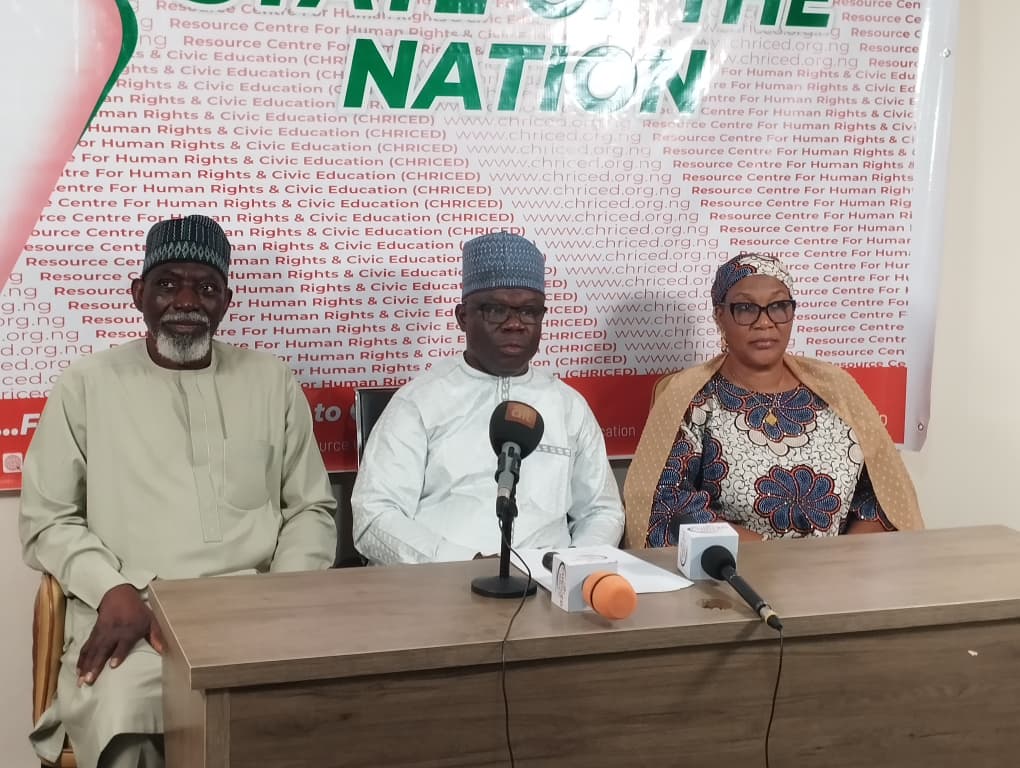
The Resource Centre for Human Rights and Civic Education (CHRICED) on Saturday, has reviewed Nigeria’s socio-economic and governance landscape in 2025, calling for policy reforms, inclusive growth and strengthened democratic institutions in 2026.
The Executive Director of CHRICED, Ibrahim Zikirullahi, made the call in Abuja during a news conference on the state of the nation.
Zikirullahi said 2025 was a challenging year for many Nigerians, marked by economic pressures, security concerns and governance issues, while also highlighting the resilience demonstrated by citizens across the country.
According to him, rising inflation, a weakened naira and declining purchasing power continued to affect households, with many families facing high living costs, reduced incomes and limited access to essential goods and services.
He noted that although there were indications of price moderation in some food items, particularly grains, many low-income earners were still unable to benefit due to unemployment and reduced earnings.
“Nigerians have shown extraordinary resilience. But resilience alone is not enough. We must transform endurance into action.
“As Nelson Mandela said, “It is in your hands to make a better world for all who live in it”.
“In 2026, citizens must hold leaders accountable, demand transparency, defend their rights and stand united against impunity,” he said.
Zikirullahi also expressed concern about the impact of production costs on farmers, citing the prices of fertiliser, transportation and labour, and warned that this could affect future food security if not addressed through coordinated interventions.
On governance, the CHRICED director underscored the importance of prudent public spending and institutional reforms.
He urged authorities to revisit recommendations aimed at reducing the cost of governance and improving service delivery.
He said implementing long-standing reform proposals could free up resources for critical sectors such as education, healthcare, agriculture and infrastructure.
Reviewing the 2025 off-cycle elections, Zikirullahi said the processes highlighted the need to further strengthen Nigeria’s electoral system, political pluralism and public confidence in democratic institutions.
He also stressed the importance of an independent judiciary and transparent electoral management to deepen democracy and sustain citizens’ trust.
On security, he said insecurity remained a major concern, affecting farming communities, schools, businesses and transportation, and called for sustained efforts to improve safety and protect lives and property.
Zikirullahi further advocated the protection of civic space, noting that active civil society engagement, press freedom and citizens’ participation were essential for accountability and good governance.
Looking ahead to 2026, he urged government at all levels to prioritise economic recovery, reduce governance costs, strengthen institutions, improve security and uphold the rule of law.
He also encouraged citizens to remain engaged in democratic processes, promote transparency and contribute constructively to national development.
Zikirullahi expressed appreciation to the media, civil society organisations and development partners for their roles in advancing civic education and public discourse.
He expressed optimism that with collective effort, dialogue, and reforms, Nigeria could make progress toward stability, inclusion, and shared prosperity in 2026.

Comments are closed, but trackbacks and pingbacks are open.