

|
Getting your Trinity Audio player ready...
|
Step Up Nigeria, a Non-Governmental Organisation (NGO), has rewarded students, youths, teachers and community champions actively promoting integrity and resisting corruption across Nigeria with integrity awards.
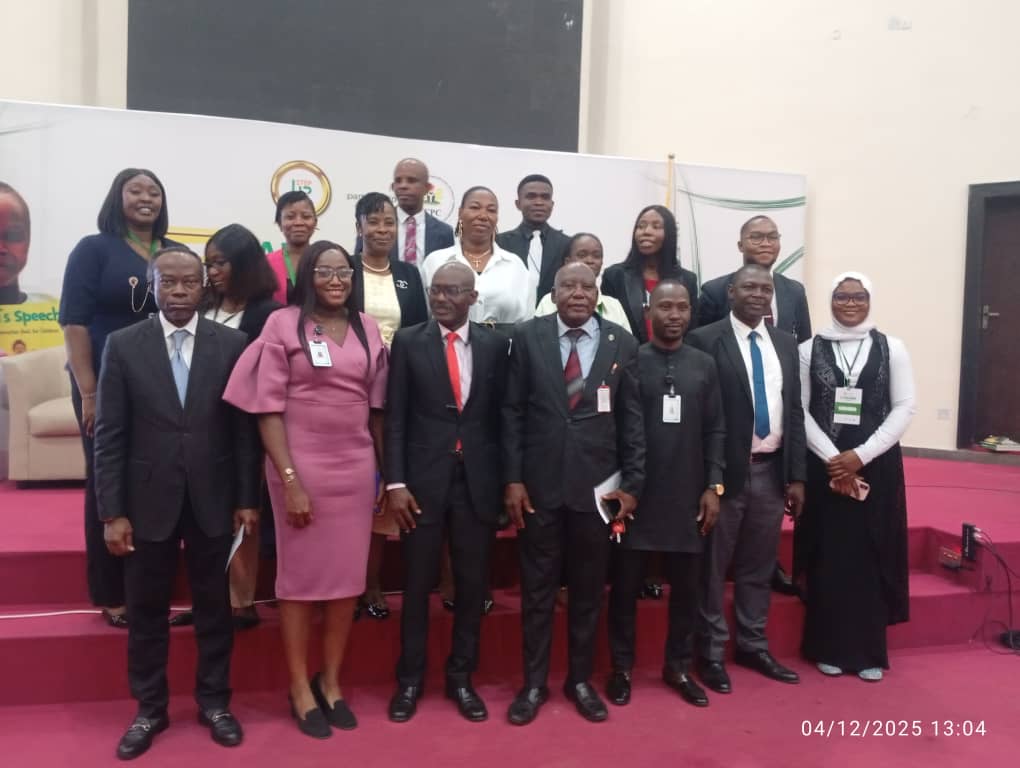
The Director of Programmes, Step Up Nigeria, Feranmi Iyanda announced this at the 6th edition of the Anti-Corruption Star Awards Ceremony organised for primary and secondary school students in Abuja on Thursday.
Iyanda said the event was organised in collaboration with the Independent Corrupt Practices and Other Related Offences Commission (ICPC).
She said the recognition was for anti-corruption champions who have taken significant steps to promote integrity, raise awareness, and initiate behavioural changes that discourage corruption.
“If we don’t take action and leave everything to anti-corruption agencies, the demand for sanctions will be overwhelming. Integrity must be a collective effort,” she said.
She commended ICPC for its sustained partnership since 2019, particularly in supporting schools anti-corruption clubs and expanding values-based education nationwide.
She said that within six years of the initiative, over 109 integrity champions have been recognised.
According to her, the programme has shown that recognition inspired more young people to emulate integrity champions seen as light and hope in their communities.
“Rewarding good behaviour helps rebalance social incentives in environments where wrongdoing often appears more celebrated.
“Anti-Corruption education works with randomised control trials and long-term tracer studies showing that repeated exposure to value-based learning functions like a vaccine against corruption.
“Also, social sanctions from families, schools, religious institutions and traditional leaders can deter corruption where formal punishment is weak or absent.”
Anchored on the 2025 International Anti-Corruption Day theme “Shaping Tomorrow’s Integrity”, Iyanda urged stakeholders to help strengthen values that defined the nation’s moral direction.
She called for value orientation across families, schools, religious bodies and communities as well as mentorship and positive role models for young people.
Also speaking, Demola Bakare, Director, Public Education, ICPC, pledged to strengthen youth engagement as a central pillar of Nigeria’s anti-corruption efforts.
Bakere explained that youth and student engagement was one of the “cardinal anti-corruption strategies deployed by the commission.
“Since its establishment in 2000, the ICPC has implemented value-based education through the National Values Curriculum introduced in collaboration with the Nigerian Educational Research and Development Council (NERDC).
“The curriculum aims to instill uprightness, positive behaviour, and ethical decision-making among students from the basic school level upward,” he said.
He added that to further reinforce these values, the commission established Student Anti-Corruption Clubs in secondary schools and Anti-Corruption Peer Groups across tertiary institutions nationwide.
He said that these platforms had yielded notable gains, strengthening integrity and accountability among young Nigerians.
Similarly, Mr John Bala, from the National Orientation Agency (NOA), reaffirmed the organisation’s commitment to anti-corruption drive.
He described corruption as an “endemic social vice” that had weakened national cohesion, slowed development, eroded trust, fuelled inequality, and undermined Nigeria’s democratic processes.
“Corruption spreads across the entire structure of our society. It erodes communal trust, undermines economic and social justice, and destroys international cooperation.
“This issue must be tackled with seriousness and tenacity,” he said.
He commended the efforts of President Bola Tinubu’s administration, noting that the government’s Renewed Hope Agenda had recorded progress in promoting transparency, accountability and good governance.(NAN)

Comments are closed, but trackbacks and pingbacks are open.