

|
Getting your Trinity Audio player ready...
|
By Sunday Dare
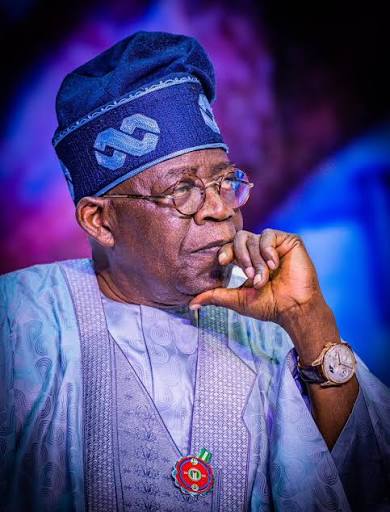
On Monday this week President Bola Ahmed Tinubu departs for a two-day official visit to the Republic of Türkiye. The stated agenda—military cooperation and trade partnership—is precise. But the subtext is broader: Nigeria is recalibrating its partnerships toward countries that combine strategic geography, industrial depth, security capability, and an instinct for pragmatic diplomacy.
Few nations fit that description as naturally as Türkiye, making this visit not just a sentimental jaunt but a strategic engagement, strengthening our official ties, since Turkey established diplomatic presence in Nigeria in 1962.
Türkiye: Where Civilizations Converge
Long before modern states, the lands that form present-day Türkiye were the arteries of human civilization—bordering Mesopotamia, linking ancient empires, and serving as the world’s crossroads between Europe and Asia. Today, Türkiye remains the only major power that physically straddles two continents, controlling maritime gateways that connect the Black Sea, the Mediterranean, and the global trade lanes.
Geography has always been destiny. For Africa—and for Nigeria in particular—Türkiye’s location is not symbolic; it is operational. It is a bridge to Europe, a corridor to the Middle East, and a springboard to Central and Far-East Asia.
So, Istanbul is not just a city; it is a gateway. For Nigerian exporters, investors, students, and logistics operators, Istanbul is increasingly the shortest route from Africa to global markets.
Why Nigeria Is Turning to Türkiye
The President is visiting with the mindset that Nigeria’s reform trajectory—industrialization, security stabilization, trade diversification, and technology transfer—requires partners who do not merely sell products, but build systems.
Türkiye brings four strategic advantages:
a. Industrial Capability: From construction to defense manufacturing, textiles, energy equipment, and rail systems, Türkiye is one of the most industrialized economies bridging emerging and developed markets.
b. Defense and Security Depth: Türkiye has become a global supplier of cost-effective, battle-tested military platforms—from drones and armored vehicles to surveillance systems. For Nigeria, confronting insurgency, banditry, and transnational crime, this partnership is about capacity, not dependency.
c. Trade Dynamism: Türkiye is among the world’s leading exporters to Africa. Its model emphasizes local production, infrastructure delivery, and joint ventures—the kind of growth Nigeria now prioritizes.
d. Geopolitical Balance: As a NATO member with strong relations across Asia, the Middle East, and Africa, Türkiye offers Nigeria strategic flexibility—not alignment by ideology, but cooperation by interest.
A Partnership Already in Motion
The first Turkish Head of State to visit Nigeria was President Abdullah Gül in 2010. This milestone was followed by the official visits of President Recep Tayyip Erdoğan to Nigeria in March 2016 and October 2021, reflecting Türkiye’s sustained diplomatic outreach and commitment to deepening bilateral relations with us.
These engagements were complemented by President Muhammadu Buhari’s official visit to Ankara on 19 October 2017, during the D-8 Summit. Together, these high-level exchanges set the tone for the strategic and forward-looking conversations taking place this weekend as President Tinubu visits.
So, the Nigeria–Türkiye relationship has already since, taken tangible shape—far beyond diplomatic pronouncements—across healthcare, education, manufacturing, agriculture, defence, and trade.
Trade at Scale- Bilateral trade now exceeds USD 1 billion annually, with historical peaks near USD 2.7 billion. Both governments have set a formal target to expand trade to USD 5 billion.

Comments are closed, but trackbacks and pingbacks are open.