

|
Getting your Trinity Audio player ready...
|
By Akanji Alowolodu, Bauchi
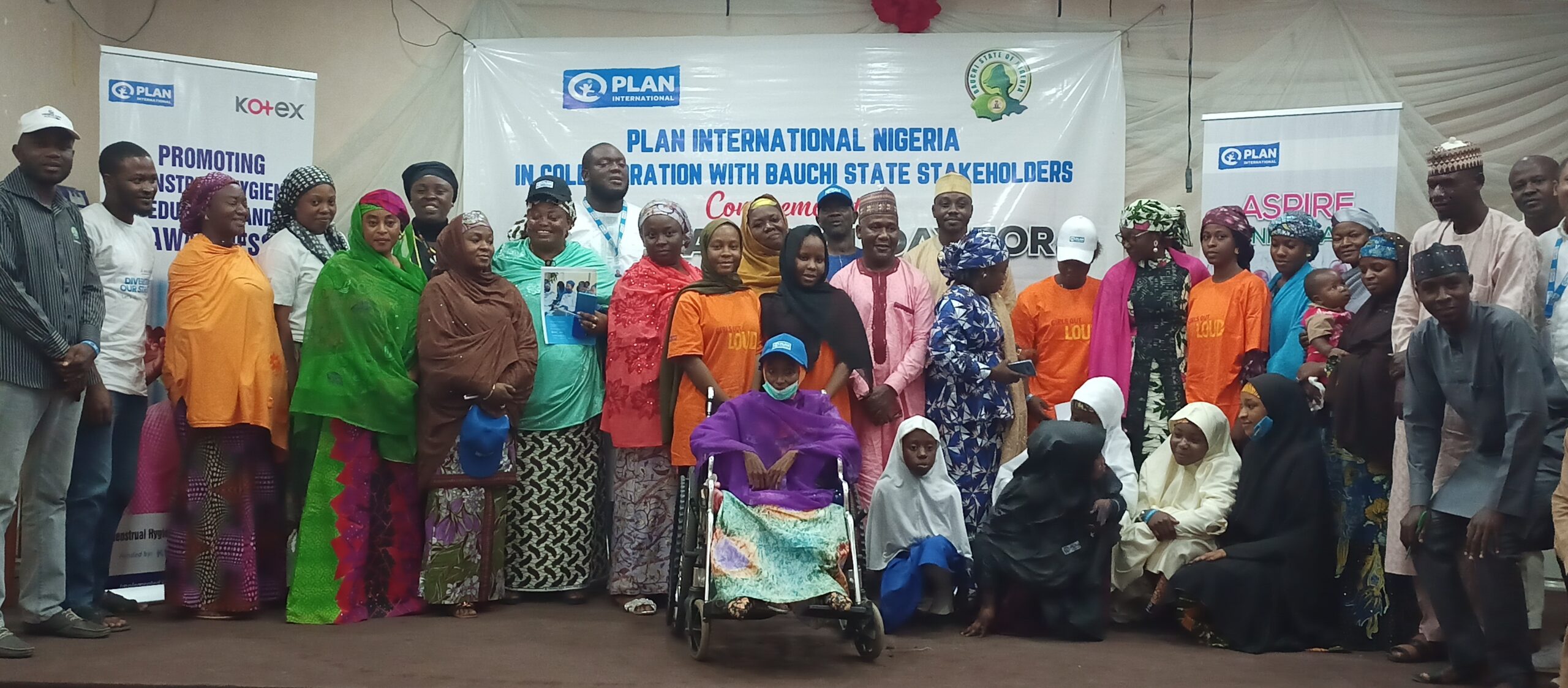
It has been disclosed that in 2021, the UNFPA-UNICEF Global Programme to End Child Marriage and its partners provided over 2.6 million adolescent girls with life skills and comprehensive sexuality education, which empowers them to make choices about their bodies and futures.
The disclosure was made by UNFPA Executive Director, Dr. Natalia Kanem on the International Day of the Girl 2022 saying that, “We engaged nearly 16 million people in dialogues on child marriage, the rights of adolescent girls and the importance of gender equality. We worked to improve access to school and to adolescent-friendly health services. And yet, we are nowhere near finished”.
Represented by Bauchi State Programme Officer and Gender/Reproductive Health Specialist of UNFPA, Deborah Tamara, she pointed out that there are more than 600 million adolescent girls globally who have hopes to fulfill and dreams to realize.
According to her, “Every single one of us can commit to being their allies and champions. Instead of sidelining a girl, shine a spotlight on her. Instead of silencing her, hand her a microphone. Hear what she has to say. Give her the chance to chart her destiny and be a force for positive change”.
Natalia Kanem said that, “Today, as we commemorate the 10th anniversary of the International Day of the Girl, how many ten-year-old girls are able to look forward to realizing their full potential? A girl’s life should begin the way every life should: as an open book in which she writes her own story”.
“If, as she moves through life chapter by chapter, she is nurtured, encouraged and supported, she has a greater chance of recognizing that she deserves opportunities and options, of considering herself worthy and valued, and of participating in and contributing her gifts to the world”, she added.
The UNFPA Executive Director further said that, “For it is these girls who grow up to become women making laws and making noise, breaking records and breaking barriers, and inspiring movements and igniting change. From protesting to leading countries, they tell the next generation of girls: Take up space. This is your world too”.
She lamented saying, “Yet, from the moment a girl takes her first breath, she is already at a disadvantage simply because she was born a girl. Globally, almost twice as many girls aged 15-19 are not in employment, education or training compared to boys the same age” .
According to her, “We know that the COVID-19 pandemic, conflict and climate change are increasing the threats girls face. Before the pandemic, 100 million girls were projected to be at risk of child marriage over the next 10 years, pandemic-related poverty and education disruptions have added 10 million more girls to that figure. For girls in humanitarian settings, these risks are even greater”.
Natalia Kanem stressed that, “We must act with urgency and commitment to end child marriage. And we must tackle its root cause gender inequality. If all girls completed secondary school, child marriage would fall by 66 per cent”.
She concluded that, “By investing in quality education, ensuring decent work for women, and dismantling harmful gender norms and stereotypes, we can give girls the future they deserve. We are making headway and there are some positive stories to tell” .
