
Marwa: Drug war has no end date, NDLEA must stay relentless, honours 274 officers, 18 commands, 19 NGOs, media organisations for anti-drug fight

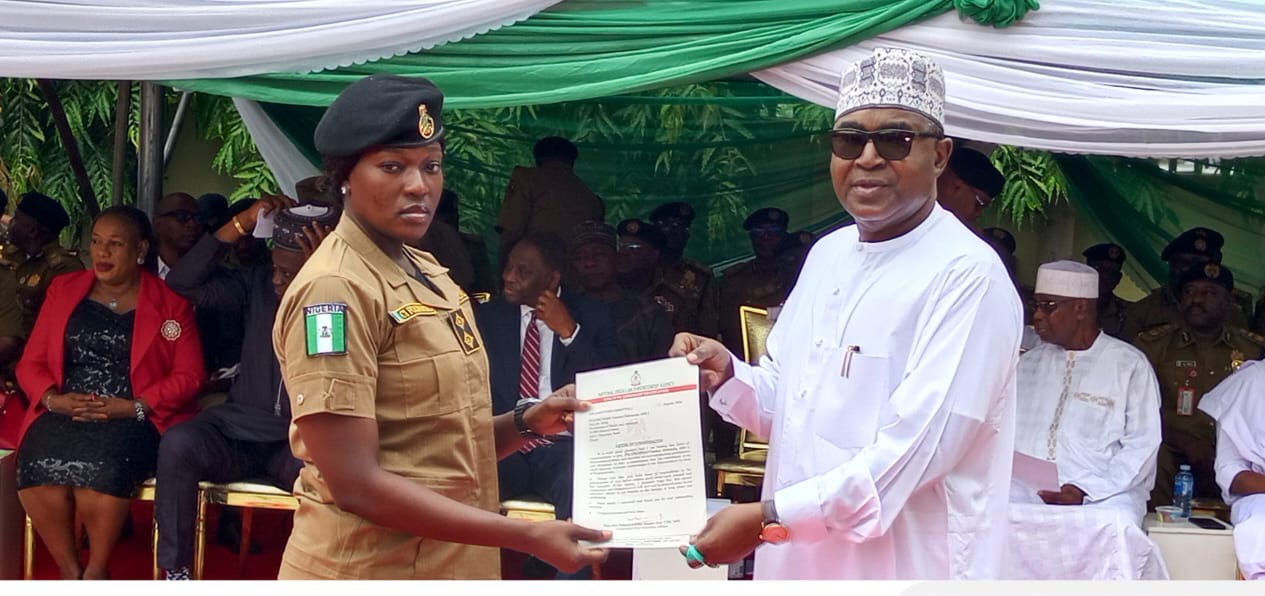
Marwa made the declaration on Thursday in Abuja at the 12th Chairman/Chief Executive Officer’s Commendations and Awards ceremony of the NDLEA, where the agency recognised 274 personnel, 18 commands and 19 civil society and media organisations for outstanding contributions to the fight against drug trafficking and substance abuse.
In one of the strongest assessments of the challenge yet, Marwa said the drug war must be viewed as a generational battle rather than a conventional security operation with a foreseeable end.
He said: “The war against illicit drugs is not a campaign with an end date. It is a generational responsibility.”
He warned that every major victory against traffickers could trigger another attempt to rebuild criminal networks, making resilience and continuous intelligence gathering critical to the NDLEA’s mission.
“For every cartel we dismantle, intelligence tells us another will attempt to rise. For every corridor we shut down, traffickers will search for another route,” he said.
The NDLEA boss’s warning comes against the backdrop of increasingly sophisticated drug trafficking operations, including cross-border networks and clandestine laboratories used to produce dangerous substances.
Marwa cited the dismantling of the Amadi Simon drug cartel, the takedown of two Nigerian-Mexican methamphetamine cartels operating from forests in Ogun and Oyo states, and the disruption of a tramadol trafficking network exploiting the Togo-Benin Republic-Nigeria corridor as evidence of the agency’s growing operational reach.
He said the operations were the product of painstaking intelligence gathering, international cooperation and the willingness of NDLEA personnel to pursue traffickers into areas where they believed they were beyond the reach of law enforcement.
“These were not simple raids. They were the product of patient intelligence-gathering, cross-border cooperation, and officers willing to go where the criminals believed no one would follow,” Marwa said.
But the NDLEA chairman cautioned that arrests and seizures alone could not defeat the drug problem, insisting that the battle must also be fought at the community level through prevention, rehabilitation and sustained public education.
He credited civil society organisations and the media with helping the agency reach vulnerable communities and Nigerians who may never come into direct contact with law enforcement personnel.
“The fight against drug trafficking and substance abuse was never going to be won by enforcement alone,” he said.
According to him, NGOs are helping young people at risk of addiction, while journalists have continued to expose trafficking networks and tell stories about rehabilitation, recovery and families affected by substance abuse.
“Our partners in civil society and the media have been the multiplier effect on everything this Agency does. You have taken our message into homes, schools, and communities that our uniforms alone could never reach,” he said.
The awards ceremony therefore served a dual purpose: recognising exceptional performance within the NDLEA and strengthening the wider coalition against substance abuse.
Marwa said the 19 NGOs and media organisations honoured at the event should not regard the recognition as an endpoint, stressing that their contribution must intensify as the drug challenge evolves.
He similarly challenged NDLEA personnel to regard the 274 award recipients as a standard to emulate rather than a ceiling on professional achievement.
The NDLEA chief acknowledged that many other individuals and organisations across the country deserved recognition, describing the latest awards as “the beginning of a tradition, not a closed chapter.”
He assured that future editions would continue to identify and honour Nigerians and organisations making significant contributions to the anti-drug campaign.
Marwa congratulated the recipients and commended their families for the sacrifices associated with their work, while thanking Nigerians for their continued confidence in the agency.
He urged officers to remain focused and resilient, stressing that the ultimate objective of the NDLEA’s campaign is not merely to seize drugs or arrest traffickers, but to prevent the illicit drug economy from destroying the future of Nigeria’s young population.
The message from the NDLEA leadership was unmistakable: Nigeria may win battles against individual cartels and trafficking corridors, but the wider drug war will require an unrelenting, generation-to-generation campaign.
