
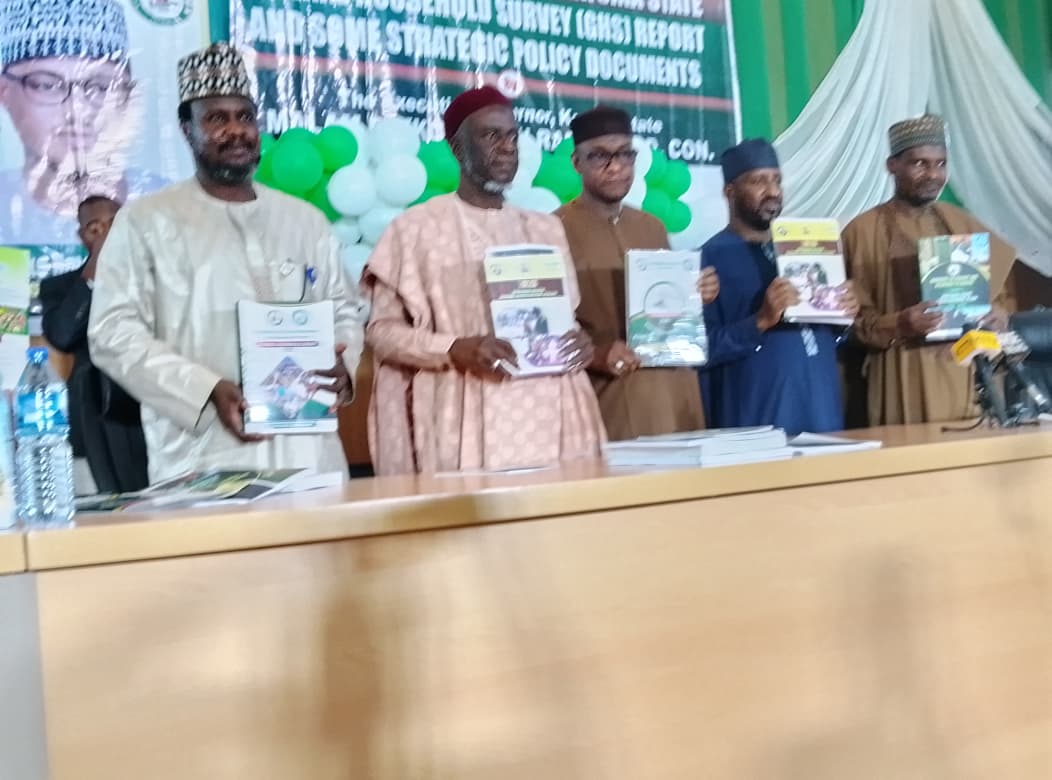
Gov. Radda launches five strategic development documents, general household survey covering 34 LGs

Katsina State Governor, Malam Dikko Umaru Radda, has launched five strategic policy and planning documents aimed at strengthening evidence-based governance, accelerating inclusive development, reducing poverty and improving the welfare of citizens across the State.
The documents, unveiled on Thursday at the Banquet Hall, Government House, Katsina, are the Katsina State Development Plan, State Social Protection Policy, Multi-Sectoral Strategic Plan of Action for Food and Nutrition, State Nutrition Policy and Katsina State General Household Survey (GHS) Report, alongside the State Statistical Yearbook.
Represented by the Deputy Governor, Malam Faruk Lawal Jobe, Governor Radda described the launch as a major step towards using credible evidence to shape government policies, programmes and resource allocation.
He said the General Household Survey, covering all 34 Local Government Areas, provides comprehensive information on household welfare, poverty, employment, livelihoods, agriculture, education, health, housing, water, sanitation, social protection and access to basic services.
Government will no longer rely solely on assumptions. Development interventions will increasingly be targeted using credible data, resources will be allocated where they are needed most, and performance will be measured objectively,” Governor Radda said.
Governor Radda said the Katsina State Development Plan would serve as the State’s strategic blueprint for economic transformation and improved quality of life.
He said it prioritises agriculture, education, healthcare, infrastructure, industrialisation, environmental sustainability, digital innovation, security, good governance and youth empowerment.
According to him, the plan is aligned with the administration’s Building Your Future (BYF) policy framework, the Katsina State Economic Development Strategy, national development frameworks, African Union Agenda 2063 and the Sustainable Development Goals (SDGs).
The Governor said the administration had already recorded significant investments in human capital and social development, particularly in healthcare and education.
He noted that healthcare facilities had been renovated and upgraded, medical equipment provided and qualified health professionals recruited to improve access to quality and affordable healthcare.
In education, he said the administration had constructed Smart Schools, renovated and expanded existing facilities, recruited thousands of teachers and introduced reforms aimed at improving learning outcomes.
On security, Governor Radda said the situation had improved considerably across much of the State through the combined efforts of the State Government, security agencies, Armed Forces, traditional institutions and local communities.
He said the improvement had enabled many farmers to return to their farms, while agricultural production and economic activities had resumed in several previously affected communities.
“While we celebrate these gains, we remain mindful that security challenges persist in a few Local Government Areas where isolated attacks still occur,” he said.
Governor Radda assured citizens that his administration would continue working with security agencies, community leaders and other stakeholders to eliminate remaining threats and ensure that citizens can live, work and farm safely and with dignity.
The Governor said the State Social Protection Policy would provide an integrated framework for supporting poor households and vulnerable groups, including women, children, older persons, persons with disabilities and internally displaced persons.
He said the policy would coordinate social assistance, livelihood support, human capital development, labour market interventions and shock-responsive social protection programmes.
Governor Radda highlighted the State’s hybrid approach, which combines traditional Islamic welfare mechanisms, particularly Zakat and Waqf, with modern evidence-based social protection systems.
He disclosed that more than 50,555 beneficiaries had received various forms of support through the State’s Zakat programme, with more than ₦1.9 billion mobilised to assist vulnerable households, strengthen livelihoods and promote social inclusion.
Our vision is to establish a comprehensive and shock-responsive social protection system that is well-coordinated, data-driven and inclusive,” he said.
Governor Radda described malnutrition as a major threat to human capital development, stressing that nutrition was both a health priority and an economic investment.
He said the State Nutrition Policy and the Multi-Sectoral Strategic Plan of Action for Food and Nutrition would strengthen coordination across agriculture, health, education, water, sanitation and hygiene, food systems and social protection.
He disclosed that the State Government had invested more than ₦1.7 billion in targeted nutrition interventions to prevent malnutrition, improve maternal and child nutrition and strengthen essential nutrition services.
He added that the State had provided a ₦500 million counterpart fund to attract additional support from development partners and accelerate high-impact nutrition programmes.
According to him, the interventions were contributing to improved infant and young-child feeding practices, expanded micronutrient supplementation, better management of acute malnutrition and increased community awareness of healthy nutrition.
He said its findings would enable government to design programmes around the actual needs of communities and improve the targeting and effectiveness of public resources.
He also pledged to strengthen the Katsina State Bureau of Statistics to produce timely, reliable and internationally comparable statistics for policymaking and development planning.
Governor Radda stressed that the launch marked the beginning, rather than the end, of the development process.
He directed Ministries, Departments and Agencies to align their plans, budgets and programmes with the newly launched frameworks, while urging Local Government Councils to use the household survey findings to improve grassroots service delivery.
He also called on development partners to sustain technical cooperation, capacity development and strategic investments, and encouraged the private sector to explore opportunities in agriculture, manufacturing, commerce, infrastructure, renewable energy and digital innovation.
Universities, researchers and civil society organisations, he added, should utilise the survey data to generate knowledge and evidence capable of informing public policy.
Governor Radda expressed appreciation to UNICEF for its technical and financial support towards strengthening planning systems, statistical capacity and evidence generation in Katsina State.
He also acknowledged the contributions of United Nations agencies, development partners, donor organisations, Federal Government institutions, academia, civil society organisations and the private sector.
The Governor commended the Ministry of Budget and Economic Planning, Katsina State Bureau of Statistics, Steering Committees, Technical Working Groups, consultants, supervisors, enumerators and data analysts for their contributions to the preparation of the documents.
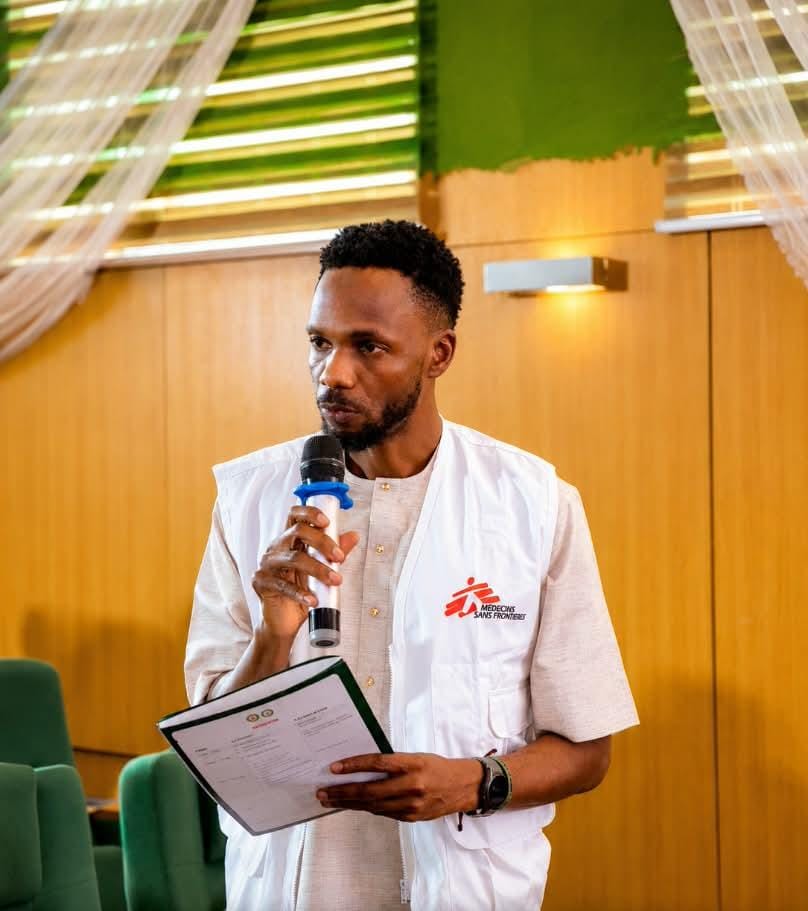
Earlier, the Commissioner for Budget and Economic Planning, Malam Malik Anas, said the General Household Survey would strengthen evidence-based planning, budgeting and service delivery across the State.
Anas said the survey, which covered all 34 LGAs, provides critical information on poverty, household welfare, education, health, employment, livelihoods and access to basic services.
He said the newly launched development and social protection frameworks would provide strategic direction for economic transformation, protection of vulnerable citizens and improved nutrition.
The Commissioner called on MDAs, Local Governments, development partners and other stakeholders to align their budgets and programmes with the new frameworks.
He stressed the need for Katsina to move “from data to policy, policy to implementation and implementation to measurable results.”
He commended UNICEF, the Katsina State Bureau of Statistics and other stakeholders for their support.
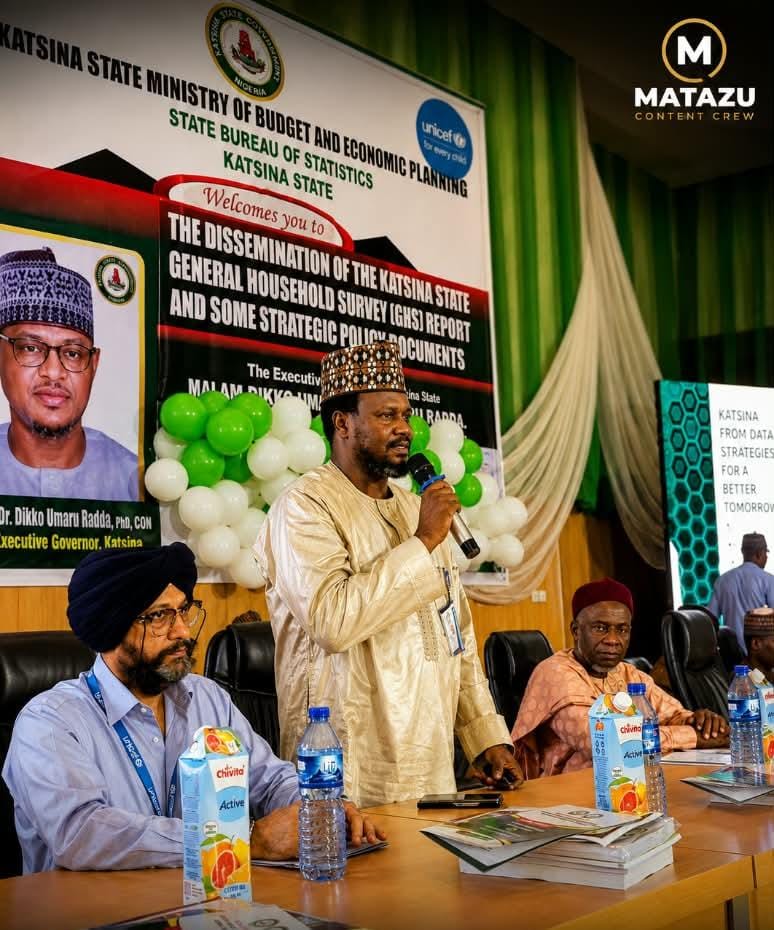
The Statistician-General and Chief Executive Officer of the Katsina State Bureau of Statistics, Prof. Saifullahi Sani Ibrahim, said the findings of the General Household Survey point to encouraging improvements in a number of key development indicators across the State, while also revealing areas requiring sustained policy attention and targeted intervention. He noted that the survey provides evidence of progress in household welfare, access to education and healthcare, economic activities and livelihoods, social protection, access to basic services, water and sanitation, as well as other dimensions of human development. According to him, the availability of comparable and disaggregated data across the 34 Local Government Areas makes it possible to identify areas where significant progress has been recorded, understand persistent disparities and better target public investments. Prof. Saifullahi stressed that the findings demonstrate the value of sustained government investment in human capital and social development, while providing a reliable baseline for measuring future progress. He assured that the Katsina State Bureau of Statistics would continue to provide timely, credible and policy-relevant statistics to support evidence-based planning, resource allocation, monitoring and evaluation, and to ensure that development gains are translated into measurable improvements in the lives of citizens.
The Chief of the UNICEF Kano Field Office, Shafeeq Ur-Rehman, represented by the Officer-in-Charge, Dr. Karanveer Singh, commended the Katsina State Government for strengthening evidence-based planning, accountability and inclusive development.
UNICEF said the General Household Survey provides timely evidence on the living conditions, needs and priorities of households across Katsina State.
UNICEF reaffirmed its commitment to supporting Katsina in data systems, policy implementation, nutrition, health, education, social protection and WASH, while urging stakeholders to translate the newly launched documents into practical actions, effective budgets and measurable results.
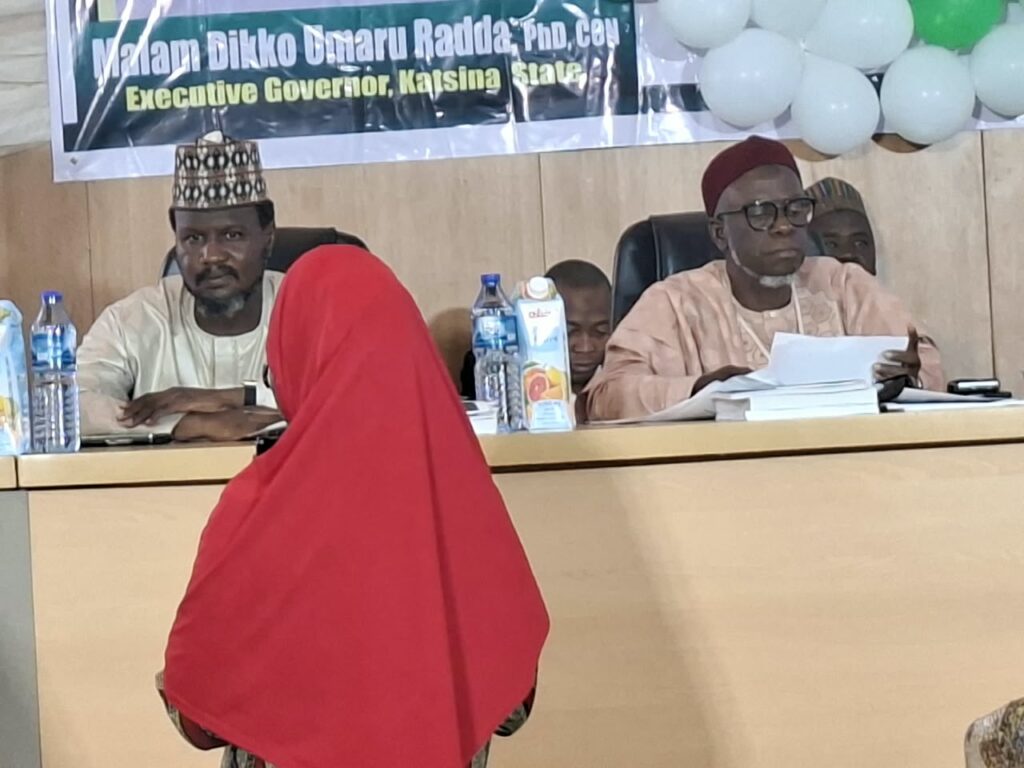
The event was attended by the Speaker and members of the Katsina State House of Assembly, the Chief Judge, the Secretary to the State Government, members of the State Executive Council, the Statistician-General and Chief Executive Officer of the Katsina State Bureau of Statistics, and Heads of Ministries, Departments and Agencies.
Also present were representatives of the Federal Government, UNICEF and other development partners, as well as traditional and religious leaders, members of the diplomatic community, captains of industry and civil society organisations.
