

By Joseph Adahnu, Yola
Climate change pandemic has increasingly threaten the health, nutrition and education of children in Adamawa State over rainfall patterns, temperatures raising and weather continue to undermine livelihoods and food.
Speeches during a climate change and WASH engagement in the state emphasized that children, particularly those from vulnerable and farming dependent households, will be among the worst affected by the growing effects of climate change.
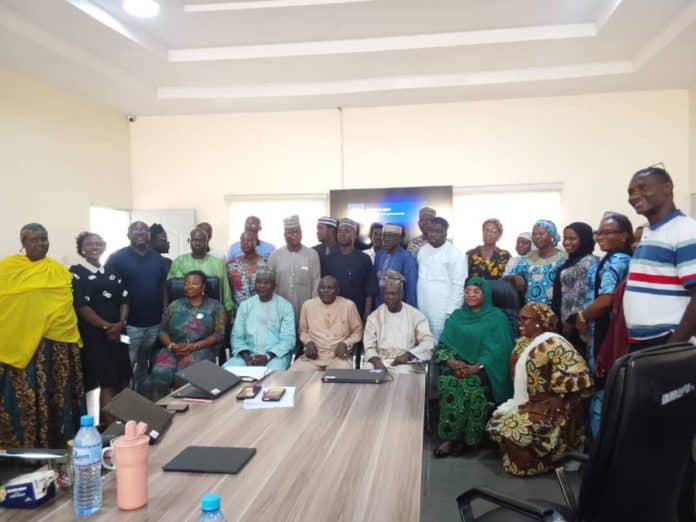
The activity coordinated by the Adamawa State Government in collaboration UNICEF and the ASWA III Project, is funded by the Government of the Netherlands.
In his earlier presentation, the General Manager of RUWASSA, Emmanuel Esly, also commended UNICEF, the Government of the Netherlands and Governor Ahmadu Umaru Fintiri for their support to the WASH sector.
He said RUWASSA is working to ensure that more local government areas achieved Open Defecation Free (ODF) status, while describing the level of support to the sector as unprecedented.
Declaring the training open, the General Manager, Adamawa State RUWASSA, Mr. Emmanuel Esly, commended UNICEF for its continued efforts in building the capacity of journalists and stakeholders. He urged participants to put the knowledge gained into practice by reporting accurately and sensitizing communities on the impact of climate change on children.
The General Manager, Adamawa State Water Board, Engr. Dishion M. Gyathi, while supporting, described the training as timely, stressing the need for quality reporting on the effects of climate change on citizens, food security and human activities.
In a presentation by Prof. Abel Adebayo from Modibbo Adama University (MAU) said climate change was already altering the state’s weather and agricultural patterns, with rising temperatures and increasingly unpredictable rainfall affecting when farmers can plant and harvest their crops. And that studies conducted in Adamawa showed that the commencement of the planting season had shifted significantly over the years—from around late April in the 1990s to as late as June in recent times.
According to him, the shift, coupled with prolonged dry spells and extreme weather events, is placing enormous pressure on farming communities and threatening household food security. Adebayo cited preliminary findings from a study of the 2024 drought in Adamawa, which showed significant declines in the production of major crops.
He said the study found out that groundnut production declined by 31 per cent compared with a normal year, while beans recorded a 46 per cent reduction. Maize and rice production also declined by about three per cent each.
The university Don warned that the consequences of declining agricultural production go far beyond farmers’ incomes, particularly in households where children depend on crops such as beans and groundnuts as important sources of food and protein.
“When nutrition is affected, disease and the health of our children are also in danger,” he stressed, linking the deteriorating agricultural situation to the wider health and welfare of children. There by rainfall patterns had also changed considerably, citing a reported 31.7 per cent decline in annual rainfall and a 31 per cent reduction in the number of rainy days.
In response to the crisis, Aisha Yusuf, head of WASH unit in RIWASSA said climate considerations must now be integrated into water, sanitation and hygiene interventions. Communities are being encouraged to work with WASH structures, volunteers, youth groups, traditional leaders and other stakeholders to strengthen climate action.
Monitoring WASH interventions Aisha said should no longer focus exclusively on access to water and sanitation facilities but must also incorporate climate and gender indicators, Yusuf stressed. UNICEF-supported youth groups, including the YPASS initiative, were already undertaking climate action and awareness activities, she also disclosed.
