

By Usman Abdullahi Koli
Kano has a drug problem. The harder truth is that the drug problem has a Kano problem too: it has found enough social, economic and institutional room to survive. That is why the Kano State Multi-Agency Task Force on Drug Abuse and Illicit Trafficking should not be measured by press statements or the drama of midnight raids. It should be measured by whether, over time, it makes the drug economy harder to run, harder to finance, harder to recruit for, and easier for vulnerable people to escape. That is the real test before Barrister Muhuyi Magaji Rimin Gado and the institution he leads. The Task Force has already shown that it intends to be operational rather than ceremonial. It has identified hotspots, conducted operations, arrested suspects, pursued prosecutions and begun building a wider institutional architecture around the assignment. In a matter this consequential, that early determination deserves support.
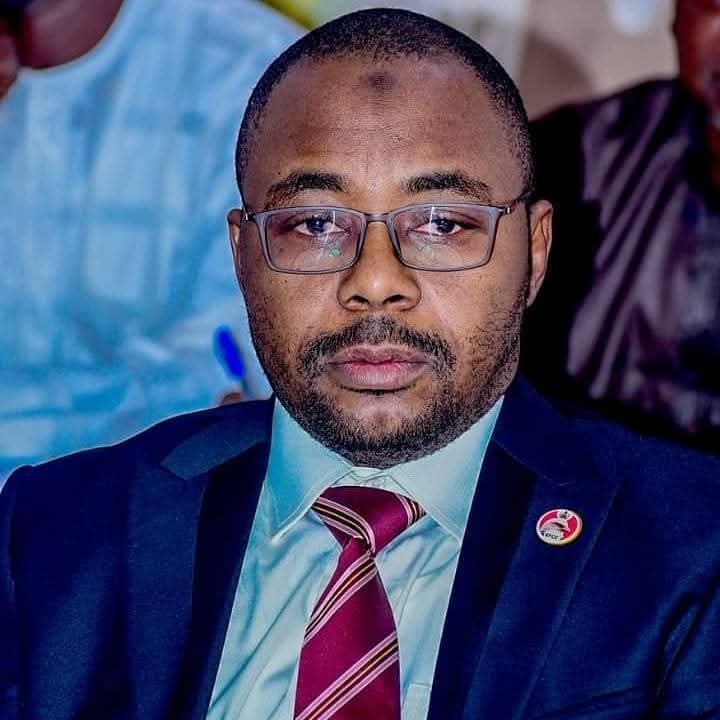
There is a reason Muhuyi’s appointment deserves particular attention. Kano did not choose a conventional bureaucrat to chair an unconventional problem. As former chairman of the state’s Public Complaints and Anti-Corruption Commission, he knows how institutions resist reform, how influence works, and how competing interests can complicate public duty. Drug trafficking presents a different challenge: its beneficiaries are often concealed, its networks are adaptable, and its victims can sometimes be mistaken for its perpetrators. The expectation, then, is not simply that Muhuyi will be firm, but that firmness will be matched by intelligence, restraint and institutional discipline. His decision to begin operations in Rimin Gado, his own local government, was significant. It sent a clear message that the campaign should not be selective. In public administration, credibility begins when the rules are seen to apply close to home.
The Task Force has also recognised that a problem this deep cannot be solved by one agency working inside its own administrative boundary. Its multi-agency composition brings together security, law enforcement, regulatory, traditional and community interests, while the nine specialised committees covering intelligence, advocacy, finance, compliance, monitoring and coordination provide a framework for sustained intervention. The important question now is whether that architecture will produce a different quality of governance. Nigeria has never suffered from a shortage of committees. It has suffered from committees whose reports rarely become intelligence, whose intelligence rarely becomes coordinated action, and whose actions are rarely measured for long-term effect. Kano has an opportunity to avoid that familiar cycle by giving every component of the Task Force clear responsibilities, reliable information flows and measurable targets.
The early results provide a useful foundation, but they should also raise the ambition of the campaign. The Task Force has moved into identified hotspots, extended operations beyond the immediate urban centre, and reported arrests and disruption of illicit activities. Recent convictions, including the sentencing of two men involved in supplying intoxicating substances to vulnerable children, are particularly significant because they show the importance of taking cases beyond arrest and into the justice system. Yet the larger objective should be to weaken the environment that allows such offences to reproduce themselves. That means understanding how networks recruit, identifying those who finance and organise trafficking, and ensuring that intervention produces lasting change in affected communities. The strongest operation is not necessarily the one that produces the biggest headline. It is the one after which the problem becomes measurably harder to reproduce.
This is where intelligence and financial investigation become indispensable. Every illicit drug market has people who supply, finance, transport, distribute and profit from it. The person encountered at street level is rarely the whole story. If enforcement consistently stops there, the business can replenish itself. Stronger collaboration with financial and investigative institutions can help expose the economic structures sustaining trafficking and identify those who profit without ever appearing at the point of sale. Following the money should therefore be treated as seriously as following the drugs. It can reveal relationships, expose hidden beneficiaries and make the criminal enterprise itself more difficult to sustain. Kano should aim to move from reacting to visible offences to understanding and disrupting the system that produces them.
But the deepest test may lie beyond enforcement altogether. Kano cannot arrest its way out of addiction. It can only reduce the problem sustainably if people who have become dependent on substances are given a credible path back to productive life. This makes rehabilitation central, not supplementary, to the Task Force’s mission. Medical treatment, psychological support, counselling, family involvement, education and vocational training must connect into a continuum that begins with identification and continues well after treatment. A person leaving a rehabilitation centre without social support, economic opportunity or a stable environment may return to the same pressures that contributed to the addiction in the first place. Recovery therefore cannot end at discharge. It has to include reintegration, follow-up and a realistic opportunity to rebuild a life beyond dependency.
That distinction is particularly important for young people. A teenager drawn into substance abuse may be dealing with peer pressure, family instability, unemployment, trauma, poor supervision, social exclusion or deliberate exploitation by people who understand how vulnerable young people can be. None of this removes personal responsibility, but it demands a more intelligent public response. The state must be uncompromising toward traffickers who manufacture dependency and deliberately target children, while creating realistic routes for users and recovering addicts to return to school, employment, family life and society. Rehabilitation should not be confused with leniency. It is a form of prevention. Every person who completes treatment, avoids relapse and becomes economically productive is one less potential customer for a trafficker and one less young life available for recruitment into a criminal network.
That is why prevention and community participation should receive the same seriousness as intervention. Parents, teachers, traditional rulers, religious leaders, health workers, transport operators and community organisations can help identify warning signs before substance abuse becomes entrenched. Public enlightenment should therefore be practical rather than ceremonial. Families should know where to seek help. Young people should know how to access support. Communities should have safe channels for reporting trafficking without exposing themselves to retaliation. The reported decision by residents of Bajallabe to reject a substantial bribe and expose an alleged trafficking network illustrates the value of citizen ownership. Government cannot place an officer on every street, but it can create the confidence and systems that encourage citizens to become partners in protecting their communities.
The regional dimension should not be overlooked. Drug trafficking does not respect local government or state boundaries, while the relationship between substance abuse, gang activity and wider insecurity makes the issue larger than public health or street crime. The North-West Development Commission’s willingness to collaborate with Kano is therefore important. Kano’s population, commercial importance and strategic position give it the opportunity to develop an approach that other states can adapt. Regional intelligence sharing, coordinated responses to trafficking routes and the exchange of effective rehabilitation practices could turn a state intervention into a wider public policy model. The objective should not simply be for Kano to perform better than other states. It should be for Kano to demonstrate what a serious, integrated response to a complex social problem can look like.
The Governor’s political backing and provision of operational resources are equally important because no task force confronting organised illicit activity can operate on goodwill alone. Mobility, communications, intelligence capacity, training, rehabilitation funding and institutional continuity will determine whether the present momentum survives beyond the first phase of public attention. The Task Force should remain protected from political interference while being accountable to the public and the law. Its eventual scorecard should extend beyond arrests to successful prosecutions, disrupted networks, treatment completion, relapse rates, young people returned to school or employment, reduced activity in known hotspots, and communities becoming less vulnerable to drug-related violence. Muhuyi Magaji now has an opportunity to demonstrate that a Nigerian state can confront a difficult social problem with firmness without recklessness, compassion without complacency and coordination without bureaucracy. Kano’s real success will not be measured by the next arrest figure. It will be measured by whether fewer young people enter the drug economy, whether those already trapped can genuinely recover, whether families have stronger avenues for help, and whether communities eventually find that the drug market has become too difficult to sustain. That is the test Kano must pass.
Koli can be reached at
mernoukoli@gmail.com.
