
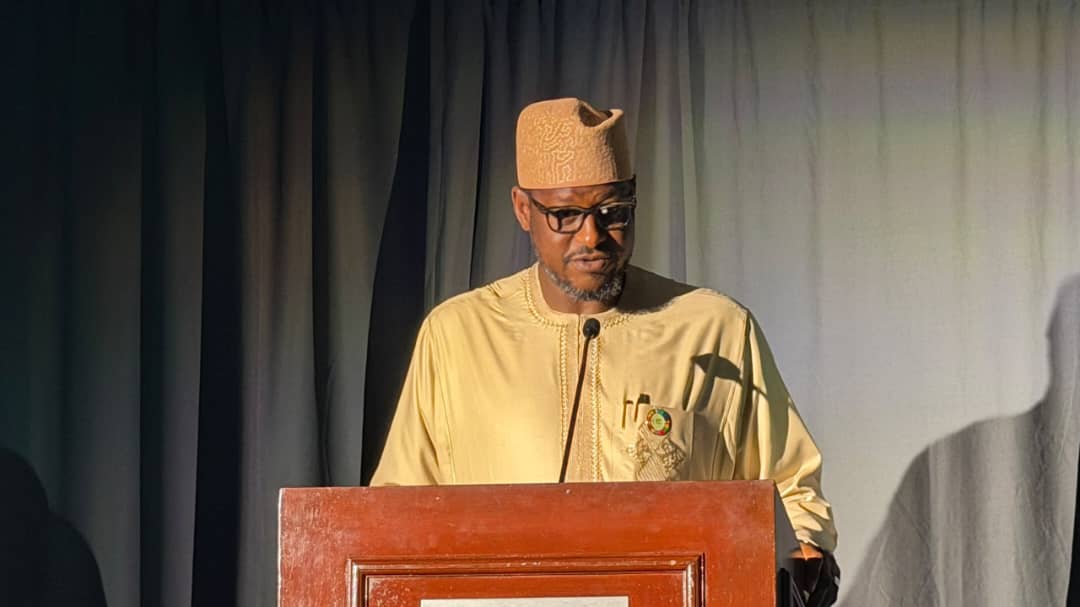
Governor Radda rallies northwest governors, partners on regional security, economic growth in New York

Katsina State Governor and Chairman of the Northwest Governors’ Forum, Malam Dikko Umaru Radda, has called for stronger cooperation among the seven Northwest states and their development partners to tackle insecurity and open up the region’s economic potential
Governor Radda made the call in New York, United States, at the High-Level Side Event on the Northwest Peace, Security and Development Framework, where the region presented its common plan for peace, security and development to international partners.
The event was attended by Zamfara State Governor, Dauda Lawal; Kebbi State Governor, Nasir Idris; and Sokoto State Deputy Governor, Idris Mohammed Gobir, who represented Governor Ahmad Aliyu. Also in attendance were representatives of the Nigerian government, the United Nations, development and financial institutions, civil society organisations and other partners.
Speaking on behalf of the governors, Governor Radda said the Framework represents the collective decision of the seven governors to work together on challenges that cut across state boundaries.
“This Framework does not belong to one Governor. It does not belong to the Chairman of the Forum. And it does not belong to the Secretariat. It belongs to the Northwest,” Governor Radda said.
He explained that while the seven states have different histories, strengths and priorities, their people, markets and economies are closely connected. Their security challenges also cross state boundaries, making cooperation necessary if lasting solutions are to be achieved.
Using the Hausa saying, “Tsintsiya madaurinki ɗaya,” Governor Radda said a broom derives its strength from being bound together. He explained that the same principle applies to the Northwest, where each state can retain its identity while working with others on common problems.
Governor Radda said security remains one of the most pressing challenges facing the region, but stressed that military and security operations alone cannot guarantee lasting peace. He said unemployment, poverty, displacement and limited economic opportunities must also be addressed as part of efforts to make communities safer.
“Security must be accompanied by opportunity. Stabilisation must be accompanied by development. And public investment must create space for responsible private capital,” he stated.
According to the Governor, the regional plan is to build a Northwest where farmers can produce more and reach bigger markets, young people can acquire useful skills and build businesses, women can participate fully in economic and public life, and communities affected by insecurity can rebuild with dignity.
He said the region’s population, agricultural strength, natural resources and productive capacity offer considerable opportunities, but these advantages must be supported by sound policies, stronger institutions, infrastructure and investment.
Governor Radda therefore urged development partners to work with the Northwest at a regional level and called on financial institutions to support funding arrangements that can attract investment into underserved communities.
He also appealed to private investors to take a fresh look at the region beyond the security challenges often associated with it.
“To the private sector, we say: look again at the Northwest. Look beyond the headlines. Look at the people, the markets, the productive sectors and the opportunities that can be created when governments coordinate,” he said.
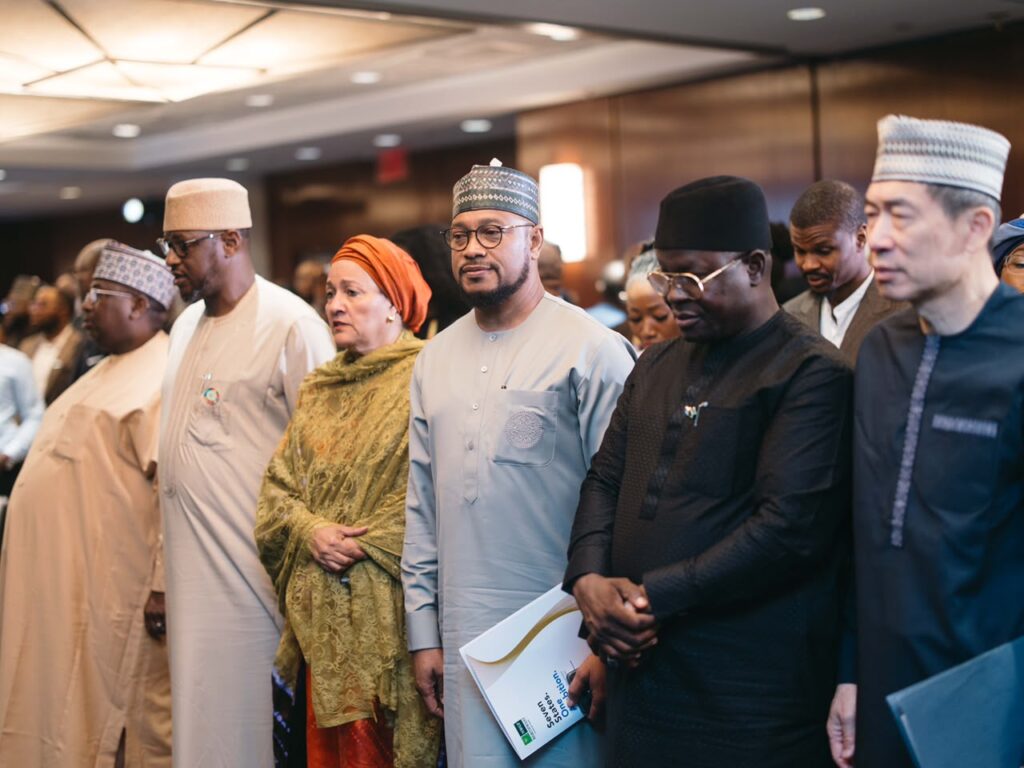
While seeking international partnership, Governor Radda made it clear that the governors themselves must take responsibility for delivering the Framework. He said they must strengthen institutions, improve coordination, ensure accountability and show through their actions that regional cooperation can produce results.
He added that the Framework would not be judged by the number of meetings held or documents produced, but by whether communities become safer, livelihoods improve, children have better opportunities, women and young people are included and displaced families are able to rebuild their lives.
“We do not claim to have all the answers. But we are willing to do the work. We are willing to learn. We are willing to reform. And we are willing to partner,” Governor Radda said.
He invited development institutions, investors and other partners to work with the seven states to build safer communities, stronger institutions and more resilient economies, while creating opportunities for young people across the region.
Earlier, the Director-General of the Northwest Governors’ Forum, Maryam Musa Yahaya, traced the development of the Framework to the decision of the seven states to stop treating their common challenges as separate problems.
Yahaya said insecurity, poverty, displacement and other difficulties facing the region are real, but should not be allowed to define the Northwest or overshadow its history of enterprise, agriculture, trade and resilience.
“We refuse to allow a difficult chapter to become the title of our entire story. Our story did not begin with fragility, and it will not end there,” she said.
She recalled that the process took shape in June 2024 when the governors met in Katsina State for the inaugural Northwest Peace and Security Summit. Although the discussion started with security, she said it soon became clear that insecurity could not be separated from livelihoods, jobs, displacement, investment and public confidence.
That understanding, according to Yahaya, changed the conversation from what individual states could do alone to what the seven states could achieve together, leading to the development of the Northwest Peace, Security and Development Framework.
She explained that throughout 2025, the Forum, with support from UNDP and other partners, consulted governments, communities, civil society groups, traditional institutions, women and young people to ensure that the Framework reflected the experiences and priorities of people across the region.
By March 2026, she said, all seven governors had adopted the Framework, providing the political backing needed to move from planning to implementation.
“We did not develop this Framework because we were coming to the General Assembly. We came to the General Assembly because we had developed it. We had done the work at home, we had agreed on a direction, and now the conversation must move from ambition to implementation,” Yahaya said.
The Director-General also acknowledged the role of United Nations Deputy Secretary-General, Amina Mohammed, in supporting the idea of stronger regional cooperation and the development of the Northwest Governors’ Forum and its Secretariat.
Yahaya said the next phase must put communities at the centre of implementation, particularly women, young people, farmers, entrepreneurs and families displaced by insecurity. She stressed that the Northwest was not in New York asking outsiders to solve its problems, but seeking partners willing to work with a region that has accepted responsibility for its future.
“Our message today is not: come and rescue us. Nor is it: come and solve our problems. Our invitation is much simpler: come and build with us,” she said.
In her remarks, United Nations Deputy Secretary-General Amina Mohammed commended the Northwest governors for speaking with one voice and putting forward a common plan for peace, security and sustainable development.
Mohammed said the importance of stability in the Northwest goes beyond the seven states, noting that peace in the region has wider implications for Nigeria, West Africa and the Sahel.
She also highlighted the Northwest’s importance to Nigeria’s food production. Citing the country’s 2022/2023 agricultural survey, she said the seven states accounted for around one-third of the maize and close to two-fifths of the rice reported during the main farming season.
According to her, the region’s livestock, mineral resources, trade routes and large youthful population provide a strong base for investment, particularly when supported by roads, electricity, skills and access to markets.
Mohammed, however, said lasting stability requires more than security operations. She said people also need justice they can trust, functioning schools and health facilities, stronger institutions, climate-resilient agriculture and jobs.
“Every naira and every dollar invested in the Northwest is an investment in peace, and should be designed that way from the start,” she said.
The UN Deputy Secretary-General commended the governors for committing their own resources to the regional plan, saying the decision demonstrates ownership and provides a basis for partners to contribute.
She called for better coordination of funding, with state budgets providing initial capital, development assistance supporting institutions and project preparation, international financial institutions providing long-term financing, and businesses bringing technology, markets and investment.
Mohammed said UNDP, through its Beyond Crisis Action Agenda, is developing a proposal for a Northwest-led Stabilisation-to-Transformation Programme and Financing Platform to bring together recovery, jobs, stronger institutions, development financing and responsible investment.
She also drew attention to the more than 700,000 people displaced from their homes in the Northwest, saying regional funding must eventually translate into practical improvements within affected communities.
To achieve this, Mohammed urged the governors and their partners to consider a community resilience and social action arrangement through which communities could identify their priorities and receive support for projects such as feeder roads, classrooms, markets and water facilities. She stressed that women and young people must have a strong voice in deciding those priorities.
She called on the governors to identify an initial list of projects that can be delivered, while urging development and investment partners to support project preparation, share risks and provide financing that can grow with the programme.
“The Governors have brought one plan for seven states to New York. Now all of us in this room need to help them deliver it,” Mohammed said.
She assured the governors of the organisation’s support, declaring: “The United Nations is with you.”
Governor Radda, in closing, said the seven states were prepared to work, learn, reform and partner with institutions that share the region’s ambition for lasting peace and development.
