

Nigeria’s 2027 general elections are already assuming enormous political and institutional significance. Beyond the contest among political parties and candidates, the election will constitute another major test of the country’s democratic institutions, particularly the ability of the Independent National Electoral Commission (INEC) to conduct elections that Nigerians and the international community can regard as transparent, peaceful and credible.
The leadership of INEC, under its Chairman, Professor Joash O. Amupitan, SAN, has indicated that the Commission is taking technological preparedness seriously. INEC has disclosed plans for a nationwide mock accreditation exercise and an audit of its electoral technology systems as part of preparations for the 2027 polls. The objective is to identify weaknesses before election day rather than discovering them when millions of citizens are already casting their votes.
This approach is significant because technology has become inseparable from Nigeria’s electoral process. From voter accreditation to electronic result management and transmission, technological systems now occupy an important place in the credibility debate. INEC has therefore emphasised system testing, cybersecurity, redundancy and other safeguards as part of preparations for the next general elections.
The Commission has also appealed to political parties, candidates and citizens to recognise that electoral credibility is a collective responsibility. INEC’s preparations cannot by themselves guarantee peaceful elections. Political actors must respect the rules, supporters must reject violence, the media must report responsibly, security agencies must remain professional, and voters must participate peacefully.
The present electoral timetable places the Presidential and National Assembly elections on 16 January 2027, followed by the Governorship and State Houses of Assembly elections on 6 February 2027. These dates followed INEC’s revision of its earlier timetable after the enactment of the Electoral Act 2026.
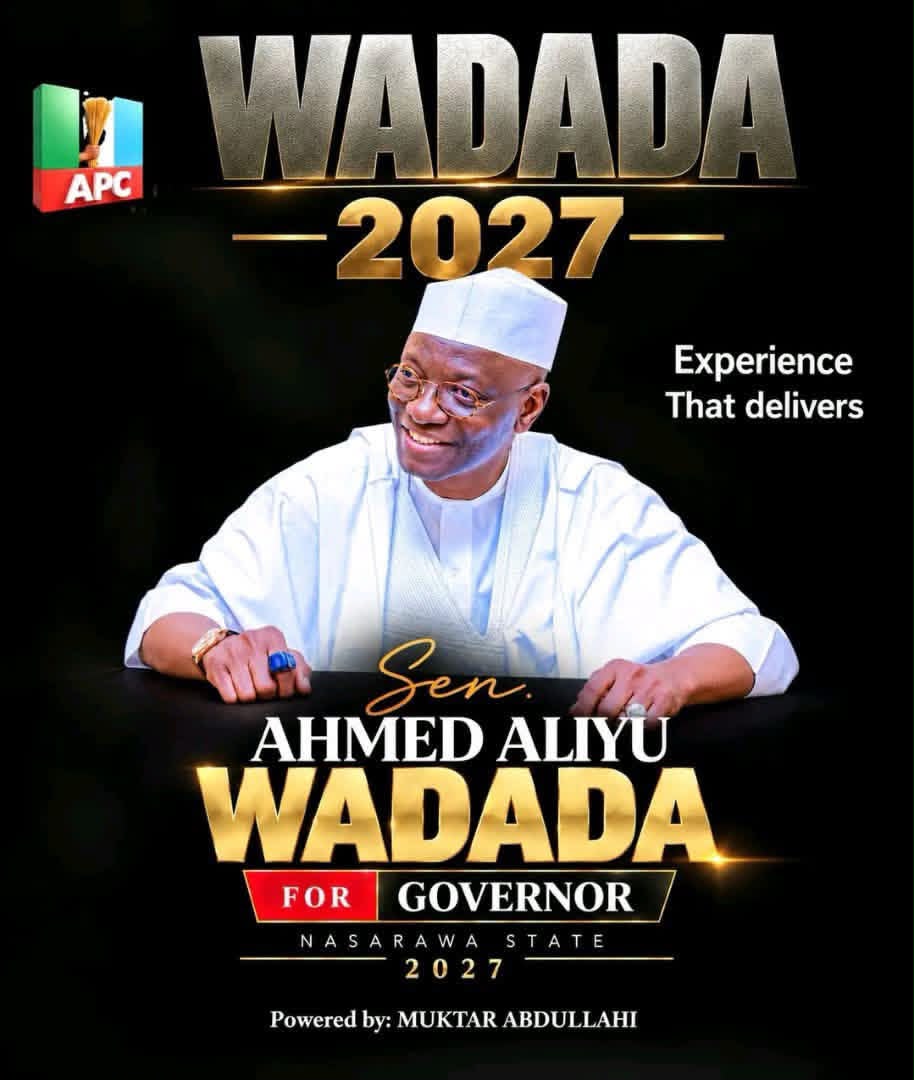
Against this national backdrop, Nasarawa State is witnessing an increasingly active political contest. Among the major figures in the race is Senator Ahmed Wadada Aliyu, the All Progressives Congress (APC) governorship candidate. His emergence followed the APC governorship primary in which he secured the party’s ticket after a statewide contest. Results declared said Senator Wadada polled 195,285 votes across the state’s 147 wards, with Mohammed Adamu recording 39,675 votes.
Wadada’s candidacy has also received the public backing of Governor Abdullahi Sule. The Governor announced his support for Wadada as his preferred successor in April 2026, describing the decision as the product of consultations involving political stakeholders, traditional rulers, youth and women organisations, investors and other groups.
The APC subsequently announced Emmanuel Ombugadu as Wadada’s running mate. The development has added another dimension to the party’s campaign structure as it prepares for the 2027 governorship contest.
Wadada has presented what his campaign describes as the HEARTS Agenda as a developmental blueprint for the state. The agenda places emphasis on areas including health, education, agriculture, rural development and transportation/infrastructure, with the broader objective of linking government policy to human development and economic opportunity.
His supporters have sought to connect the HEARTS Agenda with his legislative experience, pointing to his service in the House of Representatives and subsequently in the Senate. At the same time, as with every candidate in a democratic contest, the electorate will ultimately have the opportunity to examine the proposals, record and claims of all candidates before making its own judgment.
A number of groups and communities have publicly expressed support for Wadada during the developing campaign. Public reports have documented endorsements or expressions of support involving stakeholders from Nasarawa North, Ibo stakeholders, the Tiv Development Association, Agatu groups, Gwandara Development Association, most recently Alaga nation and other community-based organisations.
The breadth of these political engagements illustrates an important feature of the 2027 contest: candidates are increasingly taking their messages beyond party structures to traditional institutions, professional groups, ethnic and community associations, business interests, women and youth organisations. Such engagements can provide voters with opportunities to interrogate candidates about their programmes and their understanding of the state’s challenges.
For Nasarawa, the central question should therefore extend beyond political slogans. Voters will have to examine the manifestos of the competing candidates, their previous records, their understanding of the state’s economic and social challenges, the feasibility of their promises and the mechanisms they propose for accountability.
The same standard should apply to Senator Wadada. His supporters point to his legislative experience, his HEARTS blueprint, his political consultations and the endorsements he has received. Those claims can be tested against his documented public record and against the programmes and records presented by his political opponents.
Ultimately, the 2027 election should be about the sovereign right of citizens to choose their leaders freely. INEC has the responsibility to provide the electoral framework; political parties have the responsibility to present credible programmes and conduct peaceful campaigns; the media has the responsibility to scrutinise claims; and citizens have the responsibility to participate and make informed choices.
The real measure of success will not simply be which candidate wins. It will also be whether Nigerians can look back after the elections and conclude that their votes were respected, that the process was sufficiently transparent, and that political competition was conducted without violence or intimidation.
For INEC, therefore, the 2027 election represents a significant institutional test. For Senator Ahmed Wadada Aliyu and the other candidates seeking the governorship of Nasarawa State, it represents an opportunity to place their records, programmes and leadership propositions before the people.
And for the people of Nasarawa State, the election presents the democratic opportunity to examine every candidate carefully and decide, through the ballot, the direction in which they want their state to move.
The choice of Senator Ahmed Wadada Aliyu is the way to go based on his agenda as presented and if the equation of zoning is to be respected.
Israel JP is the Senior Special Assistant on media to Senator Wadada
