

By Our Reporter, Lafia
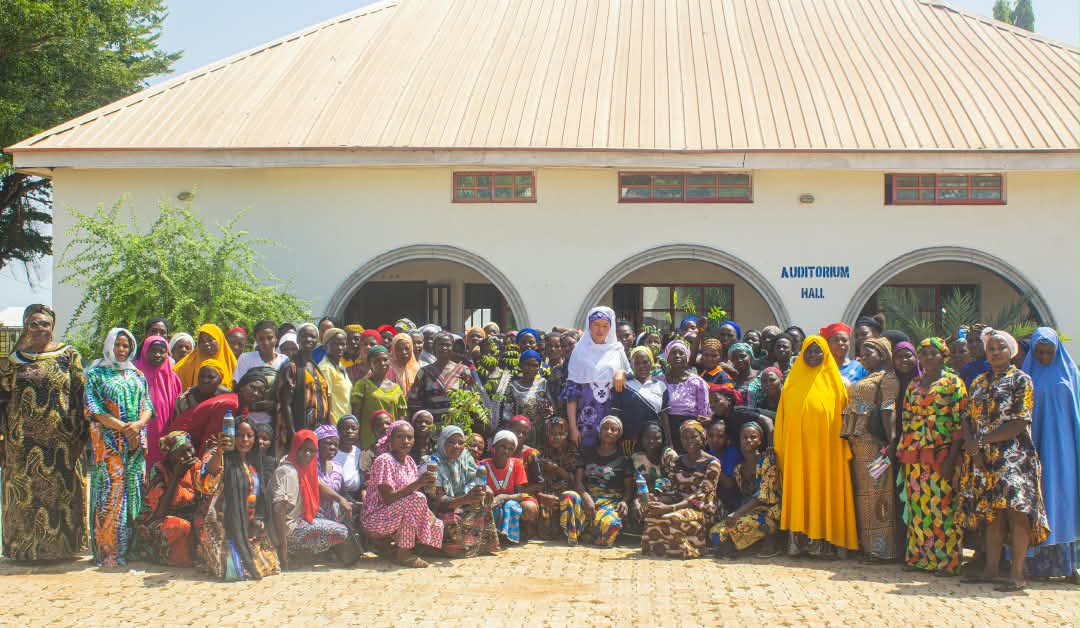
The Women Environmental Programme (WEP), a Non-Governmental Organisation, has trained 100 rural women in Doma Local Government Area of Nasarawa State on organic manure and organic pesticide production to promote climate-smart agriculture in rural communities
The training was held under the project, “Strengthening Climate Resilience and Sustainable Livelihoods for Rural Women in Doma Local Government Area of Nasarawa State.
Speaking during the two-day training, Ms Damaris Uja, Head of Programme for WEP, said the training aimed to equip the women with relevant knowledge to adopt sustainable practices that benefit crops and the environment.
She explained that the training was organised by WEP, under its project titled “Strengthening Climate Resilience and Sustainable Livelihood for Rural Women”, funded by Irish Aid with support from the Government of Ireland.
According to her, the women are taught how to produce compost manure and pesticides from household waste and materials, which they can use on their farmlands instead of buying inorganic fertiliser and pesticides.
She noted that inorganic fertilisers and pesticides destroy soil nutrients, harm crops and reduce the shelf life of vegetables and fruits in the market.
“The women learnt to use garlic, neem leaves, seeds and stems, black soap, ginger and scent leaves as natural repellents. The money they would use for those inorganic fertilisers and pesticides they can channel it into something else.
“When they spray it on their farm, those insects will not attack their crops again. We hope that as they learn, they are going to practise it and stay away from the inorganic pesticides and fertilisers,” Uja said.
Ms Victoria Esa, facilitator at the training and Executive Director, Environment and Climate Change Amelioration Initiative (ECCA), in her presentation entitled
“Strengthening rural women’s capacity to adapt, sustain farm productivity, and make informed decisions,” harped on farming smartly.
She said women were adequately taught on the production and application of organic manure on their farms for better crop yields.
According to her, organic manure is
safer; grows crops faster, keeps nutrients in the soil longer than synthetic fertilisers, prevents soil caking and maintains soil structure and richness, thereby increasing crop production and
helps families generate wealth.
“The two-day training focused on theory and practical demonstrations where participants made their own compost manure and pesticides.
“Participants were also taught climate-smart agriculture, how to use NiMet radio updates to track rainfall, how to use good planting stock for better yields, and how to farm using sacks if they lack traditional farmland,” she said.
Another facilitator, Jacinta Igwilo, Chief Executive Officer of Jacinive Venture Ltd and an organic fertiliser and pesticides consultant, said the women were trained on pesticide production using available materials within their environment instead of relying on synthetic pesticides.
“The training empowers women to be self-reliant by putting these practices into use on their own; we encourage them to work in clusters to make it easier to practise and provide long-term sustainability,” she said.
On their part, Mrs Mary Ushie and Mrs Agnes Amos, participants, said they learnt how to use organic alternatives using resources and materials within their environment instead of relying on synthetic chemical fertilisers and pesticides.
They expressed appreciation to the WEP for giving them the opportunity and promised to put the knowledge gained to use to improve their socio-economic status and community at large.
