ECOWAS, World Bank intensify drive to bridge West Africa’s electricity gap, target 1,800 communities

The Economic Community of West African States (ECOWAS) Commission and the World Bank have intensified efforts to address persistent electricity access deficits in West Africa, launching a five-day implementation support mission for a US0 million regional energy project targeting underserved communities in Togo and The Gambia.
The mission, which commenced on 16 November and will run until 20 November 2026 in Abuja, Nigeria, is designed to assess implementation progress, address operational challenges and strengthen coordination among institutions responsible for delivering the Regional Access Increase and Sustainable Energy (RAISE) Project.
The initiative targets the electrification of 1,800 localities, the provision of 202,000 household electricity connections and the facilitation of 242 megawatts (MW) of renewable energy generation capacity
The project is expected to expand access to reliable and sustainable electricity, particularly in rural and underserved communities where inadequate power infrastructure continues to constrain economic activities, education, healthcare delivery and other essential services.
During the five-day engagement, the ECOWAS Commission and World Bank teams will review implementation arrangements, examine progress against project objectives, identify operational bottlenecks and agree on measures to accelerate delivery.
The mission commenced with a meeting between the World Bank delegation and the ECOWAS Commissioner for Infrastructure, Energy and Digitalisation, Amin Amidu, during which the Directorate of Energy and Mines briefed the Commissioner on the project’s objectives, implementation arrangements and ongoing collaboration with the World Bank.
Amidu, who assumed office on 1 September 2026, reaffirmed his commitment to monitoring the Directorate’s activities, acknowledging that inadequate electricity access remains one of the major development challenges confronting West Africa.
He noted that limited financial resources continue to constrain efforts to close the regional electricity gap, stressing the importance of sustained partnerships and strategic investments in the energy sector.
The Director of the ECOWAS Directorate of Energy and Mines, Arkadius Koumoin, underscored the importance of electricity as a fundamental driver of socioeconomic development.
He observed that the continued absence of electricity in many rural communities across West Africa remains a significant obstacle to improved livelihoods, economic opportunities and inclusive growth.
Koumoin reaffirmed ECOWAS’s commitment to coordinated regional interventions, noting that access to reliable and sustainable energy remains central to the organisation’s Vision 2050 aspiration of building a more integrated, prosperous and people-centred West Africa.
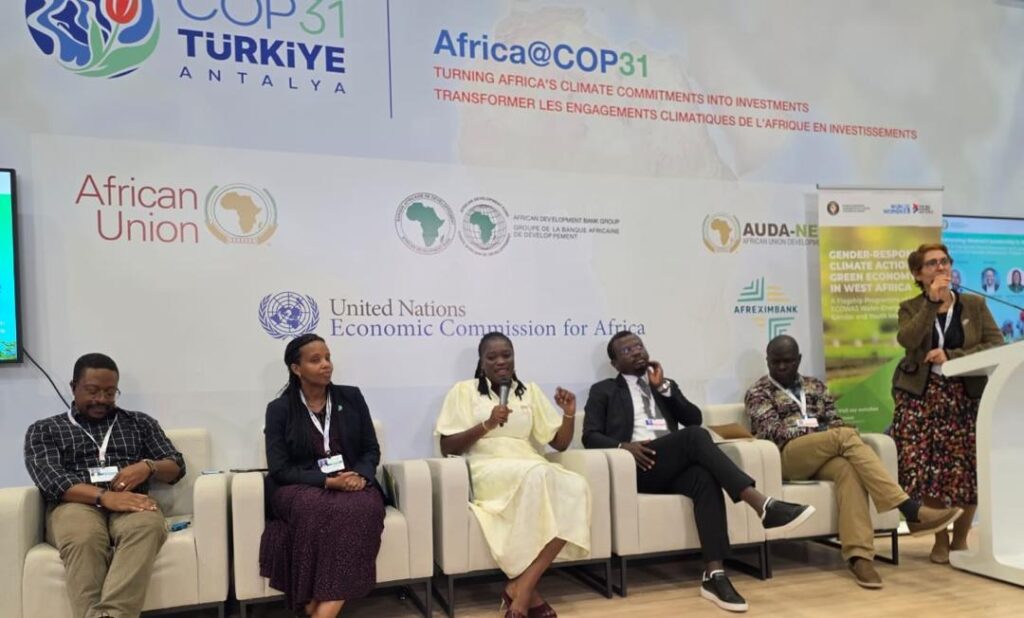
The World Bank’s Task Team Leader for the RAISE Project, Ebrima Bah, described the initiative as an important regional development intervention and commended the progress recorded so far.
He noted that the project had benefited from lessons and experiences gained from previous initiatives, providing a favourable foundation for implementation. He expressed optimism that the project could be completed within three to four years.
The mission will also examine critical implementation components, including the preparation of the 2027 Annual Work Plan and Budget, environmental and social safeguards, regional procurement activities, financial management arrangements and national procurement processes in Togo and The Gambia.
The RAISE Project became effective on 29 October 2026, following a US$10 million grant agreement signed between ECOWAS and the World Bank in July 2026 to facilitate regional coordination and implementation.
The RAISE Project comes against the backdrop of persistent electricity access challenges across West Africa, where inadequate infrastructure, high generation costs, unreliable supply and affordability constraints continue to undermine economic development.
Despite progress in expanding electricity infrastructure, significant disparities remain between urban and rural communities, with many households and businesses still lacking access to reliable power.
The electricity deficit has particularly affected rural economies, limiting opportunities for small businesses, agricultural processing, digital services and other productive activities that depend on dependable electricity.
The World Bank has identified infrastructure constraints, high electricity generation costs, affordability challenges and weaknesses in power sector institutions as major obstacles to expanding electricity access across the region.
In Togo and The Gambia, the RAISE Project is designed to address these challenges through expanded electricity distribution networks, household connections and renewable energy development.
The World Bank estimates that the initiative could generate labour income gains equivalent to approximately 11,700 jobs annually through direct and indirect economic effects, including about 9,200 in Togo and 2,500 in The Gambia.
Beyond its immediate targets in Togo and The Gambia, RAISE forms part of broader efforts to strengthen regional electricity infrastructure, improve cross-border power trade and accelerate access to affordable and sustainable energy across West Africa.
The initiative complements the West Africa Regional Electricity Market Programme (WA-REMP), a regional framework supported by the World Bank to strengthen electricity trade, improve energy security and expand access to power across the sub-region.
The programme, approved by the World Bank in January 2025 with an initial financing framework of US$1.6 billion, builds on the work of the West African Power Pool (WAPP), which is developing an interconnected electricity market to enable countries to exchange power and make more efficient use of available generation resources.
The regional integration programme builds on more than 4,000 kilometres of high-voltage transmission lines constructed to connect electricity networks across 15 West African countries, facilitating cross-border electricity trade.
The wider regional electricity agenda has also contributed to improved electricity services for more than three million people across six West African countries between 2019 and 2025.
RAISE complements these interventions by focusing on the last-mile challenge of connecting underserved communities and households to electricity while encouraging renewable energy development.
The project also aligns with the World Bank’s Mission 300 ambition to provide electricity access to 300 million people across sub-Saharan Africa by 2030.
Through these complementary initiatives, ECOWAS and the World Bank are pursuing a coordinated approach that combines regional electricity integration with investments in local distribution networks, renewable energy and household connections.
The successful implementation of RAISE is therefore expected to contribute not only to improved electricity access in Togo and The Gambia but also to ECOWAS’s broader objectives of regional integration, economic transformation and sustainable development.
