
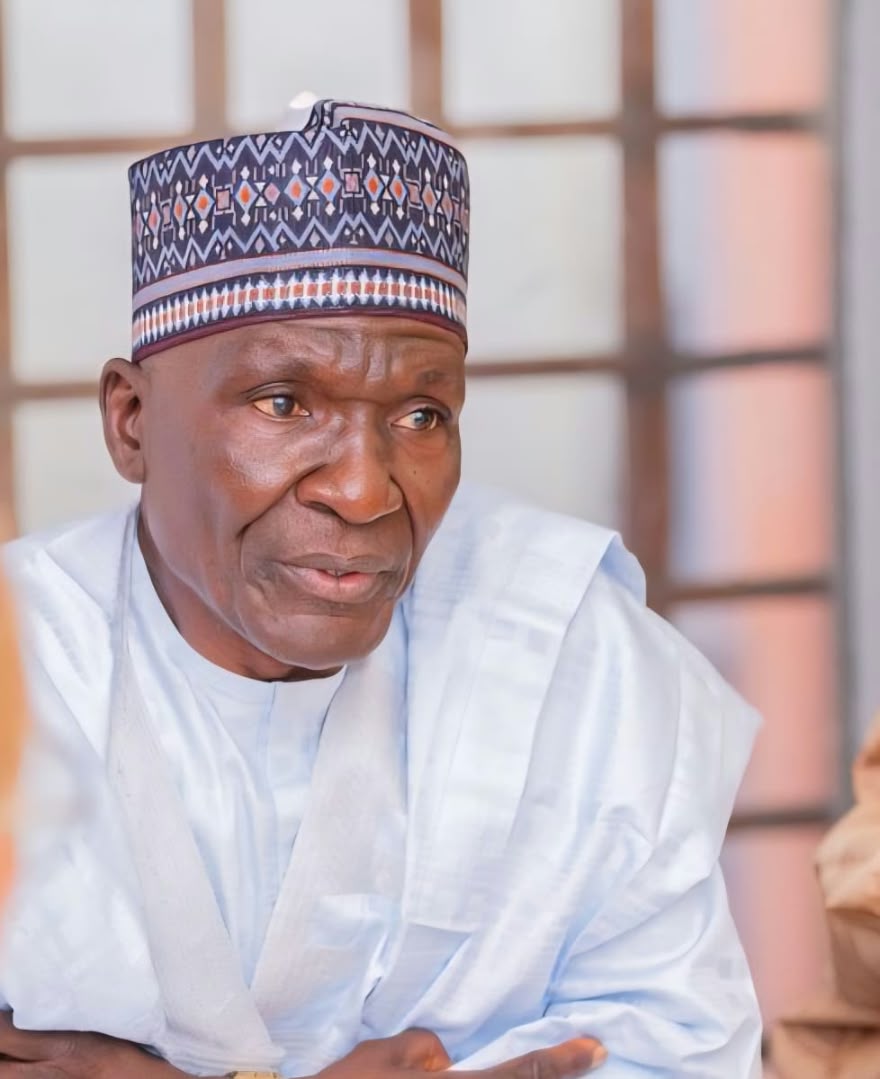
𝗡𝗖𝗗𝗖 𝗠𝗗 𝘂𝗻𝘃𝗲𝗶𝗹𝘀 𝗱𝗿𝘆-𝘀𝗲𝗮𝘀𝗼𝗻 𝗳𝗮𝗿𝗺𝗶𝗻𝗴 plans, 𝟳𝟬𝟬 𝘆𝗼𝘂𝘁𝗵𝘀 each 𝘀𝘁𝗮𝘁𝗲 𝘀𝗸𝗶𝗹𝗹𝘀 𝘁𝗿𝗮𝗶𝗻𝗶𝗻𝗴, 𝘀𝗲𝗰𝘂𝗿𝗶𝘁𝘆 𝘀𝘂𝗽𝗽𝗼𝗿𝘁, 𝗱𝗮𝗺𝘀, 𝗿𝗲𝘀𝗶𝗹𝗶𝗲𝗻𝘁 𝗿𝗲𝘀𝗲𝘁𝘁𝗹𝗲𝗺𝗲𝗻𝘁 𝗳𝗼𝗿 𝗱𝗶𝘀𝗽𝗹𝗮𝗰𝗲𝗱 𝗰𝗼𝗺𝗺𝘂𝗻𝗶𝘁𝗶𝗲𝘀

*𝗡𝗖𝗗𝗖, s𝘁𝗮𝘁𝗲𝘀 not competing — 𝗗𝗿. 𝗧𝘀𝗲𝗻𝘆𝗶𝗹
The Managing Director/Chief Executive Officer of the North Central Development Commission (NCDC), Dr. Cyril Yiltsen Tsenyil, has said the Commission was created as an intervention agency to complement, not compete with, state and local governments.
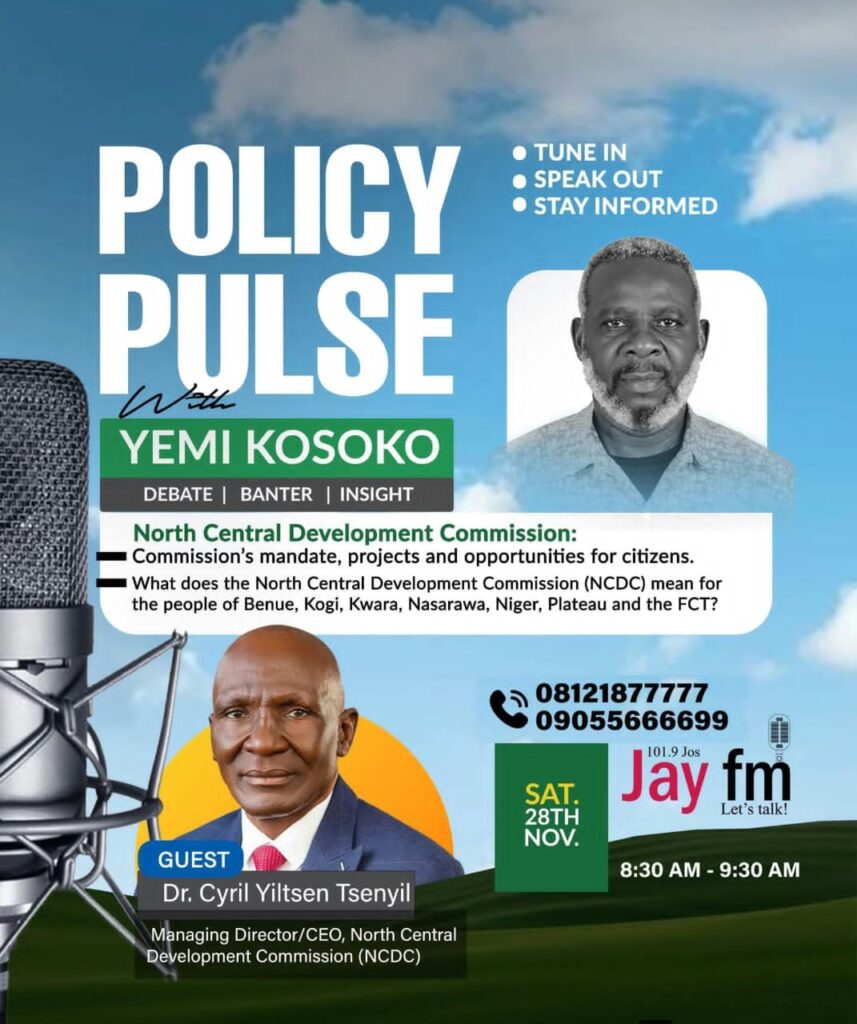
Dr. Tsenyil spoke on Saturday, 28th November, 2026, as guest on Policy Pulse with Yemi Kosoko on 101.9 Jay FM, Jos, where he discussed the Commission’s mandate, projects and opportunities for citizens of Benue, Kogi, Kwara, Nasarawa, Niger, Plateau and the FCT.
He commended President Bola Tinubu for taking what he described as a bold step to drive development through regional commissions, noting that regional development has driven growth in Asia and Europe and that leaders across Nigeria had long agitated for it.
Dr. Tsenyil said Nigeria now has seven regional development commissions — North West, North East, North Central, South East, South South/Niger Delta, and South West each created to harness the comparative advantage of its region.
He said the North Central, which he described as 6 states plus FCT, is richly endowed with agricultural potential, mineral resources, two major rivers — River Niger and River Benue — tourism potential and a large, educated youth population that must be harnessed.
According to the NCDC Act of 2024, the Commission has about eight thematic areas to intervene in:
Infrastructure gaps, agricultural development, human capital development, education, security, climate resilience, environmental degradation, and health.
“Our mandate is very clear. We are complementing in the areas of infrastructural gaps, not competing. Where the state governments are not looking, the Development Commission is looking at those areas,” Dr. Tsenyil said.
He gave the example of the River Niger and River Benue, which he said are highly sited, as well as tourism, youth development and SMEs — areas states and local governments cannot fully cover alone.
Dr. Tsenyil said the Commission is still carrying out needs assessment, but the infrastructural deficit in the North Central is massive, especially in rural communities.
He said while the Federal Government is working on the Lokoja-Abuja road, travelling from Minna to Makurdi or moving food and minerals from Kwara to a hub remains difficult.
The Commission, he said, is therefore looking at roads, rail development to move agricultural produce and mineral deposits, rehabilitation of the Baro Port in Niger State, and dredging of River Niger and River Benue for inland water transport.
He said the Commission is developing legacy projects through a private-sector model, where major roads and rail can be built and tolled so that people have good roads and pay a little to maintain them, rather than relying solely on slow government budget releases.
On reconstruction of communities destroyed by conflict and natural disasters, Dr. Tsenyil said the Commission is in discussions with foreign partners on fire-resistant building materials, so that houses rebuilt are not easily destroyed again.
He also unveiled a communal resettlement model where displaced villagers can farm on secured land close to a settlement, with landowners holding equity for providing the land, instead of trekking deep into forests where they are attacked.
“We cannot just fold our arms and sit down and people perish and die with hunger. We are looking at how our people can continue to produce,” he said.
On how interventions are prioritised, he said governors have submitted focal persons, board members are drawn from the states, state offices are being set up, and the Commission now has data of all displaced persons, shared with the Ministry for Humanitarian Affairs.
The Commission also plans a mobile classroom model, with a pool of teachers employed by the Commission and immediately deployed to displaced communities so that no child stays three to four months in a camp without access to education.
He clarified that the teachers will be paid by the Commission, in collaboration with UBEC, State UBECs and the Federal Ministry of Education.
Dr. Tsenyil said within weeks, not just within a year, farmers should expect intervention.
He said the Commission has awarded contracts for dry-season agricultural intervention in all states plus FCT, including construction of one dam in each state to drive dry-season farming, and distribution of farm inputs before Christmas.
“Some of the items for Plateau, for instance, and some of the states are already being piled in some warehouses here in the state,” he said.
“If you can eat fresh maize in Kano today, why can’t we eat fresh maize in Plateau, in Kwara, or in Benue? We want to encourage our people so that we have all-year-round farming.”
On security, Dr. Tsenyil said the Commission does not directly drive security operations but will intervene before Christmas with security inputs, using existing security structures to complement them.
On youth unemployment, Dr. Tsenyil said the Commission has partnered with SMEDAN and awarded contracts for construction of skill acquisition centres.
He said about 700 youths will be trained in each of the states before Christmas in key trades, and given take-off grants — amounting to about 4,900 youths across the 6 states plus FCT.
“Our youths are very hardworking. Gone are the days that you go to school and then you begin to sit and wait for government work,” he said.
Some callers on the programme expressed scepticism, saying they have not yet seen NCDC’s impact in Plateau, particularly among IDPs and communities affected by attacks, and challenged the Commission to move from grammar to action on displacement and farming.
In response, the MD/CE noted that the Commission’s role is to complement government efforts.
In his closing remarks, Dr. Tsenyil appealed for support and patience, assuring the region that the Commission will not let the people down.
“We are also very much aware of the challenges in the North Central geopolitical region, and we are committed to addressing it with the backing of our people. We know that we are largely behind other regions, and we cannot afford to continue to live behind,” he said.
The programme ended with a reminder that for the NCDC, the real measure of success will not be the number of projects announced, but the visible improvement in the daily lives of citizens across the region.
