
Nigeria has called for the strategic deployment of Artificial Intelligence (AI) to accelerate economic growth and development, while advocating greater African representation in global governance structures, particularly in shaping international rules on emerging technologies.
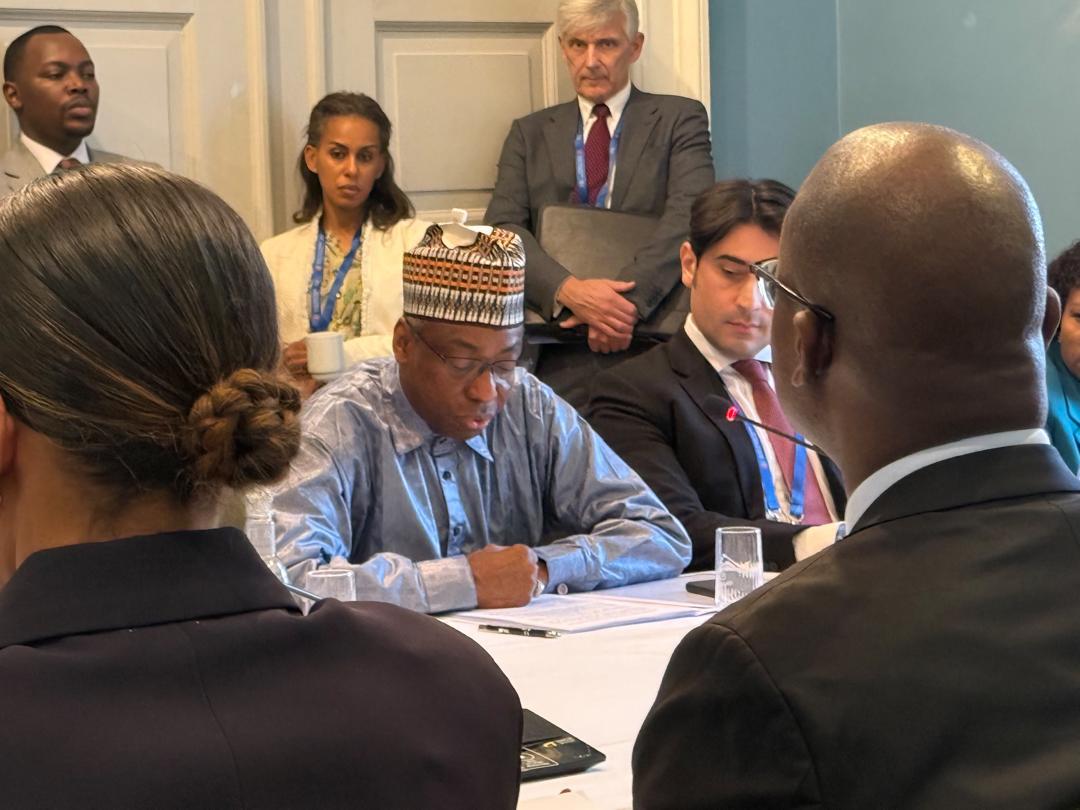
The position was articulated by the Permanent Secretary, Ministry of Foreign Affairs, Ambassador Dunoma Umar Ahmed, at the 23rd Nordic-African Foreign Ministers’ Meeting and Business Forum held in Oslo, Norway.
Speaking during discussions on digital infrastructure and regional connectivity, Ahmed reaffirmed Nigeria’s commitment to digital transformation as a critical driver of economic development, competitiveness, improved public service delivery and economic security.
He identified the National Digital Economy Policy and Strategy as the framework guiding Nigeria’s efforts to build an inclusive digital economy, stressing the importance of expanding digital infrastructure to unlock economic opportunities and strengthen connectivity.
The Permanent Secretary highlighted Project BRIDGE (Building Resilient Digital Infrastructure for Growth), Nigeria’s flagship digital infrastructure initiative, which is designed to deploy approximately 90,000 kilometres of additional fibre-optic infrastructure across the country.
According to him, the project is expected to extend broadband connectivity to more than 700,000 underserved communities, expand opportunities in the digital economy, enhance the technological capacity of small and medium-sized enterprises (SMEs), strengthen cross-border connectivity and reduce barriers to intra-African trade.
On Artificial Intelligence, Ahmed underscored its transformative potential across critical sectors, including agriculture, healthcare, education, manufacturing and financial services, noting that its strategic deployment could stimulate economic growth, improve public service delivery and accelerate development.
He called for enhanced international collaboration in digital infrastructure, research, skills development, technology transfer and responsible AI governance, emphasising that African countries must have a meaningful voice in shaping global rules and standards governing emerging technologies.
Ahmed also reaffirmed Nigeria’s commitment to an independent and principled foreign policy anchored on international law, mutual respect, sovereign equality and the peaceful settlement of disputes.
He reiterated the African Union’s common position on reform of the United Nations Security Council, insisting on equitable African representation and participation in decisions on issues of global significance.
The Permanent Secretary stressed that Africa must not remain on the sidelines of global decision-making but should actively participate in shaping international governance structures.
The meeting reaffirmed the shared commitment of African and Nordic countries to strengthening practical and mutually beneficial partnerships founded on mutual respect and shared interests.
For Nigeria, the engagement provided an opportunity to attract investment, deepen cooperation in technology and innovation, advance sustainable development and reaffirm its commitment to multilateralism and international cooperation.
