
FG readies 10,000 E-Vehicles for Northeast, targets 100,000 jobs, as Maiduguri plant set for President Tinubu’s inauguration

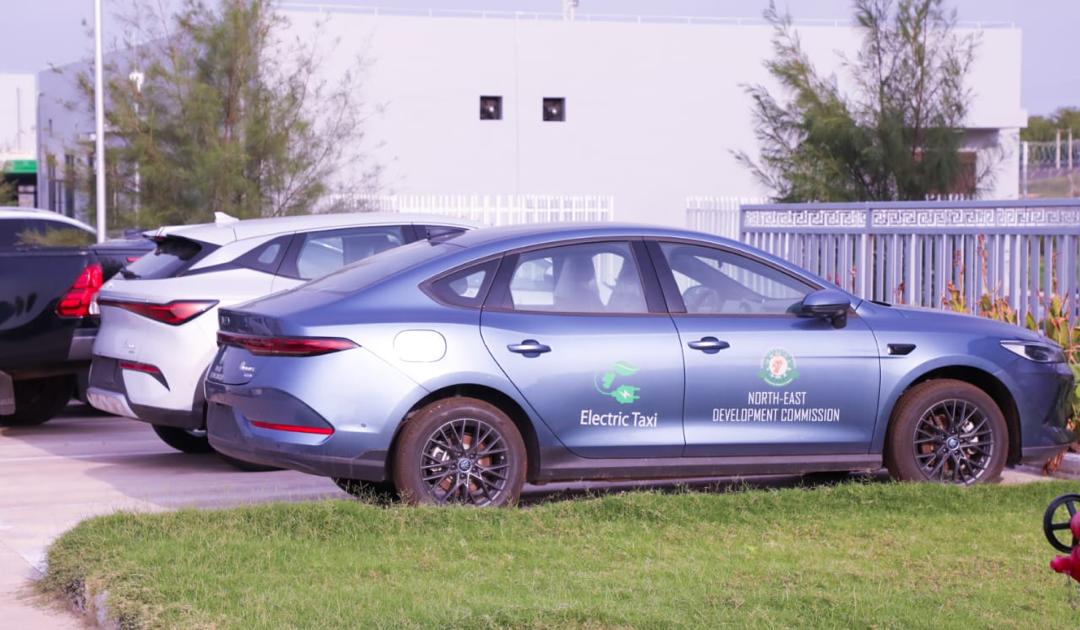
The Federal Government is set to launch a major electric mobility programme in the North-East, with an assembly plant in Maiduguri, Borno State, preparing to roll out 10,000 electric vehicles and tricycles in an initiative projected to generate employment for up to 100,000 people during the assembly process
The Minister for Regional Development, Abubakar Momoh, disclosed this yesterday after inspecting the electric vehicle assembly facility being managed by the North-East Development Commission (NEDC) ahead of its planned inauguration by President Bola Tinubu.
Momoh said the project had moved substantially beyond the planning stage, with nearly all the targeted vehicles already at the facility and assembly operations underway.
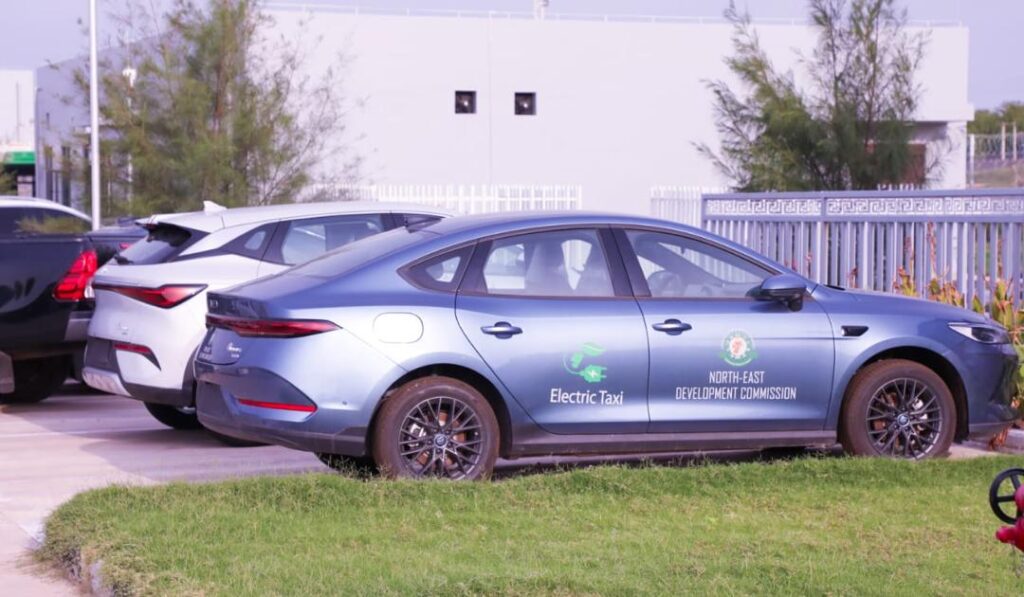
He said the fleet, comprising electric buses, taxis and tricycles, would be deployed across the six states of the North-East, with charging infrastructure incorporated into the programme.
The minister described the project as a significant demonstration of the administration’s transformation agenda, particularly its efforts to combine infrastructure development, youth employment, cleaner transportation and economic recovery in the region.
“Apart from the fact that it will help to improve commuting of people, and create more job opportunities for the youths,” Momoh said, adding that the assembly process itself was already generating employment.
One of the most significant aspects of the initiative is its potential employment impact.
According to the minister, the project’s Director of Operations briefed him that the assembly of the 10,000 vehicles could provide employment for not less than 100,000 people before the target is completed.
The claim places the Maiduguri project at the centre of the Federal Government’s broader effort to make infrastructure spending translate into direct economic opportunities for young Nigerians, rather than merely producing physical assets.
The vehicles are also expected to create jobs beyond the assembly line through transportation operations, servicing, maintenance and supporting infrastructure once deployed across the region.
The project has an additional dimension that could prove particularly important to the North-East’s predominantly agrarian economy.
Momoh said some of the electric tricycles were designed to carry both passengers and agricultural produce, potentially allowing farmers in remote communities to move their commodities to urban markets more efficiently.
He therefore directed attention to the relationship between the e-vehicle programme and ongoing rural road construction.
According to him, the combination of improved roads and appropriate transport could strengthen the connection between rural producers and city markets.
The minister specifically urged the NEDC leadership to ensure that communities along newly rehabilitated road corridors were not excluded from the distribution of the vehicles.
He said rural residents needed the vehicles to evacuate agricultural produce from their communities to urban centres.
The Maiduguri project is not a new policy idea. The NEDC announced plans in 2024 to introduce 10,000 electric vehicles across the North-East as part of an effort to modernise transportation, reduce carbon emissions and respond to climate-change concerns.
The original plan envisaged a mix of nine-seater solar-powered tricycles, four-seater taxis and 40-seater buses, with deployment across Adamawa, Bauchi, Borno, Gombe, Taraba and Yobe states.
The commission had said the programme would be implemented in two phases of 5,000 vehicles each, while charging points would be established across the six states. Plans also included solar-power installations along major routes to support charging infrastructure.
The current inspection indicates that the initiative has now reached the assembly and deployment stage, bringing the long-planned regional mobility scheme closer to implementation.
For the North-East, the project comes against the backdrop of years of infrastructure deficits, disrupted economic activity and major transportation challenges.
The region comprises vast rural areas where poor transport connectivity can raise the cost of moving farm produce and limit access to markets, schools, healthcare and other essential services.
The NEDC was established specifically to coordinate reconstruction, rehabilitation and development interventions in the six North-Eastern states.
The electric mobility programme consequently fits into a wider regional-development strategy rather than being merely a vehicle procurement exercise.
The commission’s plan to link the vehicles with rural roads is particularly significant because better roads without affordable transport can leave rural communities economically isolated, while vehicles without passable roads cannot deliver their full value.
The initiative also places the North-East within Nigeria’s broader transition towards cleaner transportation.
Nigeria has been pursuing electric mobility as part of its energy-transition strategy, with the Federal Government increasingly promoting local assembly, charging infrastructure and technology transfer.
In January 2026, the National Automotive Design and Development Council disclosed that the Federal Government had signed an agreement with South Korea’s Asia Economic Development Committee for an electric vehicle manufacturing project and charging infrastructure. That separate national initiative envisages an eventual production capacity of 300,000 vehicles and about 10,000 jobs, alongside development of battery, component and charging ecosystems.
The broader policy objective is to move Nigeria beyond dependence on imported vehicles and fossil-fuel-powered transportation by developing local manufacturing capacity and the technical workforce required to sustain an electric-vehicle economy.
During his Maiduguri tour, Momoh also inspected rural road projects, including the Ngwom/Kushebe/Gadamari corridor towards Gongulong, and said he had observed substantial improvement.
He linked the road projects directly to the e-vehicle programme, arguing that improved roads would increase the usefulness of the vehicles, particularly for agricultural communities.
The minister also inspected the ongoing construction of the NEDC headquarters in Maiduguri and expressed satisfaction with the pace of work.
He said the project, which was at basement level during his previous visit, had progressed considerably, with the basement completed and another section of the building already under construction. He expressed confidence that the headquarters would be completed within 18 to 24 months.
For the Tinubu administration and the NEDC, the forthcoming inauguration will mark only the beginning of the real test.
The success of the programme will ultimately depend on whether the 10,000 vehicles remain operational after deployment, whether charging infrastructure is reliable, whether spare parts and technical expertise are locally available, and whether rural communities receive a meaningful share of the fleet.
If those challenges are effectively addressed, the Maiduguri project could become more than a transport intervention: it could provide the North-East with a new industrial ecosystem built around electric mobility, youth employment, clean energy, rural commerce and local technical skills.
And with nearly 10,000 vehicles already at the assembly facility, the region’s long-awaited shift towards electric mobility appears to be moving from policy promise to production reality.
