
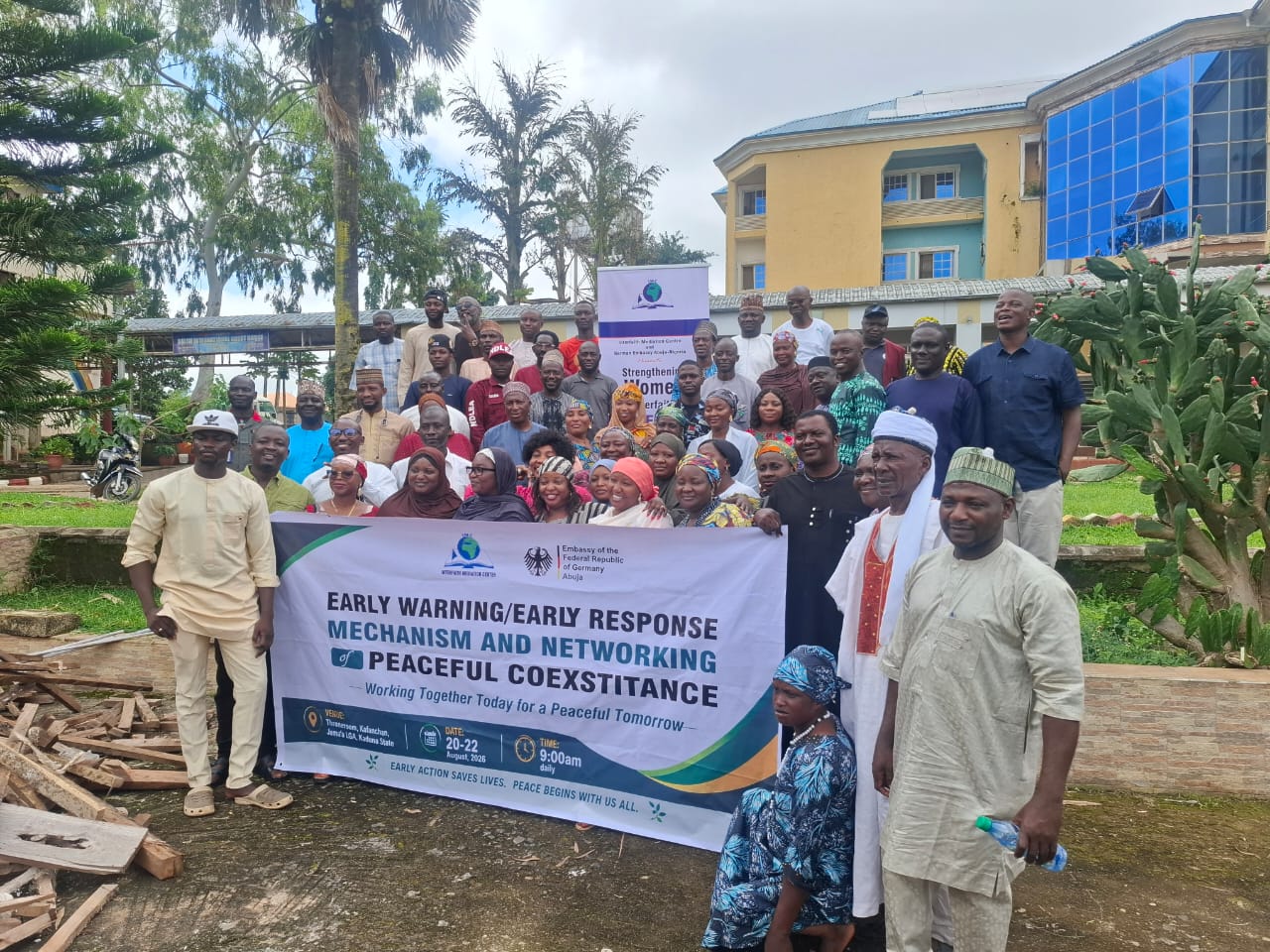
Interfaith Mediation Centre trains Kaduna women, stakeholders on early warning, conflict prevention

By Ahmed Ali, Kafanchan
The Interfaith Mediation Centre (IMC), with support from the German Embassy, Abuja, has trained women interfaith leaders, community gatekeepers and other stakeholders from the three senatorial zones of Kaduna State on Early Warning and Early Response (EWER) mechanisms.
The three-day capacity-building workshop, held in Kafanchan, Jema’a Local Government Area, from August 20 to 22, was organised under the project, “Strengthening Women Interfaith Leadership for Human Rights, Transitional Justice and Promoting Democratic Stability in Kaduna State.”
The training was aimed at strengthening EWER mechanisms across the state to enable communities identify, analyse and respond to conflict triggers, human rights violations and threats to democratic stability before they escalate.
During the workshop, participants identified farmers-herders conflicts, political thuggery, drug and substance abuse, hate speech, religious and ethnic tensions, criminality, human rights abuses, sexual and gender-based violence and the negative use of social media as some of the major drivers of conflict in their communities.
In a communiqué issued at the end of the workshop, the participants resolved to return to their communities and conduct sensitisation campaigns on early identification and prevention of conflict.
They stressed the need to verify security-related information before reporting or sharing it, warning that unverified information could worsen tensions.
The participants also called for enforcement of existing laws against perpetrators of violence and human rights violations, while urging government to address farmers-herders disputes through dialogue and mediation.
They advocated stronger collaboration among government, civil society organisations, women, youth, persons with disabilities and other stakeholders to economically empower vulnerable community members.
The participants further called for the protection of the confidentiality of early observers who report emerging threats and urged religious, traditional, women and youth leaders to strengthen their roles in peacebuilding.
They also advocated a more supportive approach towards youths affected by drug and substance abuse, rather than stigmatising or excluding them.
Ahead of the 2027 general elections, the participants urged politicians to put national interest above political ambitions and avoid inflammatory campaigns, mudslinging and the mobilisation of youths for violence.
During the programme, a delegation from the Interfaith Mediation Centre also paid a condolence visit to the traditional ruler of Nkyob, Tum Nkyob, Malam Tanko Tete, at his residence following the death of his brother. The delegation prayed for the repose of the deceased and strength for the family to bear the loss.
The visit was also part of the IMC’s commitment to maintaining strong relationships with traditional institutions.
Speaking at the closing ceremony, the Emir of Jama’a, Alhaji Muhammadu Isa Muhammadu, who was represented by Sarkin Gandun Jama’a, Alhaji Sulaiman Isa Baffar, said security was a collective responsibility involving government, security agencies and communities.
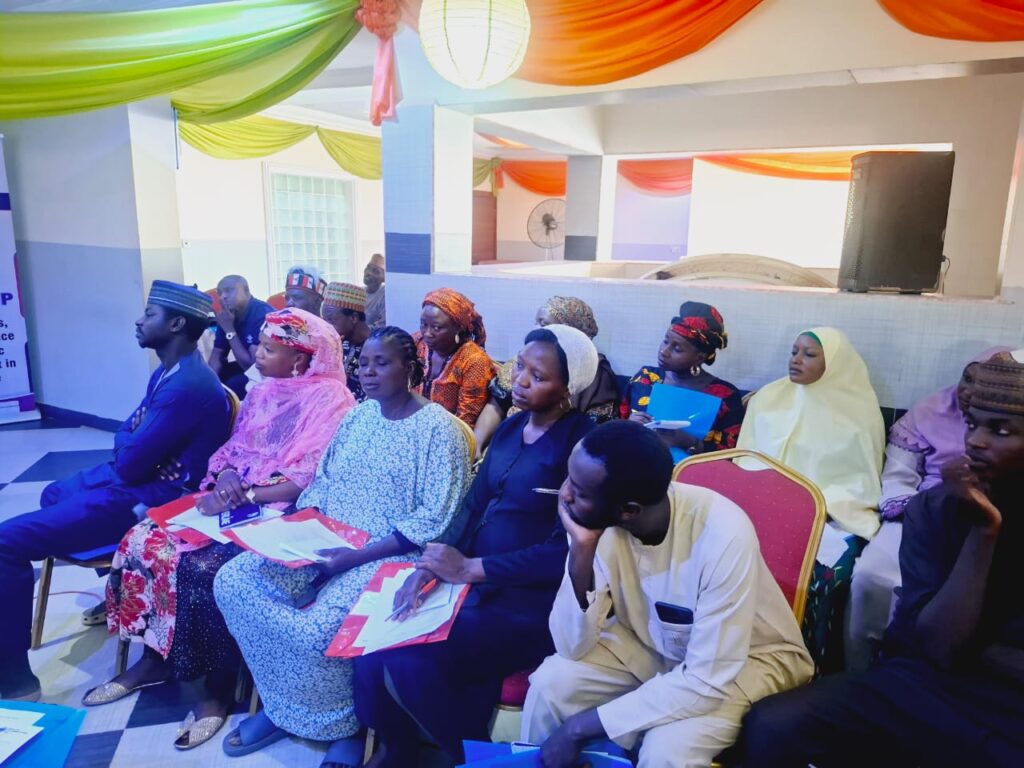
He said residents were often the first to notice unusual movements, rumours, rising tensions and disputes that could develop into violence.
The Emir stressed that early warning must be followed by timely action, noting that “a warning that is received but ignored may become a crisis tomorrow.”
He urged traditional institutions to continue serving as bridges between communities, government and security agencies.
He also cautioned against the spread of unverified information on social media, calling for “verification before amplification.”
The Emir encouraged participants to take the knowledge acquired back to their communities by strengthening communication channels, reporting credible information responsibly and promoting dialogue before disputes escalate.
Also speaking, Mr Samson Auta of IMC said the programme was designed to strengthen community capacity for conflict prevention and peaceful coexistence.
He urged participants, particularly women interfaith leaders, to apply the knowledge gained in their communities and work with other stakeholders to build peaceful and resilient communities.
Participants commended IMC and the German Embassy for the initiative and pledged to replicate the lessons learned in their respective communities.
The communiqué was signed by representatives of the EWER mechanism from the three senatorial zones of Kaduna State.
