

The Federal Government has set December 2026 as the deadline to achieve 95 per cent coverage of Nigeria’s population under the National Identification Number (NIN) system, signalling an accelerated push to make digital identity the foundation of access to public services, financial transactions and social interventions
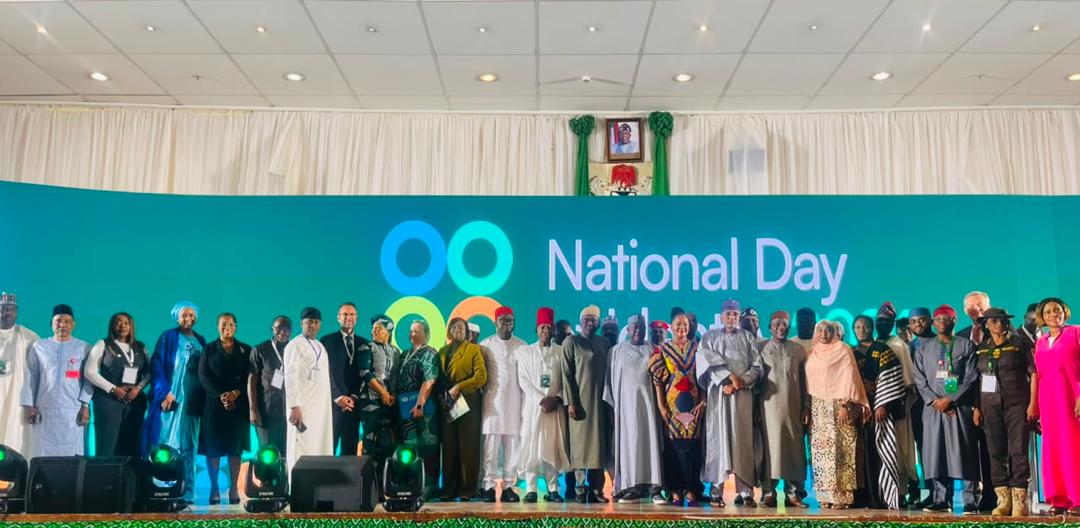
The target was announced by the Chief of Staff to the President, Femi Gbajabiamila, who represented President Bola Ahmed Tinubu at the 2026 National Day of Identity celebration.
Gbajabiamila said the national identity database had expanded from about 80 million NINs at the beginning of the administration to nearly 140 million, describing the growth as a major step towards bringing more Nigerians and legal residents into the formal economic and public-service system.
The government’s latest drive effectively places identity registration at the centre of its efforts to improve how citizens are identified, how public resources are distributed and how people access government and financial services.
Gbajabiamila said the significance of the expansion went beyond the number of records captured, arguing that every NIN represented an individual who could increasingly participate in the formal economy and establish a verifiable relationship with government institutions.
“Behind every NIN is a Nigerian with a recognised identity; a citizen or resident who can increasingly participate in the formal economy, access government services, establish financial relationships, and be better protected by the institutions of the Nigerian state,” he said.
The government is seeking to close the remaining identity gap through a ward-level enrolment programme designed to take registration to communities rather than requiring citizens to travel long distances to designated centres.
According to Gbajabiamila, free enrolment is now being taken to all 8,809 wards across the country, while more than 5,000 enrolment agents have been trained to make the process more accessible to persons with disabilities, older citizens and other vulnerable groups.
The initiative is significant in a country where the absence of reliable identity records has complicated the planning and delivery of public programmes, particularly where government needs to determine who is eligible for specific interventions and where beneficiaries are located.
Gbajabiamila said the recently enacted National Identity Management Commission Act 2026 had strengthened the statutory framework governing identity management, including provisions on data protection, mandatory NIN usage in critical sectors and tougher penalties for identity-related offences.
He described trusted identity as an essential component of a modern economy, placing it alongside infrastructure such as roads, electricity, telecommunications and financial systems.
In her part, the Director-General and Chief Executive Officer of the National Identity Management Commission (NIMC), Dr.Abisoye Coker-Odusote, said the Commission had also recorded substantial growth in enrolment, with the national register now containing the identities of more than 140 million Nigerians and legal residents.
She attributed much of the increase to the Ward-to-Ward Enrolment Project, which has extended NIMC services to the country’s 8,809 wards.
Beyond enrolment, Coker-Odusote said the Commission was attempting to change the experience of citizens who already have NINs by reducing the time required to update their records.
She said the NIMC Self-Service Modification Platform had processed close to two million record updates, cutting modification processes that previously took weeks to between 24 and 48 hours through a citizen’s phone.
The Commission is also preparing to move the identity programme from predominantly digital records to physical credentials, with Coker-Odusote announcing that Nigerians are expected to begin receiving physical National e-ID Cards before the end of the year.
She said the biometric cards would combine identity verification with access to government benefits and financial payments, including functionality that would allow them to be used in locations with limited internet connectivity.
“The physical card is not a promise for the distant future; it is actively in the deployment pipeline, and I am pleased to announce that Nigerians will begin holding physical e-ID cards in their hands before the year ends,” she said.
The developments are coming against the backdrop of broader efforts by the government to build a digital public infrastructure in which a verifiable identity can serve as the link between citizens and multiple public and private services.
Coker-Odusote said the new law had also expanded NIMC’s regulatory responsibilities and its role in Nigeria’s Digital Public Infrastructure.
She said the legislation designated NIMC as the National Root Certification Authority for the country’s Public Key Infrastructure and aligned its operations with the Nigeria Data Protection Act 2023.
The implications of the identity expansion are already being felt beyond the traditional identity-management sector, with the education ministry seeking to use NIN-linked information to address persistent weaknesses in education data.
The Minister of Education, Dr. Tunji Alausa, said accurate identity information was necessary to properly track pupils, students and teachers and improve planning across the education system.
He said the sector serves between 75 million and 80 million students across basic, post-basic and secondary education, making reliable identity information critical to determining the scale and location of educational needs.
Alausa said the absence of accurate data had made it more difficult to effectively identify out-of-school children, deploy teachers and ensure that government interventions reached their intended beneficiaries.
“We cannot tackle the challenge of out-of-school children. We cannot identify and effectively target the intervention of every child without accurate data,” he said.
He added that linking identity information to education records could reduce multiple registrations and fraudulent claims while improving the ability of government to direct resources towards genuine beneficiaries.
The Minister of Interior, Olubunmi Tunji-Ojo, similarly linked the identity programme to national security, economic development and social inclusion, saying reliable population information would improve government’s ability to determine where public infrastructure and interventions were required.
He said verified identity data could support decisions on the location of schools, healthcare interventions and social protection programmes, while also improving the distribution of public resources.
Tunji-Ojo nevertheless called for identity services to become more accessible, particularly for Nigerians living outside the country, and urged closer cooperation among government agencies, telecommunications companies, private businesses and local communities.
He also urged Nigerians who had not obtained their NIN to enrol, stressing that the expansion of the identity system must be accompanied by adequate safeguards for citizens’ privacy.
The Federal Government’s December target therefore places NIMC and its partners under pressure to bridge the remaining gap in a matter of months, while ensuring that rapid expansion does not come at the expense of the accuracy, security and protection of the identity information being collected.
The government’s stated objective is not merely to increase the number of NINs in the database, but to establish a trusted identity infrastructure capable of supporting public administration, economic participation, social protection, education, security and digital services across Nigeria.
