
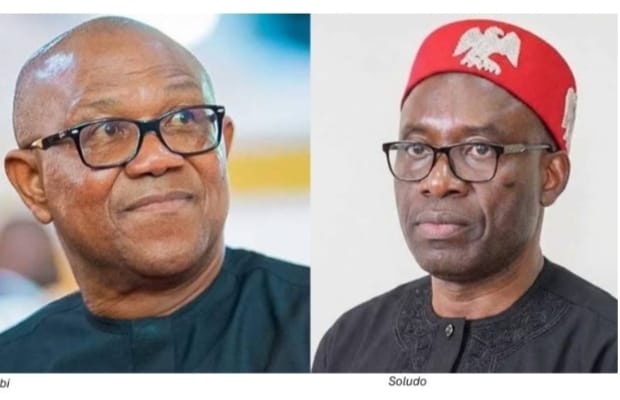

The growing exchange of words between the Anambra State Government and former Governor Peter Obi has renewed calls for respected Igbo leaders, traditional rulers and religious authorities to intervene and help de-escalate the dispute.
The disagreement, which has largely centred on issues relating to Anambra’s finances, debts, savings and the record of governance under Obi’s administration, has increasingly attracted public attention.
Questions have also been raised about the role of socio-cultural organisations and prominent Igbo elders in resolving disagreements among political leaders from the region.
The latest development followed comments by the Anambra State Commissioner for Information and Value Reorientation, Law Mefor, who responded to claims attributed to Obi regarding the state’s finances and the management of public resources during his tenure as governor.
According to reports cited by the author, the Anambra State Government argued that government should prioritise improving citizens’ welfare and infrastructure rather than focusing solely on accumulating savings and earning interest.
The government also accused the former governor’s administration of failing to fully disclose certain debts in the handover documents presented at the end of his tenure in 2014. Obi’s position on the state’s finances has, however, continued to differ from the current administration’s account.
The disagreement took another dimension following a statement by the First Lady of Anambra State, Dr. Nonye Soludo, concerning comments reportedly made by Obi at a conference of the Nigerian Guild of Editors in Enugu.
Obi was reported to have said that he had no personal issues with Governor Chukwuma Soludo and referred to a godparent relationship between the two families.
In her response, Mrs. Soludo clarified that Peter Obi is not the godfather of any of the Soludos’ children. She explained that she is the confirmation godmother to Obi’s daughter, while Mrs. Margaret Obi is the baptismal godmother to one of the Soludos’ daughters.
She said the clarification became necessary because the comments had generated public enquiries, while stressing that the relationship between the two families remains cordial.
The author argued that the reported closeness between the families makes the continuing public exchanges particularly unfortunate.
According to him, disagreements over governance, public finance, debt, savings, infrastructure and political choices are legitimate aspects of democratic debate. However, he maintained that such disagreements should not degenerate into personal attacks or an enduring public feud.
He therefore called on respected traditional rulers, elder statesmen, religious leaders, intellectuals and socio-cultural organisations in Igboland to intervene.
The proposed intervention, he said, should not be aimed at determining who is right or wrong, but at encouraging restraint, civility and reconciliation between the parties.
He noted that Anambra State, the South-East and Nigeria face several pressing challenges that require attention, adding that prolonged political exchanges between prominent leaders could distract from those concerns.
The author consequently urged Igbo elders to engage the parties and encourage dialogue in the interest of Anambra State and the wider Igbo community.
He concluded by invoking Chinua Achebe’s imagery from Things Fall Apart, saying the time had come for the “falcon to once again hear the falconer.”
