
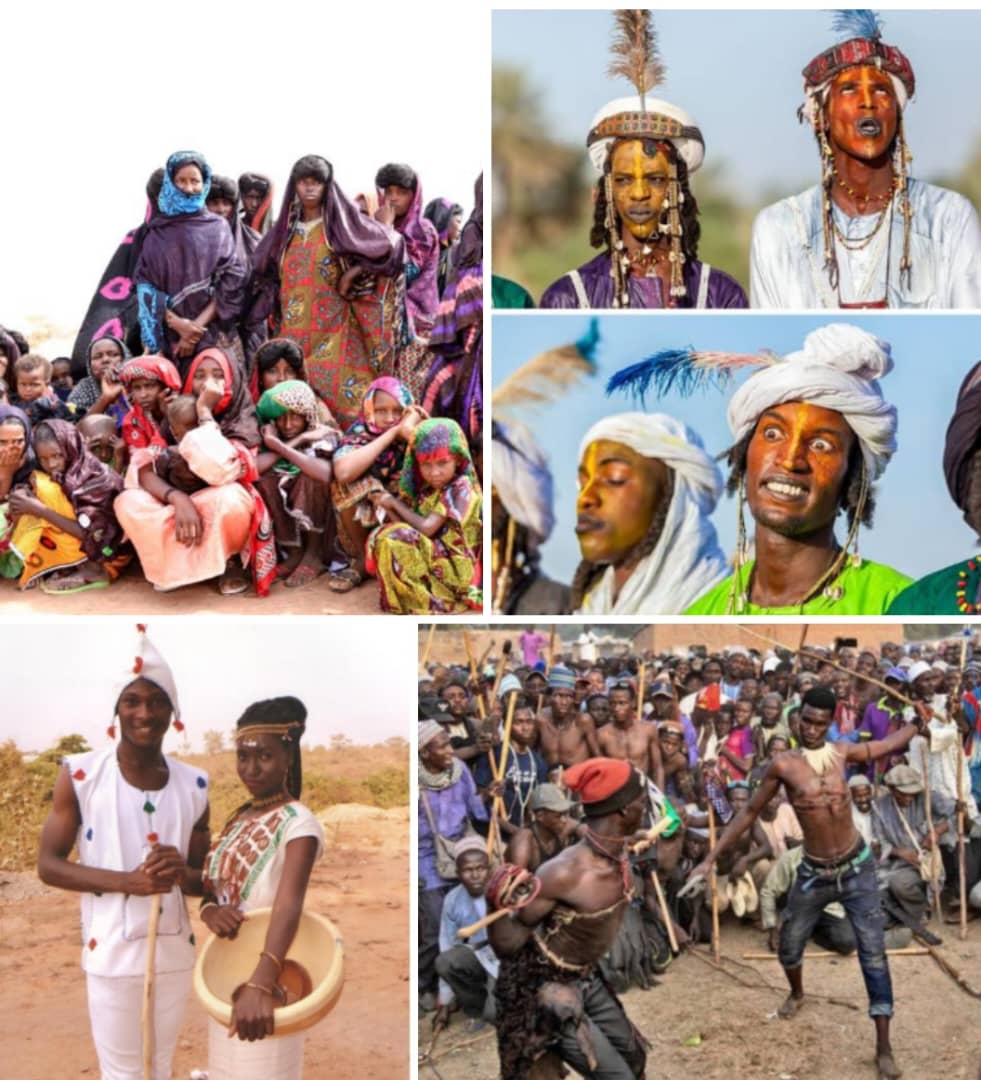
The persistent political scar on Nigeria: Fulani ethnic groups as the new target of demonization

The political games and ethnic scapegoating that kicked off in the post-independence era, especially during the Nigerian civil war and its aftermath, have repeatedly chipped away at national unity. This has shown up as tribal biases, religious divides, and the recent targeting of certain ethnic groups. These ongoing issues point to a deep-rooted failure to tackle the core problems, leaving Nigeria at risk of further division and a possible return to the chaos of its past. The shift from the early targeting of the Igbo people to the current fears surrounding Fulani communities highlights a troubling trend where political figures exploit identity for their own gain, effectively “eating Nigeria in bits and pieces.”
The period starting in 1960, which led to the nation’s first military coup, set a troubling precedent for instability that has, in many ways, continued to tear the country apart. The initial excitement of independence quickly faded into the harsh realities of power struggles, ethnic distrust, and the exploitation of these divisions for political advantage. What began as a hopeful new democracy with regional rivalries soon spiraled into a cycle of military takeovers. And when those ended, even more severe forms of social fragmentation emerged.
From the very beginning of Nigeria’s independence, political maneuvering has been rife, marked by the scapegoating of various ethnic groups, the manipulation of religious sentiments, and the rise of new divisions. This has gradually eroded the strength of the Nigerian state, resulting in a widespread feeling of insecurity and an ongoing cycle of crises that no government seems willing to tackle. The portrayal of the Igbo as a problematic group, the heightened focus on religious divides, and the current vilification of the Fulani are not just random occurrences; they reflect a deeper, systemic political issue that threatens to tear apart the nation’s delicate unity and could even lead to a repeat of the traumatic events of the past.
In the early days of independence, Nigeria was caught in a complex web of ethnic loyalties and a fierce battle for political power. The colonial past had, to a large degree, brought together various ethnic groups into one political framework, but it also unintentionally fueled regionalism and highlighted existing differences. The political elite, primarily from the major ethnic groups—the Igbo, Yoruba, and Hausa Fulani—struggled to create a unified national identity. Instead, the emerging political parties often formed around ethnic lines, deepening regional mistrust. Unfortunately, the political conversation began to label certain ethnic groups as inherently hostile or untrustworthy. For example, the Igbo were frequently depicted in some political circles as overly ambitious, expansionist, or even treacherous, especially concerning their economic success and political clout in certain areas. While this narrative wasn’t universally accepted, it became a powerful weapon for politicians looking to rally support or undermine their opponents. This fostered an environment of suspicion and animosity, setting the stage for future conflicts.
The parliamentary elections and the struggle for federal power became a zero-sum game where perceived threats from other ethnic groups were amplified to secure political advantage. The rhetoric employed often demonized the “other,” reducing complex political and economic issues to ethnic conflicts. This early phase of political maneuvering, marked by the labeling of the Igbo as a problematic entity, was a critical juncture, planting the seeds of division that would germinate into more profound crises. The political elite’s failure to foster genuine national unity, opting instead for ethnic calculations, proved to be a self-inflicted wound that began to erode the foundations of the new nation.
Following the initial ethnic-driven political antagonisms, religion emerged as another potent, and arguably more intractable, fault line in Nigeria’s political landscape. While religious differences, primarily between the predominantly Christian South and the largely Muslim North, existed prior to independence, they were amplified and weaponized by political actors. The competition for political power and resource control became increasingly intertwined with religious identity. Politicians adeptly exploited religious sentiments to mobilize their constituents, often framing political opponents as threats to their religious faith. This led to the politicization of religious institutions and the demonization of adherents of different faiths. Incidents of religious intolerance and communal violence, which might have once been localized disturbances, were increasingly drawn into the broader political arena, becoming instruments of political leverage. The framing of political issues through a religious lens created a deep chasm, making cross-ethnic and cross-religious dialogue and cooperation significantly more challenging.
The narrative shifted from purely ethnic grievances to a perceived struggle for dominance between religious communities. This contributed to a growing sense of insecurity, particularly among minority religious groups in certain regions, and fueled a cycle of retaliatory actions. The political game, in this context, became less about policy and more about asserting religious identity and safeguarding perceived religious interests. The manipulation of religious fervor by political elites proved to be a powerful divisive force, further fracturing the nation and making it more susceptible to instability. The legacy of this period is evident in the ongoing challenges of religious extremism and sectarian violence that continue to plague Nigeria.
In recent years, the political discourse has witnessed a disturbing shift, with the Fulani ethnic group increasingly becoming the target of demonization and vilification. This contemporary phenomenon is not entirely novel, as the Fulani have, at various times, been subjects of suspicion, particularly in relation to their nomadic lifestyle and historical migrations. However, the current intensity and scope of this narrative are particularly alarming. The narrative portrays the Fulani as an invasive force, responsible for widespread insecurity, farmer-herder conflicts, and acts of banditry and terrorism across the country. While the challenges posed by farmer herder clashes and banditry are undeniably real and have devastating consequences, the tendency to generalize and attribute these issues solely to the Fulani ethnic group represents a dangerous form of collective punishment and ethnic scapegoating. This discourse often ignores the complex socio-economic factors contributing to these conflicts, such as land degradation, climate change, population growth, and the breakdown of traditional conflict resolution mechanisms.
Instead, it feeds into a simplistic and dangerous narrative of an ethnic group being a “virus” to be purged. This rhetoric is not only unjust but also incredibly divisive. It risks alienating a significant segment of the population, fostering resentment, and potentially fueling retaliatory actions. It distracts from the need for comprehensive and nuanced solutions to the security challenges facing the country, solutions that address the root causes of conflict rather than targeting an entire ethnic group. The political elite, by actively or passively endorsing or participating in this demonization, are once again playing a dangerous game, exacerbating existing fault lines and threatening to push the nation towards further fragmentation. This contemporary narrative mirrors past patterns of ethnic scapegoating, demonstrating a disturbing continuity in the nation’s political pathologies.
The continuous cycle of ethnic and religious demonization in Nigeria’s political arena evokes a profound sense of déjà vu, echoing the instability that characterized the decades following the first coup. The nation has witnessed periods of intense political crisis, culminating in military rule, and the subsequent return to democracy in 1999 has not eradicated these underlying issues. Instead, the period since 1999 has seen a proliferation of vices, including corruption, ethnic nationalism, and a persistent inability to address fundamental socio-economic inequalities. The predicted divisions and the potential for the “next major tribe” to fall under the weight of such political games are not mere hypotheticals but plausible outcomes if the current trajectory continues. The experiences of the 1960s, 1970s, 1980s, and 1990s, marked by coups, counter-coups, civil war, and widespread political repression, serve as stark reminders of the fragility of the Nigerian state when its unity is undermined by divisive politics.
The return of democracy was meant to bring about a time of accountability, inclusivity, and healing for the nation. Yet, the ongoing reliance on ethnic and religious rhetoric for political gain, along with the failure to promote fair development and address long-standing grievances, has left the country exposed and vulnerable. The current discussions around the Fulani, reminiscent of past patterns of scapegoating, hint at a troubling repetition of historical errors. If Nigeria continues down this road, it risks not only deepening existing divides but also sparking new conflicts, potentially leading to the fragmentation that many fear. The predictions of division could turn into a self-fulfilling prophecy if the political leaders don’t learn from the past and actively pursue true national unity and fair governance. The issues we’ve seen over the last 26 years are just symptoms of a deeper problem that calls for a significant change in political strategy and a dedication to building an inclusive nation.
For Nigeria to escape this crippling cycle, its leaders need to rise above ethnic and religious affiliations and truly commit to national integration, fair resource distribution, and upholding the rule of law. The current path, marked by the ongoing vilification of certain groups, threatens the very fabric of the nation’s unity and stability. The lessons from Nigeria’s tumultuous history should guide a more responsible and inclusive governance approach—one that values the common good over fleeting political interests and nurtures a sense of shared purpose among all its diverse communities. Without a significant shift in political awareness and practice, the fear of division may indeed come true, leaving behind a fractured and weakened nation.
Bwala, PhD, writes from Abuja
