
Our vision is to be academically best polytechnic in North-East, Nigeria, produce best students – Rector FedPoly, Bauchi

By Akanji Alowolodu, Bauchi
The Rector of the Federal Polytechnic, Bauchi, Sani Usman, has declared that the vision of the institution is to become the best centre of technological education in the North-East subregion and among the top in Nigeria
He also said that the world of education has changed dramatically as education is no longer confined to the four walls of a classroom or restricted to a fixed timetable because advances in technology have transformed the way knowledge is created, delivered and accessed.
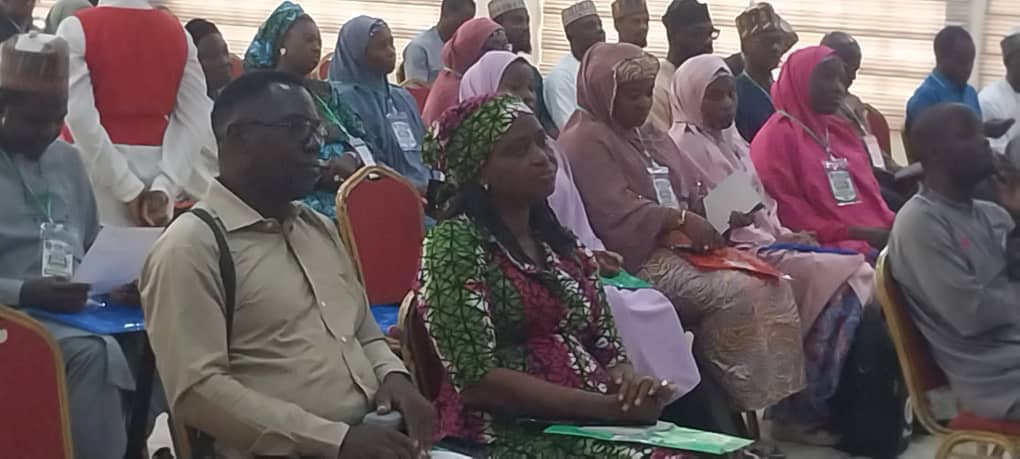
The Rector was speaking at a one-day capacity-building workshop on Open, Distance and Flexible E-learning (ODFel) for staff of the polytechnic held on Tuesday.
Represented by the Deputy Rector, Dr Usman Yusuf Dutse, the Rector added, “Today, learning can take place anytime and anywhere, allowing learners to study at their convenience and pace.
Recognising this reality, the Federal Government, through the Federal Ministry of Education and the National Board for Technical Education (NBTE), has encouraged institutions to embrace Open, Distance and Flexible E-Learning (ODFEL) as a strategic approach to expanding access to quality technical education and meeting the growing demand for skilled manpower.”
According to him,”The potential beneficiaries of this initiative are numerous. They include a young woman in a village in Alkaleri, Kumo or Konjiga who may be unable to leave her family to pursue higher education, as well as a civil servant in Damaturu, Gombe or other parts of the North-East seeking additional qualifications for career advancement.”
He added that,”ODFEL provides these learners with opportunities to acquire knowledge and skills through flexible and inclusive learning arrangements, ensuring that quality education is accessible regardless of geographical location or personal circumstances.”
The Rector further said, “However, it is important to emphasise that ODFEL goes far beyond uploading lecture notes in PDF format or conducting online classes through video-conferencing platforms. While these approaches may support learning, they do not, on their own, constitute a comprehensive Open, Distance and Flexible E-Learning system.”
He stressed that, “A functional ODFEL system requires carefully designed interactive learning materials, digital instructional resources, virtual laboratories where appropriate, effective learner-support services, continuous assessment and robust quality assurance mechanisms.”
He said, “Above all, it must produce graduates whose knowledge, skills and competencies are comparable to those acquired through conventional modes of study. This is a fundamental requirement of the National Board for Technical Education and underscores the importance of this workshop.”
He added that,”That is precisely why we are gathered here today: to deepen our understanding of ODFEL and recognise that effective online education requires more than virtual interaction. It demands well-structured learning processes and appropriate support systems that ensure students acquire the knowledge, practical skills and competencies expected of them.”
The Rector said that,”The vision of the Federal Polytechnic Bauchi is clear. We do not aspire merely to establish an ODFEL centre in name. Rather, we are determined to position the institution as a leading regional hub for flexible technical education and skills development in the North-East.”
He also said that,”We believe that the Federal Polytechnic Bauchi serves as a gateway to the North-East and should continue to set the pace in educational innovation and technological advancement.”
According to him, “Our institution is strategically positioned to achieve this ambition. The presence of the NBTE North-East Zonal Office within our institution provides us with an added advantage in terms of professional engagement, regulatory guidance and collaboration.
“Furthermore, our institution has developed a strong and resilient skills-development centre. Our Management Information System (MIS) centre has also grown into a consultancy resource, attracting other institutions within the North-East that seek guidance on our systems and operational practices.”
He added that,”We have equally made significant progress in ICT adoption and compliance. I recall an occasion when participants were asked to present their examination slips. I was able to produce mine immediately, while others had to contact their respective institutions to have theirs scanned and sent to them.”
According to him,”This experience illustrates the practical benefits of our investment in digital systems. Our results-processing procedures and examination systems also demonstrate the progress we have made towards ICT-driven administration and academic management.”
He said,”Those who have been with this institution for some time can testify to the transformation that has taken place. We have continued to embrace technological innovations and comply with relevant policies introduced by the Federal Ministry of Education and the NBTE.
“Therefore, our commitment to ODFEL is not simply about adopting a new name or establishing another centre. We want to set standards that other institutions can learn from and replicate,” he added.
He said, “By the grace of Almighty Allah, and with the continued support of our stakeholders, we intend to commence accredited programmes under ODFEL, strengthen our capacity for digital content development, establish appropriate learning infrastructure and build a critical mass of trained academic staff capable of designing and delivering high-quality flexible learning programmes.”
He added, “You, the participants in this workshop, are among the first group of professionals who will help translate this vision into reality. You are the pioneers who will lay the foundation for the successful implementation of ODFEL at the Federal Polytechnic Bauchi.
“I therefore encourage you to seize this opportunity. The presence of the regulators and technical experts here today offers us a valuable chance to acquire the knowledge, practical guidance and professional insights required to establish our programmes on a solid footing,” he told the participants.
He urged participants to, “Engage actively with the facilitators, seek clarification where necessary and ensure that you understand the standards and expectations required for successful implementation and accreditation. With the knowledge you acquire, you may eventually serve as resource persons, sharing your expertise with other institutions seeking to establish or strengthen their own ODFEL programmes.”
He urged every participant to approach the workshop with commitment, enthusiasm and a willingness to learn, stressing, “Do not merely attend the sessions; participate actively, ask questions, exchange ideas and acquire the practical skills required to develop quality ODFEL courses.”
According to him, “The knowledge gained here must translate into tangible results that will strengthen our institutional readiness, improve the quality of our programmes and prepare us for successful implementation and accreditation.”
According to him We particularly appreciate the NBTE’s continued investment in capacity building, the provision of technical guidance and the deployment of resource persons to support institutions in developing effective ODFEL systems.
He concluded, “We are grateful to the NBTE delegation for honouring our invitation and for partnering with the Federal Polytechnic Bauchi in organising this important workshop. We look forward to a fruitful collaboration that will strengthen our institutional capacity and advance the delivery of quality technical education.”
Earlier in his welcome remarks, the Director of the programme, Dr Auwal Abdullahi, said that the workshop marks an important milestone in the collective efforts to establish a sustainable, accessible and quality-assured Open and Distance Learning system at the Federal Polytechnic Bauchi.
According to him, ODFLeL provides an important opportunity to expand access to education, particularly for working professionals and other learners who may be unable to participate fully in conventional face-to-face learning.
He said that, “Through flexible learning arrangements, we can reach a wider population, promote inclusiveness and create more opportunities for skills development and lifelong learning.
However, the successful implementation of flexible e-learning requires more than technology. It demands appropriate policies, qualified personnel, effective student support services, reliable digital infrastructure, relevant learning resources and robust quality assurance mechanisms.”
“This accreditation exercise is therefore essential in assessing our level of preparedness, identifying areas requiring improvement and ensuring that our programmes meet the standards prescribed by the National Board for Technical Education, he said.
The Director assured that, “As a Directorate, we recognise that accreditation is not merely a regulatory requirement. Rather, it is a foundation for academic credibility, institutional accountability and continuous improvement. We are committed to working closely with the NBTE, the Polytechnic management, academic departments and relevant service units to address identified gaps and ensure the effective implementation and sustainability of our ODL programmes.”
He particularly encourage Academic Directorrs, Heads of Departments, Programme Coordinators and all participants to engage actively in the workshop urging them to ask relevant questions, share experiences and make the best possible use of the knowledge, expertise and professional guidance that will be provided by the NBTE team.
He also acknowledged the contributions of the NBTE Consultancy Services, the Directorate of Academic Planning and Quality Assurance, the ICT Directorate, the Research and Development Unit, and other relevant departments and units whose cooperation and commitment are vital to the success of the initiative.
According to him, “Our collective goal is to build an Open and Distance Learning system that promotes quality, flexibility, inclusiveness and employability, in line with the mandate of the Polytechnic and the broader objectives of Nigeria’s education system.”
He therefore expressed confidence that the outcome of the workshop will provide valuable direction for the continued development, strengthen institutional capacity and bring the participants closer to achieving the required accreditation standards.
