
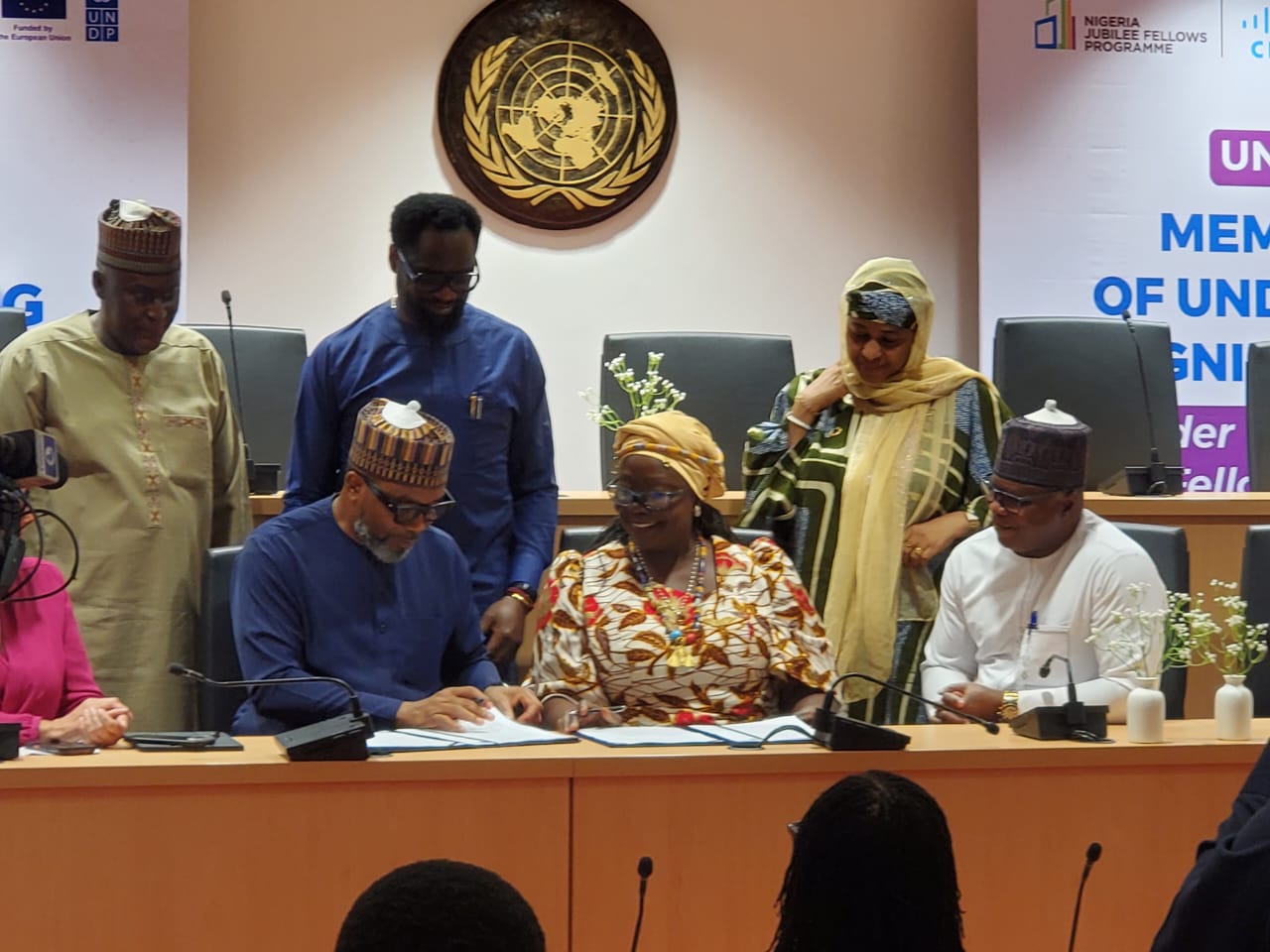

The United Nations Development Programme (UNDP) and global technology firm Cisco have entered into a partnership to equip up to 50,000 Nigerian youths with digital skills, as the government and development partners intensify efforts to bridge the gap between graduate unemployment and the growing demand for technology-driven jobs
The initiative, backed by the European Union (EU), will provide beneficiaries of the Nigeria Jubilee Fellows Programme (NJFP) with free access to Cisco’s Networking Academy platform, enabling them to acquire industry-relevant digital competencies to improve their employability and competitiveness in the labour market.
The partnership, formalised through a Memorandum of Understanding (MoU) signed at the UN House in Abuja on Friday, seeks to complement graduates’ workplace experience with digital training at a time when technological proficiency is becoming increasingly important across industries.
The intervention is expected to strengthen the link between education, practical workplace experience and employment, while expanding young Nigerians’ access to skills required in the evolving digital economy.
Representatives of the Federal Government, the EU, development partners, NJFP fellows and alumni attended the signing ceremony.
The NJFP is a Federal Government initiative funded by the EU and implemented by UNDP to connect Nigerian graduates with structured workplace learning and employment opportunities.
Representing the Office of the Vice President’s Delivery Unit, the Senior Special Assistant to the President on Delivery and Coordination, Mr Akubo Adegbe, said the collaboration would strengthen the relationship between skills acquisition and job creation.
He said the initiative aligned with President Bola Tinubu’s Renewed Hope Agenda, particularly its priorities of employment generation, economic opportunities and human capital development.
For the EU, the partnership represents part of its broader support for a more competitive and inclusive Nigerian economy, with young people positioned to contribute to innovation, entrepreneurship and sustainable growth.
The Head of Green and Digital Economy at the EU Delegation to Nigeria and ECOWAS, Ms Yolanda San Jose, said the bloc remained committed to youth empowerment and Nigeria’s digital economic development.
She said the EU’s Global Gateway strategy supported the development of a competitive, greener and inclusive economy in which young people could drive innovation and create sustainable economic opportunities.
UNDP Resident Representative, Ms Elsie Attafuah, said the collaboration would help connect young Nigerians’ skills and workplace experience with employment opportunities in an increasingly competitive labour market.
Attafuah said the partnership brought together Cisco’s technology expertise and UNDP’s development experience to help young people secure meaningful employment and sustainable livelihoods.
Under the arrangement, participating fellows and alumni will access digital learning opportunities through Cisco Networking Academy on a rolling basis. The training is expected to complement their workplace exposure and strengthen their readiness for careers requiring digital competencies.
Beyond the immediate beneficiaries, the initiative is intended to help employers access a wider pool of digitally skilled talent while addressing the persistent disconnect between formal education and the practical skills demanded by businesses.
The EU delegation noted that young people account for about 70 per cent of Nigeria’s population, making youth skills development and access to productive employment critical to inclusive economic growth.
With digital technologies increasingly shaping business operations, financial services, communications and other sectors, the partnership places digital skills development at the centre of efforts to improve graduates’ employment prospects.
However, the programme’s wider impact will depend on how effectively beneficiaries translate their training into jobs, entrepreneurship and other sustainable economic opportunities.
The partnership therefore adds a digital skills component to the NJFP’s workplace learning model, with the prospect of helping more Nigerian graduates compete for opportunities in an economy undergoing rapid technological change.
