
Wadada’s big vision: FCT sustainable development commission, expects and a new economic dawn for Nasarawa take centre in Keffi

By Sam Israel
In what could emerge as one of the most consequential policy declarations in the build-up to the 2027 governorship election in Nasarawa State, Senator Ahmed Wadada Aliyu has unveiled an ambitious development vision that seeks to address the longstanding challenges of communities surrounding the Federal Capital Territory (FCT), restore the productive relevance of retired professionals and position Nasarawa State as a major destination for investment and economic prosperity.
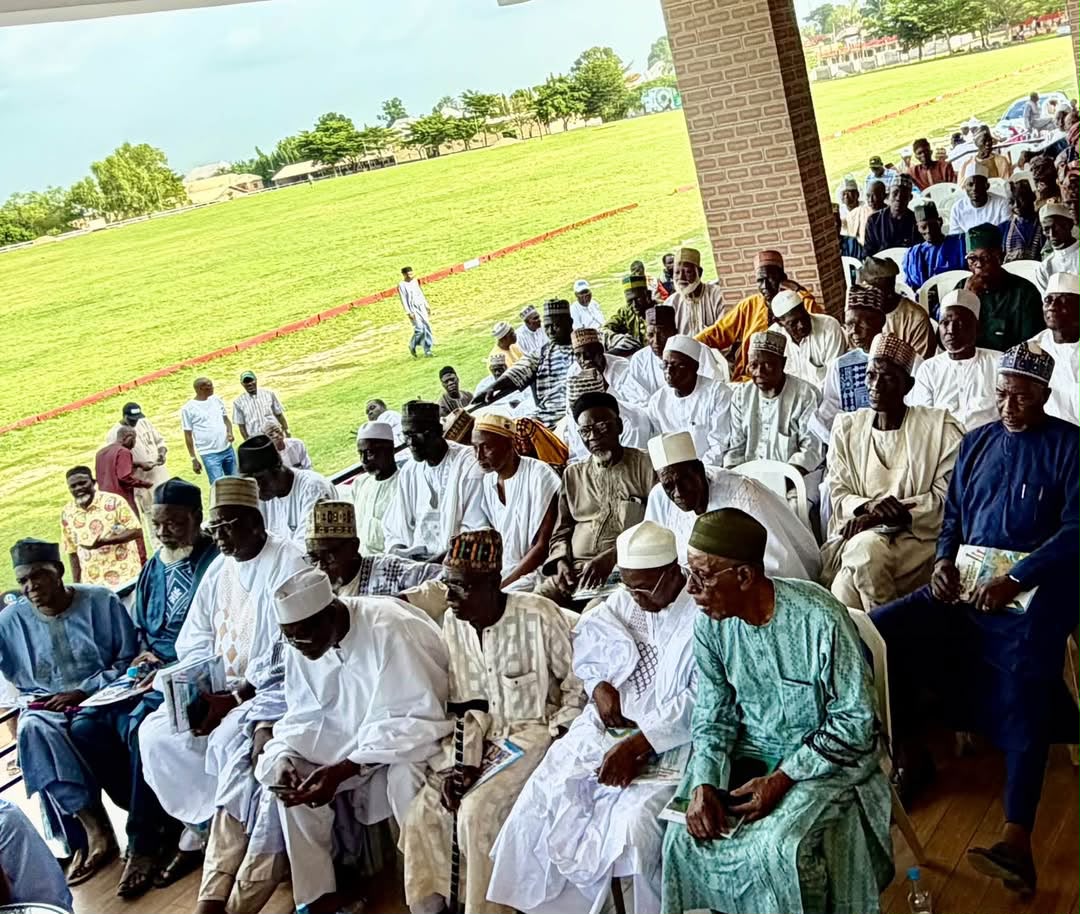
The declaration came on Sunday, October 18, 2026, when the senator, who is the All Progressives Congress (APC) governorship candidate for Nasarawa State, addressed 109 distinguished elders and numerous stakeholders drawn from different professional, ethnic, traditional and political backgrounds at the Keffi Polo Ranch
The gathering, which brought together traditional title holders, professors, retired senior public servants, ambassadors, community leaders and representatives of different ethnic groups, was more than an ordinary political consultation. It provided a platform for the senator to explain the policy direction he envisages for Nasarawa State and to solicit the collective wisdom and support of the people whose experience and influence have helped shape Keffi over the years.
At the heart of his address was the proposed Federal Capital Territory (FCT) Satellite Towns Development Commission, a legislative initiative he said had passed second reading. According to Senator Wadada, the proposed commission is intended to address infrastructure deficits, urban expansion and sustainable development challenges confronting satellite communities and towns surrounding the nation’s capital while promoting a more inclusive approach to development.
Explaining the importance of the proposed commission, the senator argued that communities whose ancestral lands and territories contributed to the creation of the FCT should not remain on the margins of the economic opportunities generated by the federal capital. He identified Nasarawa, Kogi, Niger and Kaduna states among those whose communities stand to benefit from a more inclusive development framework.
He expressed the expectation that, when established, the commission would expand employment opportunities, improve development prospects and strengthen the participation of affected communities in the affairs and economic life of the FCT.
For communities that have watched the federal capital expand over the years while grappling with the pressure of urbanisation, infrastructure demands and increasing population, the proposal presents an important question of development equity: how can the prosperity of the nation’s capital translate into meaningful opportunities for its neighbouring communities?
Senator Wadada’s intervention places that question firmly on the legislative and political agenda. The final impact, however, will depend on the provisions of the enacted law, the commission’s funding, its governance structure and the effectiveness with which its programmes are implemented.
RETIRED EXPERTS: WADADA WANTS EXPERIENCE TO REMAIN AN ASSET, NOT A FORGOTTEN RESOURCE
Perhaps one of the most striking aspects of the senator’s address was his proposal to give retired professionals a renewed sense of purpose by engaging them in community development.
Wadada said that, if elected governor in 2027, his administration would establish a committee to create an enabling environment for retired intellectuals and experienced public servants to return to productive service in their communities.
Under the proposed arrangement, qualified retirees would be engaged in community service according to their areas of specialisation and remunerated for their contributions.
To illustrate his point, the senator questioned the practice whereby a permanent secretary retires from public service or a university professor completes a distinguished academic career and subsequently disappears from the active development process, despite possessing years of accumulated knowledge and professional experience.
He argued that retirement should not automatically mean the end of meaningful service to society.
Instead, he envisages a system in which retired administrators, professors, engineers, educationists, health professionals and other specialists would help mentor younger generations, strengthen local institutions, advise community organisations and contribute to solving practical problems at the grassroots.
The underlying philosophy is straightforward but potentially transformative: a society that invests decades in educating and training its citizens should not allow their accumulated expertise to go to waste merely because they have reached retirement age.
By creating an organised structure for knowledge transfer, Wadada hopes to connect the wisdom of older generations with the energy, creativity and aspirations of younger people.
If properly designed, the initiative could help communities benefit from mentorship, professional guidance and institutional memory while creating a more structured relationship between retired experts and local development.
It is a proposition that places human capital alongside roads, buildings and industrial investments as an essential instrument of development.
HEARTS AGENDA: THE BLUEPRINT FOR A CONNECTED AND PROSPEROUS NASARAWA
Turning to his governorship manifesto, Senator Wadada took considerable time to explain his HEARTS agenda, presenting it as the framework through which his administration would pursue development across the state.
The agenda places emphasis on health, education, agriculture, rural development, transportation and infrastructure, alongside the wider priorities of human capital development, security, empowerment and accountable governance.
His central argument was that Nasarawa State cannot realise its full potential if its communities remain disconnected from one another, if rural areas are excluded from economic opportunities or if essential public services fail to reach the people who need them most.
He promised to pursue a development strategy that would link communities through roads and supporting infrastructure, improve access to economic centres and open up the state to wider commercial opportunities.
For a state with agricultural potential, solid mineral deposits, growing settlements and a strategic location close to Abuja, the importance of connectivity cannot be overstated.
Roads connect farmers to markets, businesses to customers, workers to employment and rural communities to essential services. Infrastructure also reduces the isolation of communities and creates opportunities for private investors to operate beyond established urban centres.
Wadada’s message was that development must not be concentrated in a few towns while other communities remain disconnected from the opportunities available elsewhere.
His vision is to make the benefits of governance more visible across the state, with infrastructure serving as a foundation for economic growth rather than merely as a collection of completed projects.
The challenge before any administration pursuing such an agenda would be to translate the manifesto into costed programmes, clear implementation timelines, measurable performance targets and transparent public reporting.
For the senator, however, the message to the Keffi stakeholders was that the future of Nasarawa must be built around a coordinated development plan that brings its people, resources and communities into one productive system.
SULE’S INDUSTRIAL LEGACY AND NASARAWA’S MINERAL WEALTH
Senator Wadada also paid tribute to Governor Abdullahi Sule for his industrialisation efforts, acknowledging the importance of creating an environment in which businesses can establish operations, generate employment and expand the state’s economic base.
He expressed optimism that Nasarawa could become one of Nigeria’s most prosperous states, pointing to the growing interest in lithium and other mineral resources as a major opportunity for economic expansion.
According to him, investors are already showing interest in the state’s mineral potential, creating prospects for employment and business opportunities for young people and women.
The senator’s argument is that mineral resources should become more than geological discoveries or items on an investment brochure. Properly developed, they could stimulate industrial activity, generate public revenue, support local enterprises and create skilled employment.
But he also understands, at least in the vision he presented, that investment must be accompanied by infrastructure and a deliberate commitment to local participation.
The real measure of success would be the extent to which mineral development creates opportunities for Nasarawa’s people, supports responsible environmental management, encourages local value addition and produces sustainable benefits for communities hosting mining activities.
By commending Governor Sule’s industrialisation drive while promising to build on the state’s economic opportunities, Wadada presented his proposed administration as one that would seek continuity where existing policies are productive and pursue further expansion where additional opportunities exist.
His message was not simply that Nasarawa possesses valuable resources, but that those resources must be translated into a better standard of living for its citizens.
WHY WADADA WANTS TINUBU TO RETURN IN 2027
The senator also used the occasion to rally support for the APC and appeal to Nigerians to re-elect President Bola Ahmed Tinubu, arguing that the administration’s development initiatives deserve consideration as the country approaches the next general election.
In identifying projects and institutions he considers important to Nasarawa and the surrounding region, Wadada cited the Keffi–Nasarawa–Toto–Abaji road, the Akwanga–Jos–Bauchi–Yobe–Maiduguri road corridor, the Federal University of Mining and Technology in Nasarawa State, the North Central Development Commission, the underpass and overbridge around Total Roundabout in Keffi, and the Lafia teaching hospital project.
He presented these initiatives as evidence of the importance of federal investment in transportation, education, healthcare and regional development.
For communities in Nasarawa, improved roads can reduce travel difficulties, strengthen commercial links and facilitate the movement of agricultural produce and other goods. Institutions of higher learning can also expand access to education while supporting research, skills development and specialised training.
Similarly, healthcare infrastructure has the potential to improve access to medical services and strengthen the capacity of the state to respond to the needs of its growing population.
The senator’s appeal was that voters should assess the federal administration in the light of its policies, projects and development commitments, while considering the value of continued cooperation between the federal and state governments.
He also linked the fortunes of Nasarawa State to the need for effective political representation and sustained engagement with the federal government.
His argument was that a state seeking to expand its infrastructure, industrial base and employment opportunities must be prepared to take advantage of federal programmes while building its own capacity for development.
KEFFI ELDERS SPEAK: “THIS IS A COLLECTIVE STRUGGLE”
If Senator Wadada came to the meeting to explain his vision, the responses from the stakeholders demonstrated that the gathering was also an opportunity for influential members of the community to articulate their expectations of the 2027 political process.
Alhaji Kawu Dahiru, Alhaji Ibrahim Abdullahi Kalus, Mr Jacob Ario and Deacon Labaran Kuje praised the senator for what they described as his dedicated service since his days in the House of Representatives and his current position in the Senate.
They expressed their determination to support his aspiration to become governor of Nasarawa State, describing the campaign as a collective undertaking requiring commitment, mobilisation and cooperation among stakeholders.
Their position was that Wadada’s governorship ambition should not be left to the senator or his immediate political associates alone. Rather, they called for a coordinated effort involving communities, political leaders and supporters across the state.
In a separate intervention, Professor Umar Usman, Alhaji Yahaya Umar, Alhaji Musa Ali and Dr Yakubu Mohammed Salisu, popularly known as Gole, proposed adopting an initiative they called “Operation Deliver Your Wards.”
Under the proposed strategy, stakeholders would be expected to take responsibility for political mobilisation within their respective wards, engaging eligible voters and encouraging participation in the electoral process.
The objective, they explained, would be to ensure that supporters translate their political declarations into organised, lawful and effective participation at the ballot box.
Their remarks reflected a recognition that political enthusiasm, however strong, must be supported by grassroots organisation if it is to produce electoral results.
They further argued that Wadada’s aspiration should be understood within the broader political development of Nasarawa State, where equitable representation, mutual understanding and cooperation among the different zones remain important considerations.
They called on supporters and well-wishers of the senator to engage their friends, relatives and associates both within and outside the state, while urging the people of Keffi to maintain a common front despite differences in family background, political affiliation and personal preference.
Their concluding message was particularly significant: politics may come and go, but the unity and enduring fraternity of Keffi must remain.
KEFFI UNITY ABOVE PARTY POLITICS
One of the strongest themes to emerge from the meeting was the insistence that political competition must not be allowed to destroy the relationships that bind the people of Keffi together.
The stakeholders recognised that a community can accommodate different political opinions without surrendering its shared identity, history and collective interests.
Their call for unity was directed at a town whose people include different ethnic groups, traditional institutions, professional communities and political persuasions.
For them, the 2027 election presents an important political contest, but it must not become a reason for permanent divisions among neighbours, friends and families.
The meeting therefore served two purposes: to rally support for Senator Wadada’s governorship aspiration and to reinforce the principle that the development and cohesion of Keffi should remain above partisan disagreements.
That distinction matters in a political environment where electoral competition can easily strain longstanding relationships.
The elders’ message was that political support should be expressed through lawful participation and peaceful mobilisation, while the social bonds that sustain the community must be protected regardless of the eventual outcome.
DANMAGANI: “KEFFI MUST STAND BY ITS OWN”
In his vote of thanks, the Executive Chairman of Keffi Local Government Council, Dr Idris Danmagani, expressed satisfaction with the outcome of the gathering and thanked Senator Wadada for organising the meeting and bringing together people he described as important to the affairs of Keffi.
Danmagani called on the people of the area to support the senator’s governorship aspiration and participate actively in the 2027 election.
He expressed confidence in Wadada’s electoral prospects and challenged supporters to work towards translating their enthusiasm into votes.
The chairman’s remarks were emphatic, portraying the senator as a formidable contender in the governorship race. His assessment reflected the confidence expressed by several participants at the meeting.
He also stressed that Keffi’s unity was non-negotiable, urging the people to stand together in support of their collective interests.
The significance of his intervention lay not only in his endorsement of Wadada’s aspiration but also in his appeal for solidarity among the people of Keffi.
The gathering had already heard calls for collective mobilisation, ward-level engagement and unity across political differences. Danmagani’s closing remarks reinforced those themes and placed responsibility on the community to sustain the spirit of cooperation beyond the meeting.
109 ELDERS, ONE TABLE, MANY EXPERIENCES
The meeting at the Keffi Polo Ranch brought together 109 senior citizens representing different tribes and professional backgrounds, including traditional title holders, Yoruba community representatives, other ethnic leaders, academics, retired senior government officials and ambassadors.
Among those who accompanied Senator Wadada were Alhaji Bala Fati, Alhaji Usman Bala Boss, five professors and several retired senior public servants.
The composition of the gathering gave it a distinctive character. It brought together people whose experience spans public administration, education, traditional leadership, diplomacy, community relations and political organisation.
Beyond the formal speeches, the meeting was marked by handshakes, laughter and warm exchanges among participants, some of whom had not met one another for a considerable period.
Those moments offered a reminder that political engagement is often built not only through policy declarations and campaign speeches but also through personal relationships, mutual respect and the willingness of people to sit together and discuss the future of their communities.
The meeting’s broader message was that the development of Nasarawa State requires the involvement of people with different experiences and perspectives, while political mobilisation must remain anchored in the unity of the communities whose votes will ultimately determine the outcome of the election.
THE BIGGER PICTURE: FROM POLITICAL AMBITION TO A DEVELOPMENT CONTRACT
Beyond the immediate expressions of support, the Keffi meeting placed a larger question before Senator Wadada and the people of Nasarawa State: what kind of development contract should govern the relationship between political leadership and the citizens?
The senator’s proposals cover several important areas: a commission intended to address development challenges around the FCT, the productive engagement of retired experts, an infrastructure-led development strategy, the expansion of investment opportunities, stronger human capital development and the continuation of beneficial partnerships with the federal government.
Together, these ideas present a vision in which development is not confined to government offices or major urban centres but extends to communities, institutions, businesses and individual citizens.
The proposed engagement of retired professionals is particularly notable because it recognises knowledge as an economic and social resource. The mineral investment agenda recognises the potential of natural resources, while the HEARTS agenda places infrastructure and public services at the centre of wider economic development.
The challenge, should Wadada assume office, would be to move from declarations to implementation: establish priorities, determine costs, identify funding sources, set measurable targets and publish progress reports that allow citizens to assess performance.
For the proposed FCT Satellite Towns Development Commission, the next important steps would be the completion of the legislative process, presidential assent where constitutionally required, and the establishment of a clear implementation framework.
For Nasarawa, the task would be to ensure that roads, schools, healthcare, agriculture, industry and community development programmes work together rather than operate as disconnected initiatives.
And for the people of Keffi, the challenge would be to sustain the unity they proclaimed at the meeting while exercising their democratic rights freely and peacefully.
As the 2027 governorship election approaches, Senator Wadada’s engagement with the elders of Keffi has added another dimension to his political campaign. It has provided a platform for him to explain his policy priorities, receive feedback from influential community figures and seek their support for his ambition.
Whether the proposals eventually achieve their intended impact will depend on the details of their implementation, the resources committed to them and the accountability mechanisms put in place.
But the message from the Keffi gathering was unmistakable: the contest for the future of Nasarawa State is increasingly being framed not only around political personalities, but also around the development ideas, institutional arrangements and leadership commitments that candidates place before the electorate.
And at the Keffi Polo Ranch, Senator Ahmed Wadada Aliyu made his case before 109 elders and stakeholders, while the people who gathered around him made theirs equally clear: they intend to play an active role in shaping the political future of their community and the state.
The handshakes and laughter may have marked the end of the meeting, but the political conversations it generated are likely to continue well beyond the walls of the Polo Ranch.
Israel JP is the Senior Special Assistant on media to Senator Ahmed Wadada Aliyu.
