
By Sunny A. David, Awka
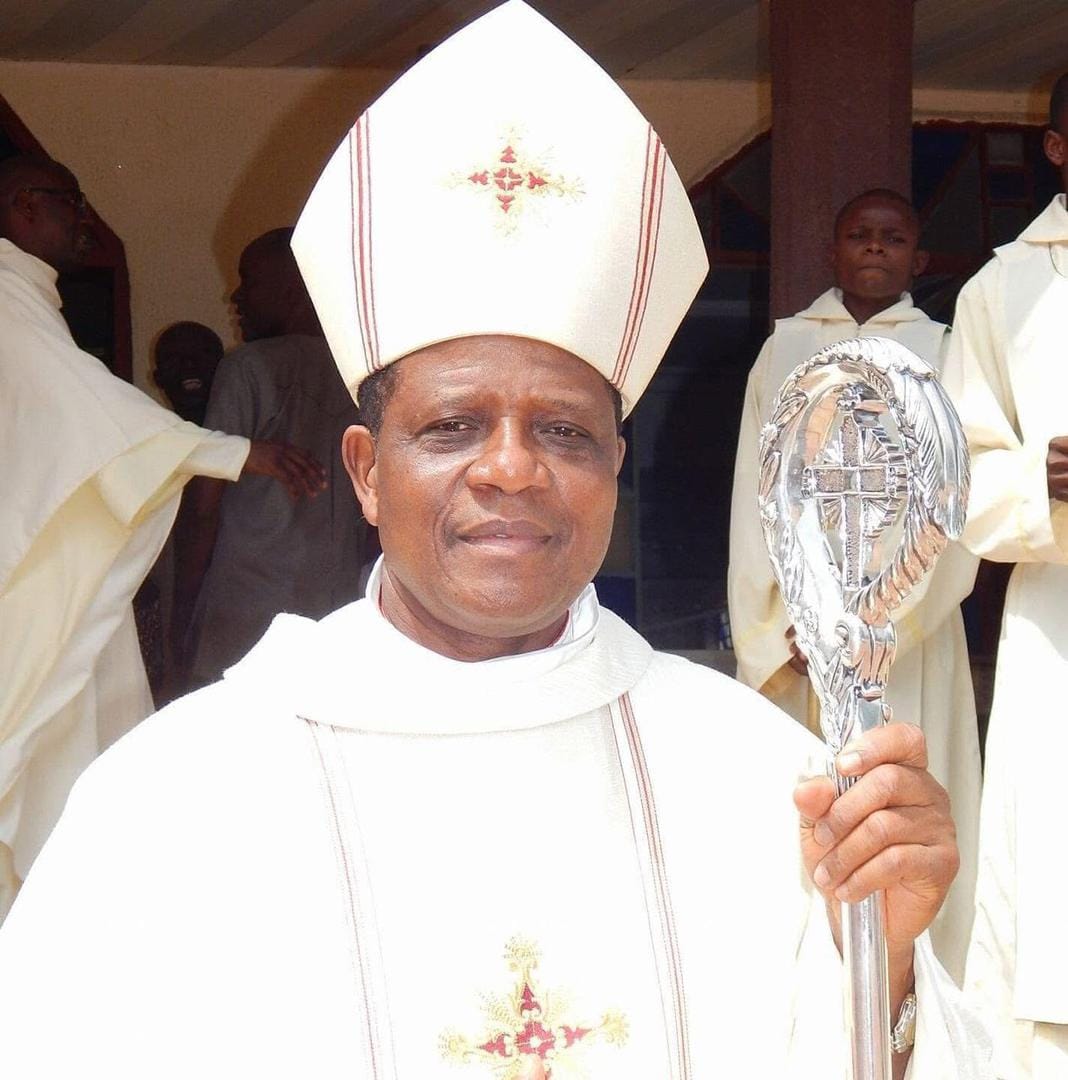
The Catholic Bishop of Nsukka Diocese, Enugu State, Most Rev. Godfrey Onah, has raised concerns over the state of Nigeria’s democracy, accusing President Bola Tinubu of concentrating excessive political power in the presidency and weakening the independence of democratic institutions
Onah described the President as an absolute monarch and emperor whose influence, he alleged, has become the foundation upon which lawmakers, judges and other political officeholders in the ruling party exercise their authority.
The outspoken cleric also lamented what he described as the transformation of Nigeria’s democracy into a combination of plutocracy and kleptocracy, where political power is dominated by the wealthy and individuals who allegedly exploit public office for personal gain.
Speaking on the country’s political situation, the bishop argued that elected officials in the ruling party no longer appear to recognise the electorate as the source of their political mandate, but instead attribute their authority to President Tinubu.
“Today, nobody in the ruling party believes he’s holding the mandate of the people. All of them say they are standing on the mandate of the President, whose own mandate is questionable and still being contested,” he said.
According to him, such a development contradicts the fundamental principles of democracy, which require elected representatives to remain accountable to the people who voted them into office.
He maintained that while political appointees derive their authority from those who appointed them, elected officials should be answerable to their constituents rather than political leaders.
“Any politically appointed officer is standing on the mandate of the person who appointed him. But if you have been chosen by your people, why are they all now standing on the mandate of the President?” he queried.
Onah further alleged that the President had assumed excessive powers, with democratic institutions that should serve as checks and balances seemingly unable to restrain the executive arm of government.
“Because the President has become an absolute monarch, an emperor who is not controlled by anybody or by any forces,” the bishop declared.
He also questioned the independence of the judiciary and the effectiveness of the National Assembly, expressing concern that institutions constitutionally empowered to check executive excesses were allegedly operating under the influence of the presidency.
The cleric equally criticised the political relationship between the Federal Government, state governors and local government chairmen.
He described governors as the President’s “satraps” and local government chairmen as field officers and political foot soldiers of governors, arguing that the arrangement undermines democratic accountability at different levels of government.
“What we call democracy now in Nigeria is the most corrupt form of what I call plutocracy and kleptocracy,” he said.
“Plutocracy is the reign of those who have money, while kleptocracy is the rule of thieves. That is what we have in Nigeria today.”
The Catholic bishop also expressed pessimism about the possibility of conducting credible, free and fair elections in Nigeria in 2027, insisting that recent political developments and local government elections had raised serious concerns about the country’s electoral future.
“Everybody is saying we want free and fair elections in 2027. It will not happen now. The signs are everywhere,” he warned.
He challenged Nigerians who believe that the 2027 general elections would be credible to examine the conduct of recent local government elections in Enugu State.
According to him, the electoral process did not provide sufficient evidence of genuine political competition or meaningful participation by opposition parties.
Onah alleged that the winners in the local government elections were not freely chosen by the electorate, claiming that the exercise was controlled by political interests.
“They were all tele-guided, not even one single councillor was chosen by the people, let alone local government chairman,” he alleged.
He warned that unless democratic principles were respected at the grassroots, confidence in the credibility of future elections would continue to diminish.
The bishop’s comments have added to the growing national debate over the independence of democratic institutions, political accountability and the future of Nigeria’s electoral system ahead of the 2027 general elections.
