

By Anthony Maliki, Abuja
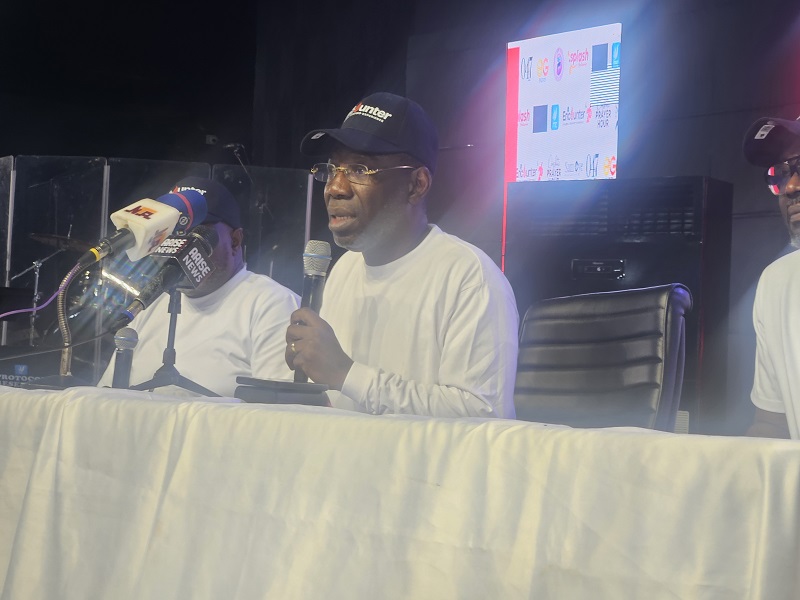
The Founder and Lead Pastor, The Transforming Church (TTC), Abuja, Rev. Dr. Sam Oye on Thursday in Abuja said the first catalyst for national transformation, growth and development, is the fear of God
Rev. Oye, who is also the convener of Prophetic Prayer Hour, (PPH), that draws millions of followers worldwide, made the remarks at a press conference while dwelling on the State of the Nation.
According to him, the fear of God is at all levels but that fear of God may be given a different name in different climes.
“If you go to Singapore, it is given a different name. It could be called integrity. Is that okay? If you go to Dubai, Saudi Arabia, or if you go to Japan, they have different names. It could be called integrity. It could be called righteousness in government. It could be called accountability,” he pointed out.
Rev. Oye, however, noted that the “bottom line is where there is spiritual consciousness of a being higher than us that we will end up having a recourse to, or where there is a system higher than us that will hold us accountable for whatever we do, whether that system be a divine system, a governing system that compels accountability from us.”
He stressed that the fear of God is usually the foundation for morality, accountability and responsibility in government but explained that in a place where there is no sense of fear of governance, accountability, response, nobody is going to hold anyone accountable for anything.
“In such a place, corruption is usually very high. Think about what happened in Singapore when a minister got to know that a story leaked that he collected just about $1,000. Just that because he heard that has leaked to the government, to the leadership, he hanged himself,” Rev. Oye averred.
He noted that people can have love for God in a country, but if they don’t have fear for God, the fear of God will be corruption in that country.
Rev. Oye said: “That is why you are amazed that you don’t see that Nigeria seems to profess a lot of love for God, but they see corruption because there is no fear of God.
“Two, there is no fear of government because who is government? So, who is going to hold me accountable for corruption, the system itself that we should hold me accountable is also corrupt. So, we need the fear of God…It was spiritual rebirth, and that spiritual rebirth must be evidenced by the fear of God, the fear of the system, the governing system, which is measured by accountability and responsibility, expressed through integrity by everyone that holds an office in government,” he said.
On the 2027 general election, Pastor Oye pointed out that it has been generating a lot of tension but the first thing is to again accountability and integrity of the voting system.
He said if the Independent National Electoral Commission (INEC) remains an integral organisation free from corrupting influences, Nigerians can be sure that come 2027, people will vote and votes will count.
“It’s not just that we are counted, but our votes are made to count. So first of all, I think Nigerians need to know that a system has been put in place to ensure that the election will be free and fair. It will be credible. It will be integral,” Rev. Oye stated.
Besides, he noted that no matter how integral the electoral system will be, there are still people who want to perpetuate evil during those events and security systems and agencies needed to be alert and visibly present days before the election.
He said the presence of security agencies will to a great extent, checkmate those who have the penchant towards evil during elections.
Rev. Oye warned against any attempt to postpone the election which might increase the agitation, the tension, and possibly open the door for violence in the country.
He also spoke about Nigerians needing spiritual help in the face of the present economic and difficulties just as the government equally needs help to govern.
According to him, the federal government need to find succour for the economic hardship and insecurity in the country.
