

By Cletus Agada
The establishment of the North East Development Commission (NEDC) in 2017 was a direct response to one of the most difficult challenges in Nigeria’s recent history. For several years, insurgency had devastated communities across the North-East, with states such as Adamawa, Bauchi, Borno, Gombe, Taraba and Yobe bearing the heaviest impact. Families and entire communities were displaced, public infrastructure was destroyed, businesses collapsed, and access to basic services became increasingly difficult for millions of people. Rebuilding a region affected by such extensive destruction required more than emergency relief or short-term interventions.
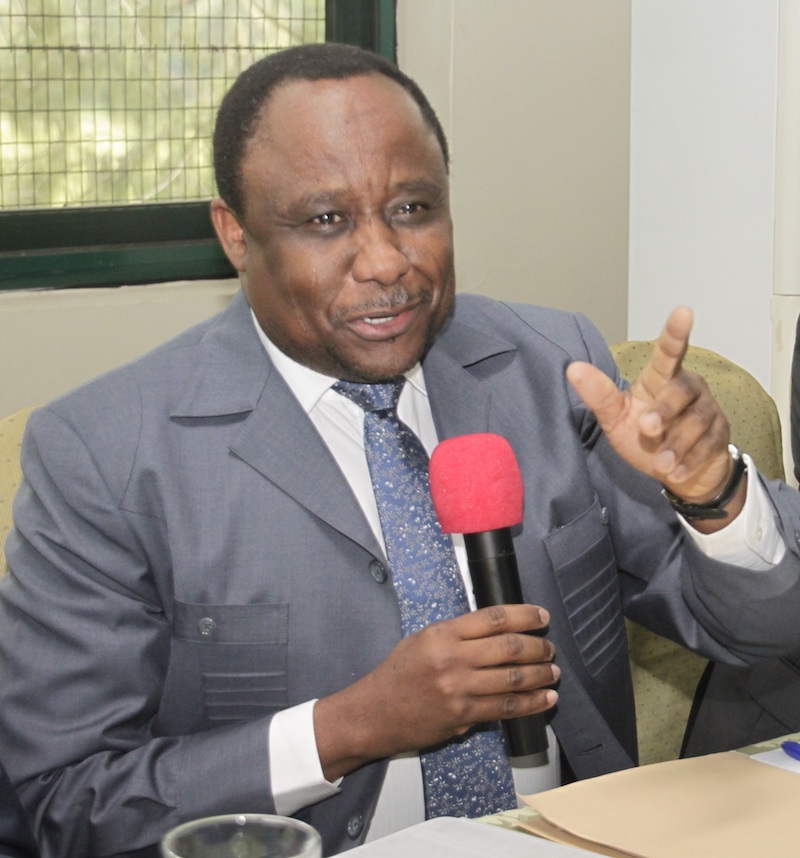
It demanded an institution capable of addressing immediate humanitarian needs while simultaneously laying the foundation for lasting recovery and development. Eight years after its creation, the NEDC, under the leadership of its Managing Director, Dr. Mohammed Goni Alkali, has provided a compelling example of what a focused and transformative public agency can achieve, steadily turning around the fortunes of a once-devastated North-East region
One of the defining features of the NEDC under Alkali has been its deliberate focus on a long-term development framework rather than a collection of isolated projects without strategic coherence. The North-East Stabilisation and Development Master Plan (NESDMP) 2020–2030 provides clear direction for the Commission’s interventions across education, healthcare, infrastructure, economic recovery and peacebuilding.
This approach recognises that the challenges confronting the North-East are deeply interwoven. Rebuilding a school without addressing the welfare and capacity of teachers, for instance, cannot guarantee quality education. By working within a broader, integrated development plan, the Commission ensures that its projects contribute meaningfully to the region’s overall recovery rather than remaining as stand-alone achievements.
The substantial number of projects completed under Alkali’s leadership further illustrates the scale of the Commission’s work. Within the eight years of its existence, more than 700 projects have been completed across the six North-Eastern states, with the NEDC intervening in sectors that directly affect the daily lives of residents.
These include the construction and rehabilitation of roads and bridges to improve movement between communities and facilitate trade, the development of housing projects for displaced and low-income families, and the provision of solar-powered boreholes and streetlights that have expanded access to essential services across the region.
Education deserves particular attention when assessing the Commission’s impact. The destruction of schools and the widespread displacement of families had left many children in the North-East without access to formal learning for years. The NEDC’s construction of mega basic schools across the region represents an important and practical response to this challenge.
Its interventions at Ari Kime Primary School in Potiskum, Yobe State, for example, illustrate the potential of rebuilding educational facilities on a meaningful scale. The school’s expansion, including additional classrooms and supporting facilities, has significantly increased its capacity to accommodate pupils.
The Commission has also supported tertiary institutions through the construction of new lecture halls as well as the upgrade of ICT centres and facilities for entrepreneurship and skills acquisition.
Healthcare is another area in which the NEDC has recorded notable progress since its establishment. The Commission has supported the construction, rehabilitation and upgrade of medical facilities, including specialised hospitals and treatment centres.
Projects undertaken at teaching hospitals in Bauchi, Yola and Maiduguri, among others, have strengthened the capacity of health institutions to meet the needs of the population. The provision of improved emergency facilities, maternity services and specialised eye-care infrastructure is particularly significant in a region where years of instability placed enormous pressure on already stretched medical services.
The Commission’s infrastructure interventions further demonstrate Alkali’s clear understanding of the relationship between physical connectivity and economic recovery. Many communities had been isolated by damaged roads resulting from years of insecurity, making it difficult to transport farm produce, access markets or reach public services.
The NEDC responded with projects such as the Dabna–Garkida Road in Adamawa State, the Alkaleri–Futuk Road in Bauchi State and the Mutai–Ngalda Road in Yobe State, which have improved access and helped reconnect affected communities. In addition, the construction of cattle markets in Soro, Bauchi State, and Kukareta, Yobe State, has created new commercial opportunities and strengthened livestock trade, a vital component of the regional economy.
The NEDC under Alkali has also made important contributions to human capital development and employment. As the region emerges from prolonged conflict, lasting stability depends heavily on giving young people access to education, vocational training and productive work.
The Commission’s support for agricultural inputs and skills-acquisition programmes has helped provide that foundation for stability and economic participation.
As the Commission continues to make steady progress under the leadership of Dr. Mohammed Goni Alkali, and with the broader policy direction of President Bola Ahmed Tinubu’s administration and the active involvement of Vice President Kashim Shettima, there is renewed hope for continuity and sustained momentum in the region’s reconstruction agenda.
Although the North-East still has considerable ground to cover, the work undertaken by the NEDC demonstrates that recovery becomes more achievable when development is treated as a sustained institutional responsibility rather than a series of temporary interventions.
Under Alkali, the Commission has the opportunity to further strengthen this record and firmly establish itself as a model of public service that successfully turns reconstruction into lasting social and economic progress.
Agada writes from Abuja
