
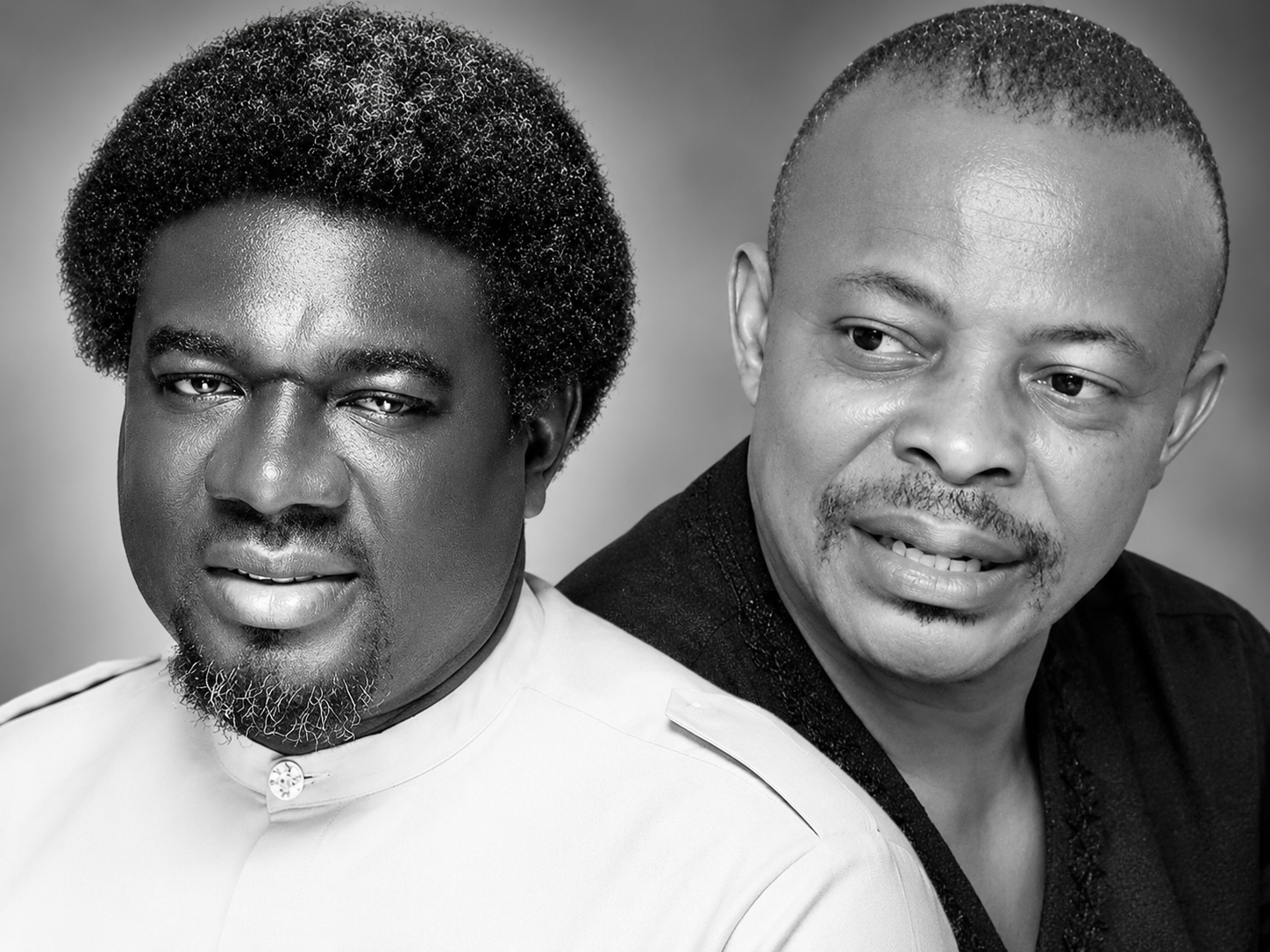

An investigative report into the ongoing face-off between the Presidents of the Nigeria Labour Congress (NLC), Comrade Joe Ajaero, and the Trade Union Congress of Nigeria (TUC), Comrade Festus Osifo, has found that several allegations exchanged by the two labour leaders were either false, unsubstantiated or contradicted by available evidence.
The investigation, conducted by Abuja and Lagos-based investigative journalists, Frank Ademola and Moses Abiola, examined 12 major claims and counterclaims arising from the disagreement between the two labour centres over the Federal Government’s six-month ₦70,000 transport allowance for public servants.
The report, titled “Claims and Counterclaims: What Our Investigation Reveals,” identified the issues based on public interest and social media engagement, following more than 22 allegations and counter-allegations exchanged by the two labour leaders
According to the investigators, the fact-finding exercise involved engagements with public servants, union members, relevant institutions and other credible sources within and outside the country alongside a review of official documents, public statements, media interviews and reports.
The journalists, however, disclosed that both Ajaero and Osifo failed to respond to their requests for comments or nominate representatives to address the issues raised.
On the controversial consequential adjustment for public-sector workers, the investigation found that the Joint National Public Service Negotiating Council (JNPSNC) negotiated a flat ₦40,000 adjustment across grade levels rather than the 133 per cent graduated increase associated with the minimum wage negotiations.
The investigators said enquiries among junior and senior public servants supported the position advanced by three public-sector unions, adding that the JNC had not publicly countered the allegation.
The report also dismissed Ajaero’s allegation that Osifo lives in the United States and only travels to Nigeria for union meetings.
An examination of available travel information indicated that Osifo spent less than 40 days on trips involving the United States between January and November 2026, including transit stops, with no single stay exceeding seven days within several weeks.
The investigation further established that Osifo remained an employee of TotalEnergies EP Nigeria Limited with about 50 calendar leave days and continued to undertake official and international engagements alongside his trade union responsibilities.
On the allegation that Osifo was a capitalist who did not work in the interest of Nigerians, the report found evidence of TUC interventions on food importation to reduce food prices, as well as proposals for using excess government revenue that is above the budgetary benchmark to subsidise fuel production and reduce the cost of petroleum products.
It noted that the TUC had engaged government officials, including the Secretary to the Government of the Federation and ministers responsible for finance, agriculture and health, on economic issues affecting workers and the wider population.
Evidence also found that Osifo used his position as president of PENGASSAN to massively improve workers welfare and hold capitalist to account through numerous industrial actions including strikes.
However, the investigation substantiated Ajaero’s allegation that Osifo had poor attendance at meetings of the National Pension Commission (PenCom) Board.
According to the report, information obtained from another board member indicated that the TUC President attended only one of three meetings during the period under review, despite available travel records showing that he was in Nigeria during the other two meetings. A source who is a member of PENGASSAN said he was engaged on other union functions involving PENGASSAN on those day aa he could recall one of the days vividly.
The investigators also dismissed the allegation concerning Osifo’s absence from meetings of the National Salaries, Incomes and Wages Commission, explaining that he was not a member of the commission’s board and was therefore not expected to attend in that capacity.
On the controversy surrounding the 90 Compressed Natural Gas (CNG) buses allocated to the NLC and TUC by the Federal Government, the report traced the TUC buses to an affiliate-based management arrangement approved by its National Executive Council of TUC.
It disclosed that the Road Transport Employers Association of Nigeria (RTEAN), a TUC affiliate, proposed to manage some of the buses under an arrangement involving monthly remittances to cover maintenance and other operational expenses. After NEC deliberation, an upfront payment of those remittances from affiliates were approved.
The investigation also reported that RTEAN and its partners had close to 65 buses in operation across the country, in addition to three buses deployed for corporate social responsibility activities. Some other TUC affiliates also got some of the buses. It further observed some long buses at the association’s headquarters and few others at a separate parking location within Abuja.
The report, however, described Ajaero’s statement on the whereabouts of the TUC buses as a question rather than a direct accusation.
On the argument that the NLC has exclusive authority to negotiate independently because of its numerical strength and representation at the International Labour Organisation (ILO), the investigators found the claim to be false.
They explained that the principle of highest representation at the ILO Conference, which gives the NLC a leading role in Nigeria’s workers’ delegation because of its larger affiliate base, is different from the legal provisions governing collective bargaining in Nigeria.
Citing Section 25 of the Trade Unions Act, Cap. T14, Laws of the Federation of Nigeria 2004, the report explained that registered unions in an employer’s workforce constitute an electoral college for selecting representatives for collective bargaining.
It added that the law separately provides for registered federations to constitute an electoral college for representation at tripartite and other bodies, taking into account their respective sizes.
The investigation also examined the historical disagreement between Ajaero and the NLC, following his defeat in the 2015 NLC presidential election.
It recalled that Ajaero, who contested against Ayuba Wabba, lost the election by 1,140 votes to Wabba’s 1,695 and subsequently became associated with the emergence of the United Labour Congress (ULC), which attracted some unions away from the NLC before its eventual dissolution and reconciliation of the unions in 2020.
The report consequently upheld Osifo’s claim that Ajaero’s departure from the NLC following his election loss contributed to divisions within organised labour.
However, it said it could not independently verify Osifo’s allegation that the strained relationship began in March 2023 when Ajaero allegedly asked him to join in confronting a government that had yet to be formed.
On the May Day celebration levy controversy, the investigation dismissed Ajaero’s claim that the TUC had never contributed financially to the annual celebration.
It said payment documents presented publicly on Channels Television, including records of transfers made to the NLC over the past three years, were found to be authentic and contradicted the allegation.
The report also examined Osifo’s claims about improvements in workers’ salaries during his tenure as President of the Petroleum and Natural Gas Senior Staff Association of Nigeria (PENGASSAN).
Following engagements with members across several branches, including Chevron, TotalEnergies, NUPRC, NMDPRA, Halliburton and NETCO Dietsmann, the investigators reported cumulative salary increases ranging from 200 per cent to 350 per cent between 2023 and 2026.
They disclosed that six respondents from different branches provided payslips, with personal information concealed, to support the claims.
In their overall assessment, the investigators said five of the seven issues arising from Ajaero’s allegations against Osifo were found to be false, one was substantiated, while another was classified as a question rather than an accusation.
Similarly, of the five issues arising from Osifo’s comments about Ajaero, four were found to be true, while one could not be independently verified.
The journalists stressed that their findings were based on available evidence and that claims they could not establish were deliberately classified as unverified rather than presented as facts.
They urged both labour leaders to shift attention from public exchanges and personal disagreements to issues affecting Nigerian workers.
According to the report, the ultimate measure of labour leadership should be the ability to protect jobs, negotiate improved wages, defend workers’ entitlements, influence public policies and ensure accountability in decisions taken on behalf of the workforce.
The investigators maintained that the ongoing disagreement should provide an opportunity for organised labour to address its internal differences and develop a common position on the welfare and economic interests of Nigerian workers.
