

By Sunny A. David, Awka
The Anambra State Government has restated that graduation ceremonies remain prohibited for pupils in primary schools and students in junior secondary schools, warning schools against compelling parents or students to pay for such events.
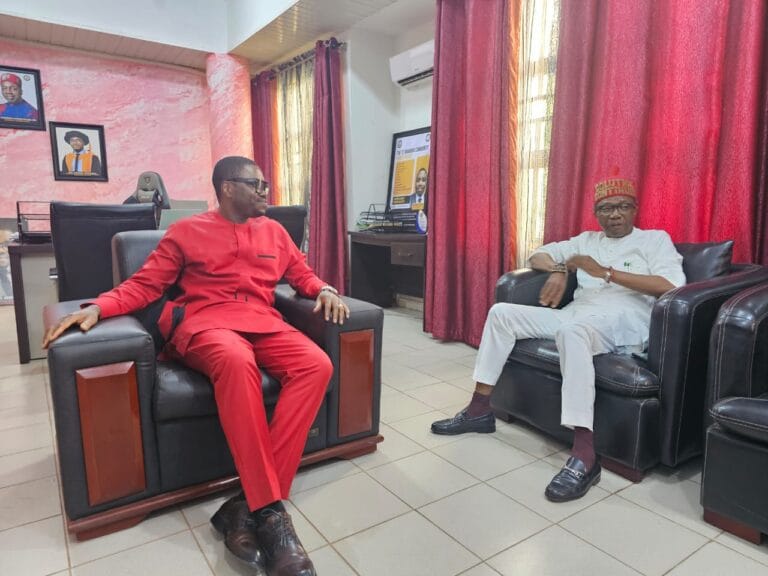
The Commissioner for Education, Dr. Ekene Ogugua, reaffirmed the government’s position during a courtesy visit by the Commissioner for Information and Value Reformation, Dr. Law Mefor, in Awka. The meeting focused on strengthening collaboration to advance Governor Chukwuma Soludo’s value reformation programme.
Ogugua stressed that the state’s policy has not changed, explaining that only students in Senior Secondary School Three (SS3) may hold graduation ceremonies, and even then, participation must not place any financial burden on students or their families.
According to him, schools are prohibited from demanding graduation fees from SS3 students. He noted that alumni associations, parents’ groups or other well-wishers may voluntarily organize graduation ceremonies, provided students are not required to contribute financially.
The education commissioner also emphasized the government’s determination to eliminate unnecessary financial pressures on parents while ensuring schools comply with established education policies.
During the meeting, both commissioners agreed to deepen collaboration between their ministries to promote moral values and improve disciplinary standards across schools in the state.
Speaking earlier, Dr. Mefor described education as a key pillar of Governor Soludo’s development agenda, stressing that infrastructural improvements must be accompanied by character development and positive behavioural change among students.
He advocated a review of disciplinary methods in schools, arguing that discipline should focus on correcting behaviour rather than relying mainly on corporal punishment or intimidation. He proposed the adoption of an “aversion” approach that helps students understand the consequences of misconduct and encourages responsible decision-making.
Mefor also expressed concern over increasing cases of students showing disrespect to teachers, warning that the absence of effective disciplinary measures could weaken respect for authority in schools.
To address the challenge, he suggested a stakeholders’ workshop involving school administrators, education experts and parents to develop a research-driven discipline policy that aligns with the Child’s Rights Act.
Responding, Ogugua disclosed that the Ministry of Education had already prepared a draft school discipline policy, which has been submitted to the State Executive Council and is currently being reviewed to ensure compliance with the Child’s Rights Act.
He welcomed the proposed partnership with the Ministry of Information and Value Reformation, expressing confidence that it would strengthen the state’s education reforms.
The commissioner further reaffirmed the Soludo administration’s commitment to improving education through its free education policy, recruitment and training of teachers, renovation of schools and ongoing digital transformation initiatives across the state’s education sector.
