
By Akanji Alowolodu, Bauchi
Bauchi State Rural Water Supply and Sanitation Agency (RUWASSA), has declared that so far, 10 LGAs have been declared open defecation free (ODF) while two others are in line to be declared in the next two months.
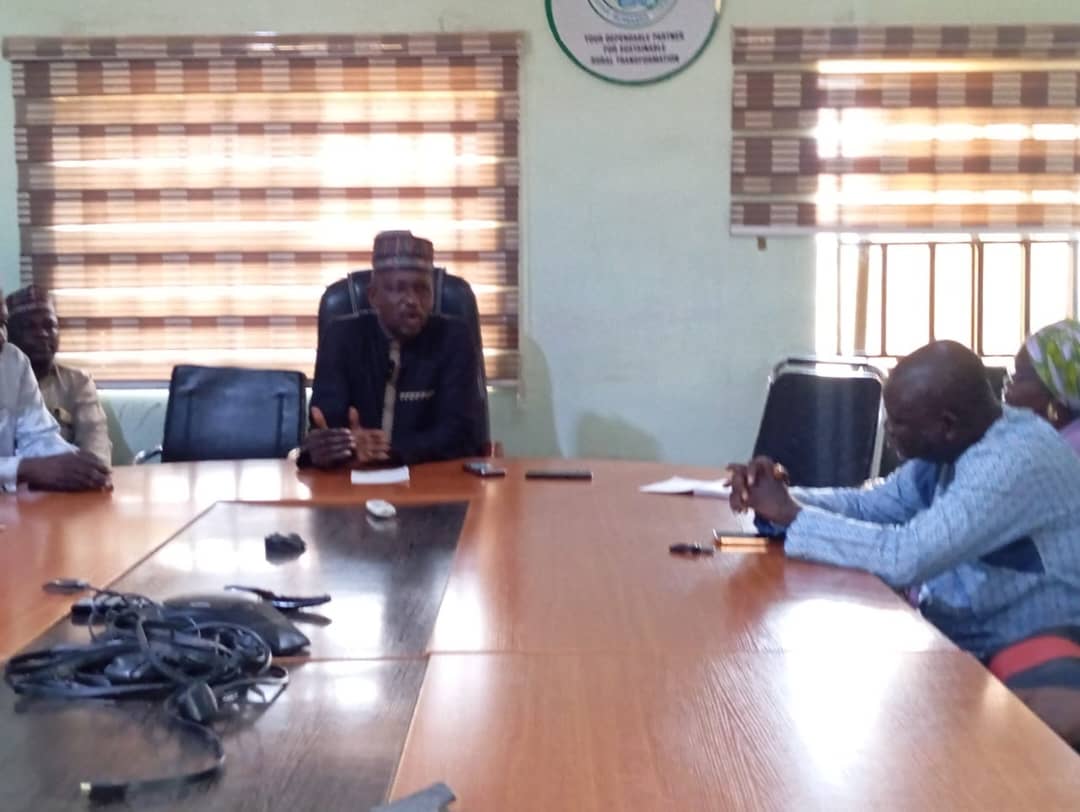
The declaration was made by General Manager of RUWASSA, Dr Samaila Jibrin, while speaking during a courtesy visit to the Agency by members of a Media CSO, Journalists for Public Health and Development Initiative (J4PD), on Thursday.
He said that, “We are highly delighted for this kind of visitation. And then, as you mentioned, first of all, let me try to make some corrections. In Bauchi State, we have 10 ODF local governments, not 70% of the LGAs. And at the same time, by the end of September, we will reach two additional LGAs, making twelve ODF LGAs in the state.”
He added that, “And I hope we will, before the end of this administration, 100% will be ODF LGs part of Nigeria. We will try to see, we reach at least part of Jigawa State as pre-ODF state in Nigeria.”
The RUWASSA GM added that,
“As we are all aware in Bauchi State, now we are in the current situation of Cholera outbreak. And the most of this issue of cholera is as a result of our behavioural attitude. Government have a limitation. And the limitation for us is rural water supply, water, and sanitation.”
According to him,”In sanitation, there is a role where the government can play, and then there are some areas where there is more of behavioural change, society to change their attitude based on their day-to-day life. So I’m happy as you are here. In fact, by next week you will start noticing our presence in terms of publicity through the media, the available local media we have in Bauchi State.”
“So, we are going to utilize them for massive campaign so that we can reach direct to the citizens. Because part of our responsibility is how we will be able to enlighten the community to safeguard their environment. Government cannot go and construct a toilet and then protect the toilet on individual household. No. It is a responsibility for each society, each household, to be able to protect themselves,” he added.
Jibrin stressed, “So, this kind of collaboration, you came at the right time. Definitely we need media. There is no any way we can succeed. There is no any way we can safeguard the environment, and there is no any way we can enlighten the citizens without the presence of this media. Definitely we are going to have a mutual collaboration.”
He added that, “And then even if that is part of our responsibility, from next week or in the next two weeks, definitely you will see changes, and then we are going to contact you in a various platform where we can be able to have a positive impact to the citizens. In Bauchi State at the same time, in terms of rural water supply, government is making a lot of effort. “
He further said that,”And part of this provision for water supply, we have some challenges in which we need a media to come in. Government provides water supply, water facilities to the citizens, but it’s a responsibility for the citizens to maintain. Our major challenge where the gap is the ownership.”
According to him,”Because community must sustain their facilities. Government cannot continue while some other areas there is gap, some other areas they have more than enough. And then there is no any way government, instead for the government to concentrate and then look into where there is a gap, and then try to, about the available resources, how are they going to repair, maintain the existing facilities.”
The RUWASSA GM further said, “So, in this aspect, definitely the media is going to play a critical role because we must use media, through a local media we have in our state, to be able to publicize, making a campaign that this facility belongs to them, not for the government. Once the society realizes this facility is their own, it means we are expecting Sustainability to exist in our society.”
Speaking earlier, the Executive Director of Journalists for Public Health and Development Initiative (J4PD), Elizabeth Carr, said that the organization is a media and development-focused organisation committed to using journalism, advocacy and public engagement to promote improved health outcomes and sustainable development in communities.
According to her, “We are here to strengthen collaboration and promote greater attention to access to safe drinking water, sanitation and hygiene services across rural communities in Bauchi State.”
The ED added, “Access to safe water, adequate sanitation and good hygiene practices are fundamental to public health, human dignity and community development. Poor access to these services can contribute to preventable diseases, school absenteeism, poor maternal and child health outcomes, and reduced economic productivity. “
Carr added that, “J4PD seeks to among other things Understand the current state of rural water supply, sanitation and hygiene services in Bauchi State.
Identify major challenges affecting the provision and sustainability of rural water schemes and Encourage stronger attention to communities that remain underserved or lack access to safe water.”
She added, “Promote community ownership and maintenance of water facilities, Encourage improved sanitation and hygiene practices at household and community levels, Strengthen collaboration between RUWASSA, the media, civil society organisations and communities and Use evidence-based journalism to increase public awareness of WASH challenges and interventions.”
Furthermore, Advocate for sustained government investment in rural water, sanitation and hygiene infrastructure.
The key advocacy concerns are that J4PD is concerned about the availability, accessibility and sustainability of safe water sources in rural communities, beyond providing water infrastructure, there is a need to ensure that facilities remain functional, properly maintained and accessible to the people for whom they were provided.
She stressed that, sanitation remains an important public health issue. Communities without adequate sanitation facilities are more exposed to environmental contamination and preventable diseases.
J4PD advocated for intensified efforts to eliminate open defecation and promote household and public sanitation facilities, alongside sustained community sensitisation knowing fully well that availability of water and sanitation facilities must be accompanied by appropriate hygiene practices.
J4PD encouraged RUWASSA and partners to strengthen public education on: Handwashing with soap and water, Safe storage and handling of drinking water, Proper use and maintenance of toilets, Hygiene practices in schools, markets and healthcare facilities.
On the Role of the Media, J4PD believes that the media can play a strategic role in improving WASH outcomes by bringing attention to gaps, highlighting successful interventions and amplifying the voices of affected communities and through responsible reporting where it can
Investigate and report WASH challenges in rural communities.
It can also track the implementation and sustainability of water and sanitation projects, Give communities an opportunity to communicate their needs and experiences, Highlight innovative solutions and successful community-led interventions and
Promote behavioural change through public education.
Encourage transparency and accountability in WASH interventions.
J4PD therefore seeks to establish a constructive working relationship with RUWASSA that will enable Journalists to access credible information and report accurately on rural water and sanitation issues.
According to her, “That can be achieved through joint identification of communities requiring greater public attention on water and sanitation challenges. Periodic engagement with Journalists to improve understanding of WASH policies, programmes and technical issues.”
Also, facilitation of media visits to selected rural water and sanitation projects to document impact and challenges, public awareness campaigns, collaboration on radio, television, social media and community-based campaigns promoting safe water, sanitation and hygiene.
She also stressed project accountability which includes encouraging evidence-based reporting on the functionality, sustainability and community impact of WASH facilities.
Community voices involved creating opportunities for rural residents, women, children and other vulnerable groups to participate in conversations about WASH services.
The ED added that J4PD recognises RUWASSA as a critical institution in advancing access to safe water and sanitation services in rural communities across Bauchi State.
Also that J4PD is committed to using its media and advocacy platforms to amplify positive interventions, document challenges and promote constructive dialogue among government, communities, development partners and other stakeholders.
Carr said, “Together, we can strengthen rural water and sanitation services and contribute to healthier, safer and more resilient communities across Bauchi State.”
