
By Anthony Maliki, Abuja
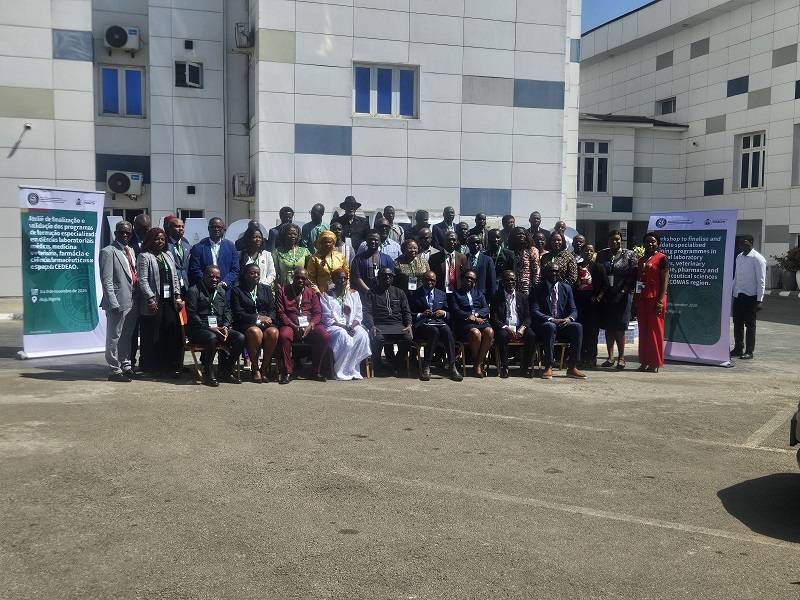
Arguably among the best medical intellectuals from West Africa subregion are in Abuja to finalise and validate a harmonised specialised training curricular in the medical sciences for ECOWAS member countries.
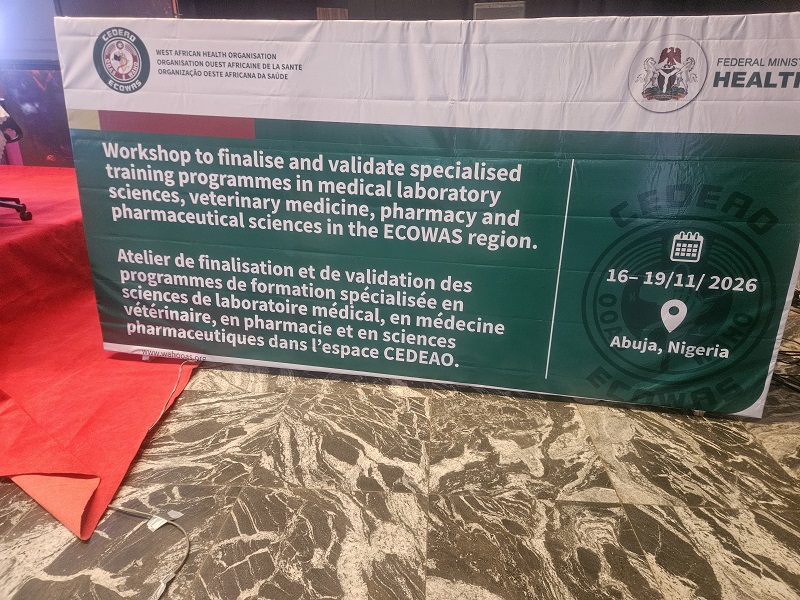
During the 4 days intense interaction, under the West African Health Organisation (WAHO), which began on Monday, the eggheads will validate the curricular in Medical Laboratory Science, Veterinary Medicine, Pharmacy and Pharmaceutical Sciences.
The core objective of the workshop is to align and validate curricular for postgraduate training for Veterinary Medicine, Laboratory Science and Pharmacy and Pharmaceutical Sciences in accordance with international standards and universal practices and ensure the curricula reflects the spirit of recognition of diplomas and their equivalencies existing in ECOWAS region.
Besides, during the workshop, WAHO intends scaling up concerted effort in training, development, motivation, recognition of certificate equivalencies in West Africa, capacity development, achieving the 17 Sustainable Development Goals (SDGs) by 2023 and beyond, training of Health Professionals without borders and exchange of skills and knowledge, training of trainers and joint research network
Declaring the workshop open, the Minister of Health and Social Welfare, Professor Mohammed Ali Pate, expressed concern that countries in the subregion cannot be operating different curricula and standards.
He pointed out that: “A medical laboratory scientist trained in Senegal learns a different curriculum from one trained in Nigeria. A pharmacist trained in Ghana follows different standards from one trained in Cote d’Ivoire. A veterinarian trained in one country may not be recognised in another, even though diseases do not respect our borders, most especially in West Africa.”
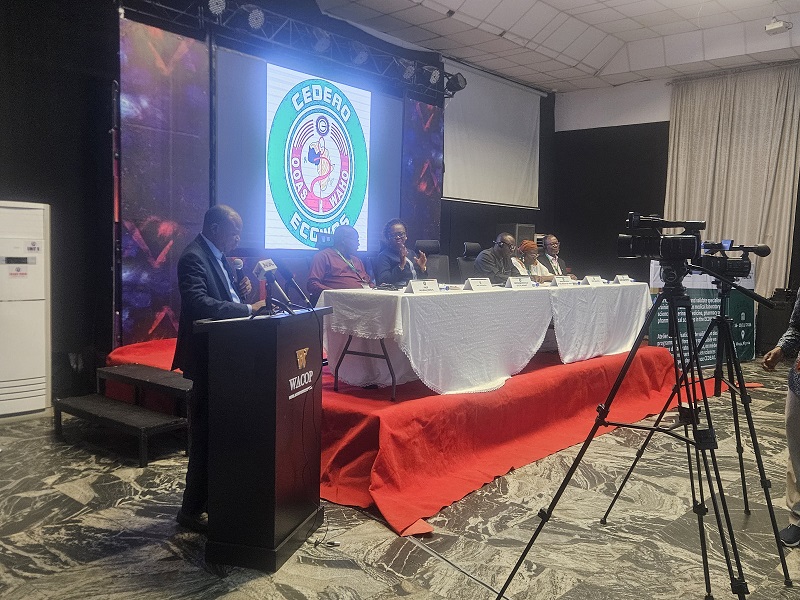
Represented by Dr. Dakum Longji Benji, Nigeria’s Liaison Officer to WAHO/African Union in the Ministry, Professor Pate said how can Member countries promise people quality care when we have not agreed on how to train those who provide that care.
According to him, how can we fight antimicrobial resistance, fake drugs, Lassa fever, Ebola, avian influenza, and the next pandemic when our laboratories, pharmacies, and veterinary services are speaking different languages.
“This workshop is not just another meeting; it is a defining moment for West Africa. Over the next few days, you have one issue, and it is historic. It’s a historic one to finalise and validate one harmonised curriculum for our region in three life-saving fields,” the minister noted.
He also stressed the need for one medical laboratory science, noting that because every correct diagnosis is a life saved and every wrong diagnosis is a life put at risk.
The Minister said there is need for laboratory scientists who are masters of modern diagnostics, molecular testing, quality assurance, biosafety, and digital health explaining that because 75% of emerging infectious diseases come from animals, human health cannot be protected without protecting animal health.
Dwelling on pharmacy and pharmaceutical sciences, Professor Pate noted that medicine saves life, but only when they are safe, genuine, and used correctly.
He described the medical laboratory scientist, veterinary doctor, pharmacist and the pharmaceutical scientist as the invincible backbone of the health system.
Representative of the Dean of Colleges, Professor Yoa Tettey commended WAHO for bringing all health professionals to discuss on these issues noting that this is an era of one health.
He also emphasized that countries should not be territorial as health issues transcends territory.
President of Senegal, Bassirou Faye who is chairperson of the ECOWAS Authority of Heads of States and Government, represented by Professor Awa Seck said health challenges in West African make human resource development a priority and collaboration of all.
He commended all stakeholders that have contributed to the validation process thus far and thanked WAHO for the efforts.
WAHO’s President elect, Professor John K. Mulbah, said the validation and harmonization of the curricula is strategic in order to tackle the present and future health challenges in the ECOWAS subregion.
