
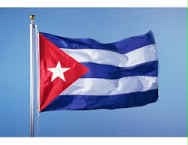

The Cuban government, in a statement to the Security Council on Tuesday, August 25, warned against the use of hunger as a weapon of war and argued that conflicts, economic inequalities and unilateral coercive measures were aggravating global food insecurity.
Havana specifically linked the worsening food situation in Cuba to the impact of the United States’ economic, commercial and financial restrictions, which it refers to as a blockade.
The intervention came only days after Cuban Foreign Minister Bruno Rodríguez launched a fresh attack on Washington over new sanctions imposed on Cuban state entities and officials, accusing the administration of US President Donald Trump of deliberately squeezing the Cuban economy and undermining the government’s capacity to provide basic services.
Rodríguez said the latest measures were particularly affecting the movement of containers carrying food, medicines and medical equipment, including supplies acquired by Cuba’s private micro, small and medium-sized enterprises.
The latest US measures reportedly targeted nine Cuban state-owned entities operating in mining, metals, construction, trade, imports and related industrial activities. Senior officials of the Cuban Institute of Friendship with the Peoples (ICAP), including its president Fernando González Llort, were also sanctioned.
Rodríguez accused US Secretary of State Marco Rubio of pursuing a policy designed to damage Cuba’s economy and prevent Havana from guaranteeing essential services to its population.
The Cuban government’s latest diplomatic offensive therefore represents a shift from its traditional condemnation of the US embargo to a broader humanitarian argument before the international community — that economic pressure is having consequences beyond government finances and is reaching food supplies, healthcare, energy and ordinary economic activity.
The controversy comes as Cuba battles a severe economic crisis characterised by shortages of fuel, electricity, food and medicines. The Associated Press reported last week that US sanctions were complicating Cuba’s efforts to attract private and foreign investment even as Havana undertakes economic reforms designed to give private businesses a larger role.
According to the AP report, Cuba has introduced measures allowing greater space for private businesses, imports and exports, foreign investment and private banking. Cuban officials, however, argue that Washington’s continuing sanctions are undermining the very reforms the US has demanded from Havana.
The confrontation has also extended beyond conventional trade sanctions. A January 2026 US executive order sought to tighten pressure on Cuba’s access to fuel, a move UN human rights experts subsequently described as having severe human-rights implications and amounting to “energy starvation.”
For Havana, the combination of the decades-old embargo, intensified sanctions and restrictions on energy supplies has created a crisis with direct consequences for civilians.
But the US maintains that its Cuba policy is intended to pressure the Cuban government rather than deliberately deprive the population. US officials have continued to defend additional sanctions as a means of closing what Washington considers loopholes through which the Cuban government can obtain revenue.
The dispute has consequently produced a striking contradiction: Washington is pressing Havana to reform its centrally controlled economy and open more space for private enterprise, while Havana argues that the same US sanctions are making those reforms harder to implement.
Cuban Ambassador to the UN Ernesto Soberón Guzmán recently questioned why Washington continued imposing new sanctions as Havana opened sectors of its economy to private participation and foreign investment. He said shortages of fuel and electricity were discouraging investors and tourists.
The latest Cuban appeal at the Security Council now places the food crisis at the centre of the confrontation, turning what has historically been a dispute over sanctions and sovereignty into a sharper international debate over the humanitarian consequences of economic warfare.
For Cuba, the central question is no longer simply whether Washington should maintain its embargo, but whether economic pressure that affects the movement of food, medicine, energy and other essential supplies can be justified when its consequences are increasingly being felt by the wider population.
The United States and Cuba have remained locked in their decades-long confrontation, but the latest escalation comes at a particularly difficult moment for the Caribbean nation, with Havana simultaneously attempting economic reforms while confronting mounting shortages and pressure from Washington.
Cuba’s appeal to the Security Council is therefore likely to intensify the diplomatic battle over whether the country’s deepening hardship should be attributed principally to US sanctions, domestic economic policies, or a combination of both.
