
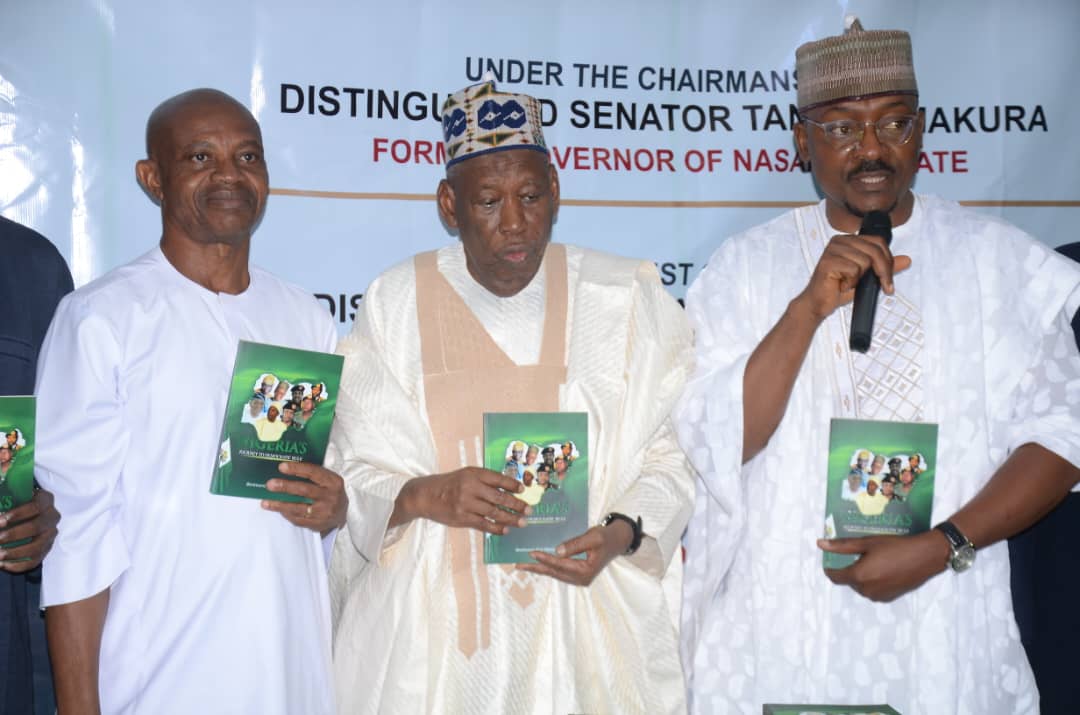

Ganduje stated this on Wednesday in Abuja at the public presentation of a book: “Nigeria’s Journey to Democratic Rule”, written by the Abuja Bureau chief of New Telegraph, Mr Onyekachi Eze-Odezulu.
According to him, democracy is much more than elections held every four years.
“It is built on the rule of law, constitutional order, credible electoral institutions and political parties that practise internal democracy,” he said.
He recalled his first electoral contest in 1979, saying that he resigned his university lecturing job to contest for the House of Representatives in spite of knowing that his party lacked the popularity.
“I believed in the manifesto of my party and its nationalistic outlook. Although I lost the election, that experience became part of my democratic journey,” he stated.
The former APC national chairman, however, decried what he called the absence of clear ideological distinctions among political parties, saying that it had weakened Nigeria’s democratic culture and encouraged defections driven by personal interests.
Earlier, Chairman of the occasion and former Governor of Nasarawa State, Sen. Tanko Al-Makura, represented by a former aide, described the book as an important historical document.
Al-Makura said understanding Nigeria’s political history remained essential to appreciating the country’s democratic progress and preparing future generations for responsible leadership.
“History remains humanity’s greatest teacher. This book reminds us of the sacrifices, struggles and triumphs that produced our present democratic dispensation,” he said.
The book reviewer, Prof. Rufai Alkali, said the publication offered a balanced account of Nigeria’s transition from military rule to constitutional democracy.
The author, in his remarks, said he wrote the book to preserve important events in Nigeria’s democratic history for younger generations.
“If we do not document our history, future generations will not understand the sacrifices that produced today’s democracy,” he said. (NAN)
