
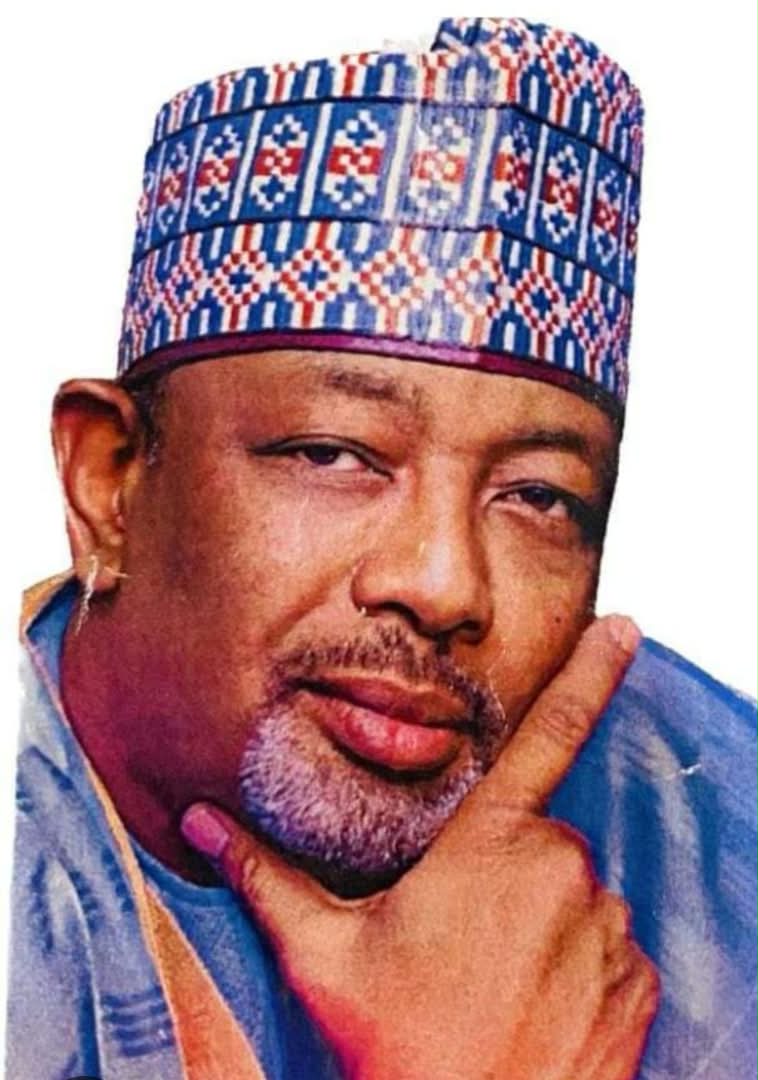

By Dr. James Bwala
The Minister of Agriculture and Food Security, Senator Abubakar Kyari, has rightly challenged attempts to turn Nigeria’s latest food security assessment into a political weapon ahead of the 2027 general elections. His response to the viral interpretation of the October 2026 Cadre Harmonisé assessment is important because it draws attention to a matter that should transcend partisan politics: the food, nutrition, and livelihood security of millions of Nigerians.
Food insecurity is a serious national challenge. It demands honest analysis, effective policy, and sustained action. It should not be reduced to campaign slogans or manipulated to create fear and political advantage. While the government must remain open to scrutiny and criticism, public debate must be based on facts rather than deliberate distortions of technical data
The Cadre Harmonisé is not an electoral forecasting instrument, nor is it a political scorecard. It is a food and nutrition security assessment framework designed by the Permanent Inter-State Committee for Drought Control in the Sahel, commonly known as CILSS, in collaboration with regional and technical partners. Organizations such as the Food and Agriculture Organization, the World Food Programme, FEWS NET, UNICEF, and the Integrated Food Security Phase Classification support the framework.
Its purpose is to identify populations and communities that may face food and nutrition insecurity so that governments, humanitarian agencies, and development partners can respond early. It is an early-warning and planning tool. It does not determine who will win an election, nor does it claim that food insecurity is caused automatically by the continuation of a particular administration.
The projected figure of 33.5 million Nigerians facing severe food and nutrition insecurity between June and August 2027 must therefore be understood in its proper context. It is a projection for a specific period, not a declaration of political failure, and it does not prove any party or candidate will cause hunger. More importantly, the projected figure represents a decline from the 34.8 million people projected to face similar conditions during the corresponding period in 2026.
This decline does not mean that Nigeria’s food security challenges have been solved. It does, however, demonstrate why data must be presented accurately. Consider a reduction in the projected number of affected people, even if it does not support a preferred political narrative. Conversely, the existence of a large projected vulnerable population must not be dismissed simply because it may be politically inconvenient for the government. Responsible public discourse requires that both the progress and the continuing difficulties be acknowledged.
The seasonal nature of food insecurity is another reason the assessment must not be misrepresented. The June-to-August period is often associated with the agricultural lean season, when household food stocks may be depleted and the next harvest is not yet available. Food prices, rainfall patterns, market access, insecurity, and household income all affect the situation during this period. Consequently, a projected figure for those months cannot be treated as a permanent statement about Nigeria’s food security position throughout the year.
It is also important to recognize that the Cadre Harmonisé is a forward-looking assessment. It identifies possible risks before or during the period under review. It is not necessarily designed to conduct a retrospective audit after the projected period and determine whether every forecast was exactly right or wrong. Its value lies in helping decision-makers identify vulnerabilities early enough to intervene. Treating the assessment as though it were a political verdict misunderstands its methodology and weakens its usefulness.
Nigeria’s food insecurity has several causes, many of which are complex and beyond the control of any single administration. Climate change is one of the most significant. Inconsistent rainfall, prolonged dry spells, flooding, desertification, and changing weather patterns have made farming increasingly difficult, particularly for smallholder farmers who depend heavily on rain-fed agriculture. The Super El Niño phenomenon has also disrupted weather conditions in different parts of the world, affecting planting seasons and crop production.
Other factors include insecurity, displacement, high input costs, inadequate storage facilities, poor rural infrastructure, limited access to finance, post-harvest losses, and weak market linkages. In some areas, farmers have been unable to reach their farms because of attacks, criminality, or fear. In others, farmers may cultivate their land but struggle to transport or sell their produce because roads are poor or markets are distant. These structural problems have developed over many years and cannot be attributed to one administration alone.
This broader context does not excuse government inaction. On the contrary, it increases the responsibility of government to respond decisively. Early-warning assessments are valuable only when they lead to practical interventions. If data indicates that particular regions, communities, or livelihood groups may be at risk, public authorities must use that information to expand social protection, support farmers, improve food production, and strengthen access to nutritious food.
According to the minister, the federal government is implementing a range of measures in response to these challenges. These include expanding access to fertilizer and other agricultural inputs, increasing mechanization, expanding irrigation and dry-season farming, strengthening agricultural financing, improving access to farmland, investing in storage and processing, developing agricultural value chains, and promoting climate-resilient agriculture.
These interventions are necessary. Nigeria cannot achieve lasting food security by depending mainly on emergency food distribution or imports. The country must increase domestic production, reduce post-harvest losses, strengthen agricultural markets, and help farmers adapt to changing climatic conditions. Irrigation, improved seeds, extension services, mechanization, and affordable credit can help farmers produce more consistently beyond the traditional rainy season.
Local fertilizer blending and more efficient distribution are also important. Fertilizer must reach farmers at the right time and at a price they can afford. Mechanization partnerships can reduce the burden of labor-intensive farming, while investment in storage and processing can prevent food from spoiling and allow farmers to earn better returns. Agricultural policy must focus not only on production but also on the entire value chain, from inputs and cultivation to transportation, processing, marketing, and consumption.
Security is equally central to food security. Farmers can only produce food if they can safely reach their fields. Improvements in security in farming communities can therefore have a direct effect on agricultural output and household livelihoods. The minister’s reference to areas such as Marte and Guzamala in Borno State illustrates this point. Where communities previously remained inaccessible to farmers and data collectors, improved stability can enable both agricultural production and more accurate food security assessments.
The relationship between security and agriculture must not be underestimated. When farmers abandon their land, food production falls, prices rise, and displaced families become more dependent on humanitarian assistance. When farmers return safely to their farms, they can restore livelihoods, increase local food supplies, and contribute to the economic recovery of their communities. Security operations and agricultural policies should therefore be coordinated rather than treated as separate areas of government activity.
At the same time, government claims of progress must be supported by transparent evidence. Citizens have the right to know how many farmers have benefited from fertilizer distribution, how much farmland has been brought under irrigation, whether agricultural loans are reaching smallholder farmers, and how much food is being lost because of storage or transportation problems. Progress should be measured not only by announcements but also by outcomes: higher production, lower post-harvest losses, better farmer incomes, more affordable food, and improved nutrition.
Constructive criticism is essential in a democracy. The Tinubu and Shettima administration, like any government, must be prepared to explain its policies and accept legitimate scrutiny. Opposition parties have a right to question government performance, identify failures, and propose alternative solutions. However, political criticism must not rely on the deliberate misrepresentation of technical assessments.
There is a clear difference between stating that millions of Nigerians may experience food insecurity and falsely claiming that the assessment predicts hunger because a particular president will be re-elected. The first is a serious discussion of a national challenge. The second is an attempt to exploit the suffering of vulnerable citizens for political purposes.
Such exploitation is harmful regardless of the political party responsible. Hunger, malnutrition, and poverty are not campaign materials. Behind every statistic is a household struggling to provide food for its members, a farmer facing rising costs, a child at risk of malnutrition, or a community dealing with the consequences of insecurity and environmental change. Political actors should not turn these human difficulties into instruments of fear or manipulation.
The media and social media users also have a responsibility. Information about food security should be checked against the original assessment and credible official sources before it is shared. Headlines and short videos can easily remove important context, while emotionally charged messages often spread faster than accurate explanations. Public figures, journalists, and influencers should therefore avoid presenting projections as certainties or technical data as political predictions.
Senator Kyari’s position that government must act when data identifies a risk is the correct principle. Hiding from difficult information would be irresponsible. A government that denies food insecurity cannot solve it. At the same time, a government that acknowledges the challenge but fails to implement effective policies would also fall short of its responsibility. The appropriate response is honesty combined with action.
The Cadre Harmonisé should be treated as a planning instrument for improving food and nutrition security. Its findings should guide investment, emergency preparedness, agricultural support, climate adaptation, market interventions, and social protection. Governments at the federal, state, and local levels should use the data to identify vulnerable populations and ensure that interventions reach those who need them most.
Ultimately, Nigeria’s food security challenge requires cooperation rather than political opportunism. Government agencies, farmers, private businesses, research institutions, civil society organizations, and development partners all have roles to play. Long-term progress will depend on policies that remain consistent beyond election cycles and on investments that address the structural weaknesses of the agricultural sector.
The projected figure of 33.5 million Nigerians facing food insecurity should therefore be neither sensationalized nor ignored. It should prompt serious action. The decline from the previous projection should be acknowledged as a sign of progress, while the continuing scale of vulnerability should inspire greater urgency.
Food security is too important to become a partisan slogan. Nigerians need accurate information.
Bwala, PhD, writes from Abuja
