
Nigeria’s Agrifood transformation plan faces funding test as government, stakeholders seek food sovereignty

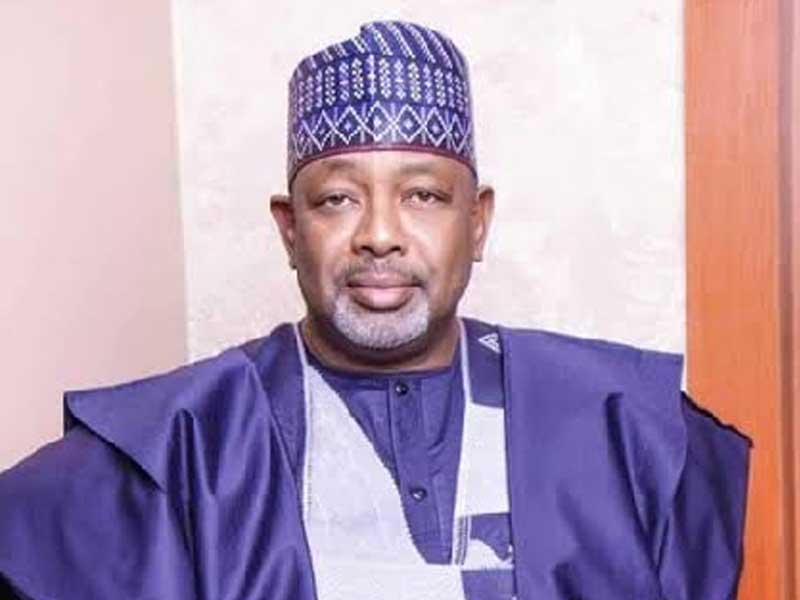
The Minister of Agriculture and Food Security, Senator Abubakar Kyari, on Thursday unveiled Nigeria’s 10-year Agrifood System Strategy and Action Plan, declaring that the Federal Government was determined to move beyond fragmented agricultural interventions and build a resilient food system capable of guaranteeing food sovereignty, reducing poverty and driving inclusive economic growth.
Kyari, who spoke at the Agrifood System Working Group (ASWG) meeting in Abuja, said the strategy, developed under the Comprehensive Africa Agriculture Development Programme (CAADP) Kampala Declaration (2026–2035), represented a new direction for Nigeria’s agricultural sector by shifting focus from isolated projects to an integrated food systems approach.
He said the plan would address the entire agrifood chain, including production, processing, markets, resilience, investment, nutrition and governance.
According to the minister, President Bola Ahmed Tinubu considers food security a national security imperative and had directed the development of a comprehensive roadmap with measurable targets and implementation pathways capable of transforming Nigeria’s food system.
“The President has given us a clear and urgent charge: to move beyond rhetoric, beyond pilot projects, and beyond fragmented interventions, and instead deliver a coherent, bankable, and implementable plan that will fundamentally transform Nigeria’s agrifood system for the long term,” Kyari said.
He disclosed that the strategy, developed through extensive consultations across Nigeria’s six geopolitical zones and national engagements, would be presented for adoption by stakeholders before being forwarded to the Federal Executive Council (FEC) for approval.
The minister said such approval would ensure that Ministries, Departments and Agencies align their programmes, policies and budgets with the country’s agrifood transformation vision.
Kyari noted that Nigeria’s agrifood system supports more than 70 per cent of the population, drives rural economies, contributes significantly to GDP and provides opportunities for job creation, industrialisation and foreign exchange earnings.
He explained that the CAADP Kampala Declaration builds on previous continental commitments but introduces a broader approach that focuses on sustainable production, resilience, value-chain development, inclusivity and accountability.
The declaration, he said, commits African countries to increasing agrifood output, tripling intra-African trade in agrifood products and inputs, reducing post-harvest losses by 50 per cent, improving nutrition outcomes, ensuring access to healthy diets, mobilising $100 billion in investments and narrowing the gender productivity gap by 2035.
Kyari identified governance as the foundation for achieving these targets, stressing that strong coordination, effective institutions and accountability mechanisms would determine the success of Nigeria’s implementation plan.
Funding Gap Threatens Agrifood Ambitions
While government outlined its transformation agenda, ActionAid Nigeria’s Food Systems Specialist, Azubike Nwokoye, warned that inadequate agricultural investment at federal and state levels could undermine the implementation of the new strategy.
Nwokoye, speaking at the meeting, said an analysis conducted by the organisation through a newly developed dashboard showed poor performance in agricultural capital spending across many states between 2023 and 2025.
He said the assessment, which covered Nigeria’s 36 states and the Federal Capital Territory, revealed that in 2025, 16 states recorded very low performance in agricultural capital spending, eight states recorded medium performance, while only 10 states achieved high performance.
“The findings are not encouraging. Between 2023 and 2025, Nigeria has performed poorly in terms of capital spending on agriculture,” he said.
Nwokoye stressed that beyond budget allocations, stakeholders must examine where agricultural funds were being deployed to ensure they deliver maximum impact.
He said the analysis showed that many states were spending only about three per cent of their capital budgets on agriculture, while federal capital spending on the sector was also below what was required to meet national and continental commitments.
He warned that Nigeria’s combined agricultural allocation by the 36 states and the FCT for 2026 stood at only 4.58 per cent, far below the 10 per cent benchmark under the Maputo, Malabo and Kampala commitments.
“As a country, we must act quickly, including through complementary budgets where necessary, if we are to meet these commitments,” he said.
Nwokoye, however, said increased investment in agriculture could significantly boost employment creation.
According to him, ActionAid’s analysis showed that if states fully implement their 2026 agricultural budgets, Nigeria could generate about 1.4 million direct quality jobs across the states.
He added that projected federal government spending could generate another 2.1 million direct jobs, bringing the potential national total to about 3.5 million direct jobs.
“Increasing investment would raise this figure significantly,” he said.
He disclosed that the findings would be transmitted to state governors to encourage stronger commitment towards agricultural financing and improved returns on investment.
Nigeria’s 42 Million Farming Households Must Thrive — Bagudu
The Minister of Budget and Economic Planning, Senator Atiku Bagudu, said Nigeria’s ability to achieve food security depended largely on strengthening the country’s more than 42 million agricultural households.
Bagudu said the CAADP Kampala Declaration reflected African leaders’ recognition that food security required a systematic approach, adding that Nigeria was pursuing an even more ambitious goal under President Tinubu’s directive to lift Nigerians out of poverty by 2030.
He said food security was embedded in Nigeria’s constitutional objectives, particularly Section 16, which recognises food security as a responsibility of the state.
The minister stressed that agriculture was the responsibility of all tiers of government, alongside the private sector, researchers and development partners.
He said Nigeria’s agricultural system was dominated by small-scale, family-based producers, adding that these households must be supported to produce enough food for themselves and the nation.
“For us to achieve our objectives, we must ensure that these 42 million agricultural households thrive,” he said.
Bagudu highlighted government reforms, including the creation of the Ministry of Livestock Development, establishment of the National Agricultural Development Fund and increased support for agricultural land development.
He also stressed the importance of science, technology and innovation in improving productivity.
According to him, Nigeria’s greatest strength lies in its private sector-driven agricultural system, and government’s responsibility is to create an environment where agriculture becomes profitable, modern and productive.
He warned that global economic pressures, including rising energy costs caused by international conflicts, had increased the cost of fertiliser, transportation and food production.
Women’s Inclusion Critical to Food Security
The Minister of Women Affairs, Hajiya Imaan Sulaiman-Ibrahim, said Nigeria could not achieve the goals of the CAADP Kampala Declaration without addressing barriers limiting women farmers.
She said closing the gender yield gap was not merely a social objective but a formal obligation under the declaration, which requires countries to halve the gender productivity gap by 2035.
“Closing the gender gap in agriculture is not a request from the Ministry of Women Affairs. It is an obligation under the declaration that Nigeria has already signed,” she said.
She noted that millions of women farmers remained disadvantaged due to limited access to land, credit, inputs, extension services and mechanisation.
“We are not dealing with underperforming farmers. We are dealing with under-resourced farmers,” she said.
The minister highlighted programmes including the Nigeria for Women Programme and Women Agro Value Expansion (WAVE) Initiative, which she said had improved women’s participation and earnings in agricultural value chains.
She urged the ASWG to establish measurable gender targets, improve sex-disaggregated agricultural data and ensure women farmers benefit from government support programmes.
Livestock Sector Key to Transformation
The Minister of Livestock Development called for stronger investment in livestock as a major contributor to food security, employment and economic growth.
He said livestock should no longer be treated as a supporting component of agriculture but as a strategic sector capable of transforming rural economies.
He called for investment in animal health, veterinary infrastructure, disease surveillance, genetic improvement, feed development, processing facilities and climate-smart production systems.
ASWG to Drive Coordination and Accountability
The Permanent Secretary, Federal Ministry of Agriculture and Food Security, Dr. Marcus Ogunbiyi, described the Agrifood System Working Group as the technical platform for coordinating policies, monitoring implementation and ensuring that Nigeria’s commitments translate into measurable results.
He said challenges facing Nigeria’s food systems, including climate change, insecurity, post-harvest losses, inadequate infrastructure and limited financing, required collaboration across government, private sector, research institutions and development partners.
Ogunbiyi said food sovereignty remained the ultimate goal of Nigeria’s agrifood transformation agenda.
“Food sovereignty means Nigerians eating what we grow and growing what we eat. It means building a resilient food system that guarantees every citizen physical and economic access to safe, nutritious and affordable food,” he said.
The meeting brought together senior government officials, development partners, African Union representatives, FAO, African Development Bank, World Bank, IFAD, GIZ, AGRA, research institutions, farmers’ organisations, private sector actors and civil society groups to chart a new course for Nigeria’s food system transformation.
