

The Federal Government has moved to avert a looming regulatory crisis in Nigeria’s electricity sector as the Minister of Power, Joseph Tegbe, brokered a fresh framework for cooperation between the Nigerian Electricity Regulatory Commission (NERC) and State Electricity Regulatory Commissions (SERCs).
The breakthrough came at a high-level stakeholder engagement convened by the Minister to resolve emerging tensions over regulatory jurisdiction and overlaps following the implementation of the Electricity Act, 2023, which ushered Nigeria into a decentralised and multi-market electricity regime.
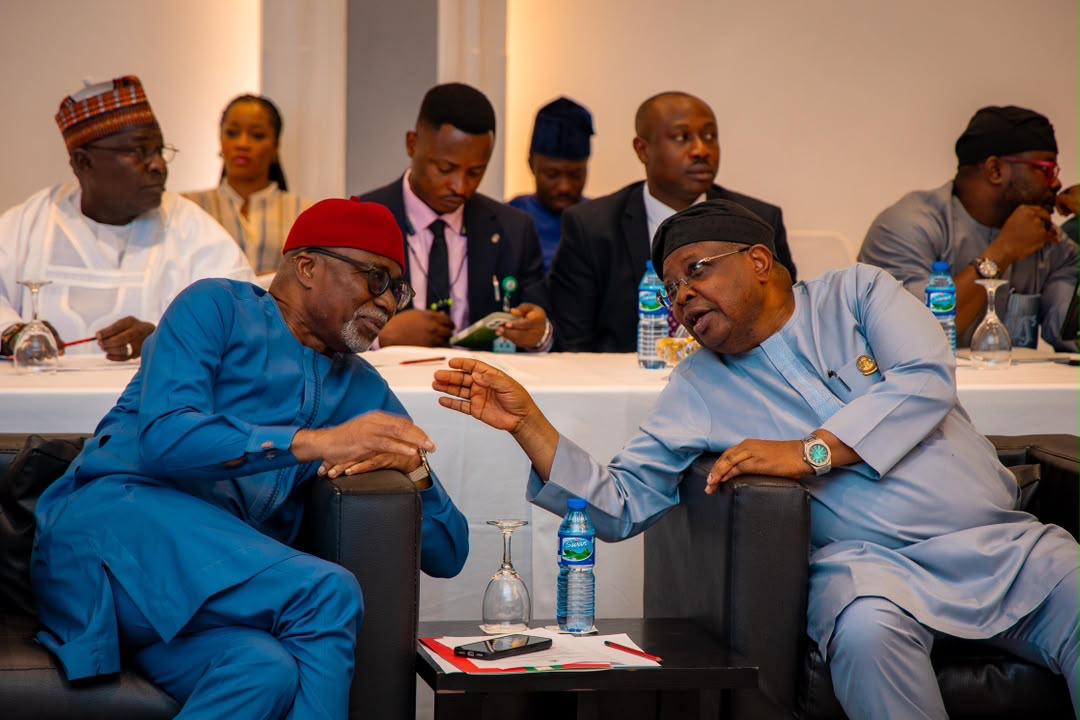
The meeting, which brought together key stakeholders across the power sector, also produced a major political and legislative concession, with the Chairman of the Senate Committee on Power, Senator Enyinnaya Abaribe, agreeing to defer the ongoing legislative process seeking to amend the Electricity Act to allow for wider consultation and consensus-building.
The development is seen as a significant step towards preventing institutional rivalry from undermining one of the most far-reaching reforms in Nigeria’s power sector in decades.
Participants at the engagement included representatives of the National Assembly, the Special Adviser to the President on Power, the Director-General of the Bureau of Public Enterprises, representatives of the Nigeria Governors’ Forum, heads of federal power sector agencies, state commissioners for energy and heads of State Electricity Regulatory Commissions.
The stakeholders deliberated extensively on the emerging challenges associated with the transition to a decentralised electricity market, including regulatory overlaps, tariff administration, institutional capacity, consumer protection and the need for clearer coordination between federal and state authorities.
Tegbe, who described the ongoing transition as one of the most significant reforms in Nigeria’s electricity sector in decades, said the success of the new multi-market framework would depend on collaboration and coordination rather than institutional competition.
He said the Federal Ministry of Power was committed to working with all relevant stakeholders to provide regulatory certainty, unlock investments and improve electricity supply and service delivery across the country.
The Minister stressed that while implementation challenges were inevitable in a reform of such magnitude, they must be addressed collectively without compromising regulatory standards, service quality or the protection of electricity consumers.
A major outcome of the meeting was the establishment of a nine-member inter-agency committee to coordinate the implementation of the Electricity Act and address emerging challenges in the transition to the new electricity market structure.
The committee, to be chaired by the Minister of Power, will include representatives of NERC, State Electricity Regulatory Commissions, the Nigeria Governors’ Forum, the Bureau of Public Enterprises and other relevant institutions.
It has been given four weeks to drive continuous engagement among stakeholders, identify and resolve implementation bottlenecks and recommend practical measures for the seamless operationalisation of the Electricity Act, 2023.
The decision by the Senate Committee on Power to defer the proposed amendment of the Act followed extensive deliberations at the workshop, with stakeholders agreeing that further consultation was necessary to build consensus and prevent legislative changes from creating fresh uncertainties in the sector.
Abaribe’s decision to suspend the legislative process temporarily was welcomed as a major outcome of the engagement, providing room for federal and state institutions, regulators, industry operators and other stakeholders to address areas of disagreement before further legislative action.
The stakeholders reaffirmed their commitment to supporting the power sector reforms being implemented under the administration of President Bola Ahmed Tinubu, stressing that the success of the decentralised electricity market would require sustained cooperation across all levels of government.
The Federal Government said the new coordination mechanism would strengthen institutional collaboration as Nigeria seeks to build a modern, reliable, competitive and investor-friendly electricity market.
The development also signals a renewed effort by the Ministry of Power to ensure that the implementation of the Electricity Act does not become a source of conflict between federal and state institutions, but instead serves as the foundation for improved electricity access, stronger investment and better service delivery to consumers.
The Minister, in closing the engagement, reiterated the government’s determination to deepen the reform process through dialogue, coordination and practical problem-solving.
He said the ultimate objective remained the creation of an electricity market capable of delivering reliable power, attracting long-term investment and supporting Nigeria’s broader economic transformation agenda.
