
Debt servicing threatens Nigeria’s climate response, deepens burden on women, children — ActionAid

Nigeria’s escalating debt burden is threatening to cripple the country’s capacity to finance climate adaptation and essential public services, with women, girls and children facing the harshest consequences of the widening fiscal and environmental crisis, ActionAid Nigeria has warned
The organisation said the projected use of more than half of Nigeria’s government revenue for debt repayments in 2026 raises serious concerns about the resources that will remain available for tackling floods, food insecurity, environmental degradation, energy poverty and other consequences of climate change.
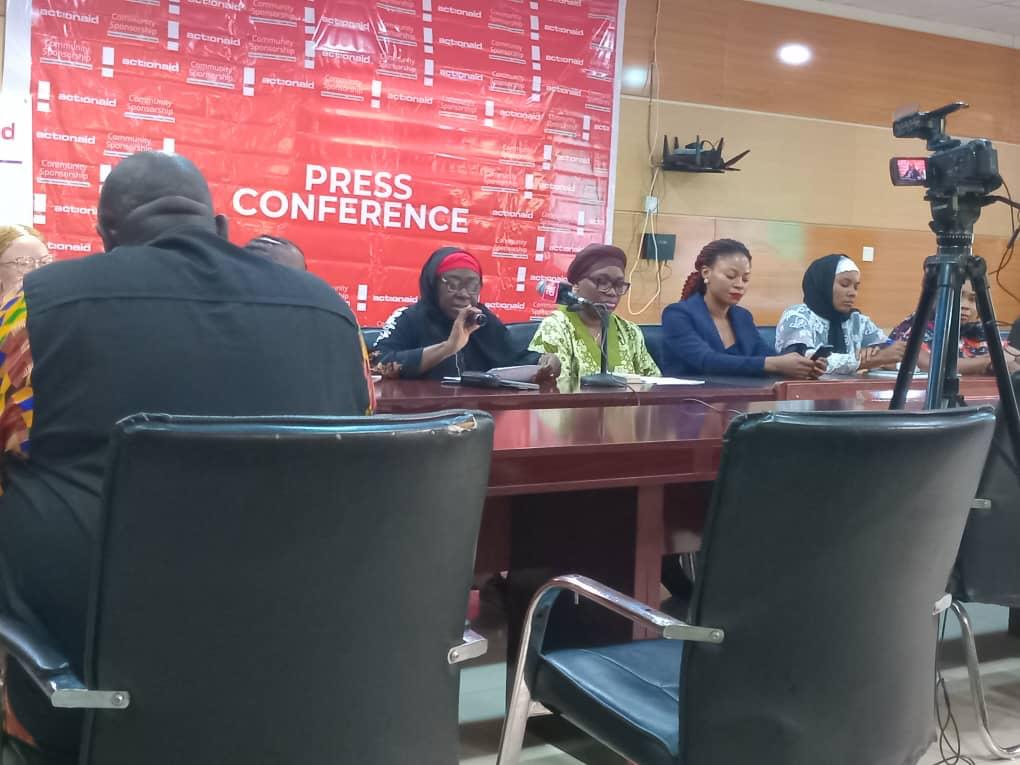
ActionAid Nigeria, alongside its partners, issued the warning on Friday in Abuja following the publication of ActionAid International’s flagship report, Debt Fuels the Climate Crisis: How the Finance Flows.
The report found that the world’s most climate-vulnerable countries are spending nearly 25 times more on debt repayments than on climate action, while 93.5 per cent are either already in debt crisis or at significant risk of debt distress.
For Nigeria, ActionAid said, the figures have implications far beyond government balance sheets.
The organisation warned that when public finances are squeezed by debt obligations, expenditure on climate resilience, healthcare, education, social protection and infrastructure can come under pressure, leaving vulnerable households with fewer resources to cope with environmental and economic shocks.
The warning comes as Nigeria continues to grapple with the effects of climate variability, including flooding, changing rainfall patterns, rising temperatures, pressure on agricultural production and environmental degradation in oil-producing communities.
Flooding in particular has repeatedly disrupted communities, destroyed homes and farmland and displaced households, while disruptions to agricultural production can contribute to food shortages and higher prices.
In rural communities, where livelihoods are heavily dependent on farming and fishing, environmental degradation and climate-related shocks can therefore translate directly into lost incomes and increased household vulnerability.
ActionAid illustrated the human consequences through the experience of Finegirl, a 59-year-old farmer, mother and grandmother from the Niger Delta.
According to the organisation, Finegirl recalls a period when rivers provided fish, farms yielded good harvests and communities had access to clean water. She now describes a vastly different environment in which oil pollution has contaminated waterways, undermined fishing and farming and damaged the natural resources on which families depend.
For ActionAid, her experience reflects the wider connection between environmental damage, climate vulnerability and poverty.
When livelihoods are destroyed, the organisation said, families may be forced to spend more on food and basic necessities, while children and women often absorb the resulting economic pressure.
The burden is particularly severe for women and girls, whom ActionAid described as the “shock absorbers” of climate disasters and cuts in public services.
Women may have to travel farther to obtain water, reduce their food intake when household supplies become inadequate and assume additional unpaid care responsibilities when healthcare and other public services are weakened.
Girls, meanwhile, may face increased pressure to leave school when climate-related losses reduce household income.
Children and young people also face long-term consequences through disruptions to education, healthcare and employment opportunities, potentially leaving them to inherit both the economic burden of debt and the environmental consequences of inadequate climate investment.
The situation is compounded by Nigeria’s energy deficit.
Although the country remains Africa’s largest fossil fuel producer, ActionAid said nearly 40 per cent of Nigerians still lack access to electricity, highlighting what it described as the contradiction between the country’s natural resource wealth and the energy insecurity experienced by millions.
The organisation questioned how Nigeria could adequately finance renewable energy, climate-resilient infrastructure, flood prevention, healthcare, education and agricultural adaptation when such a significant proportion of public resources is projected to go towards servicing debt.
ActionAid International’s report found that countries in the Global South are paying about 225 times more in debt repayments than they receive in grant-based climate finance.
It also raised concern that much of the climate finance available to developing countries is delivered as loans, potentially adding to the debt burden of countries that are already struggling to finance climate adaptation.
ActionAid Nigeria consequently called for a fundamental rethink of how climate action and development are financed, urging the Federal Government to increase domestic public financing for climate adaptation and resilience.
It demanded increased investment in sustainable agriculture, renewable energy, flood prevention and locally led climate solutions capable of protecting livelihoods and vulnerable communities.
The organisation also called for urgent measures to address Nigeria’s debt burden, insisting that public borrowing and repayment obligations must be managed transparently and sustainably.
It warned that debt servicing should not crowd out expenditure on healthcare, education, social protection and climate resilience.
ActionAid further demanded greater transparency in the management of climate finance, including public tracking of funds, stronger accountability mechanisms and meaningful participation by citizens and affected communities.
It called for climate budgets to be gender-responsive and disability-inclusive, arguing that major climate programmes should demonstrate how they would address the specific needs of women, persons with disabilities, children and other vulnerable groups.
The organisation also urged the government to invest more aggressively in women-led green enterprises and jobs by providing women and young people with access to skills, technology, finance and markets in sectors such as renewable energy, agroecology, recycling and sustainable agriculture.
Beyond domestic reforms, ActionAid Nigeria joined the wider ActionAid Federation in calling for the cancellation and restructuring of unsustainable and unjust debt, increased grant-based climate finance and reforms to the international debt system.
It also advocated transparent public debt and climate audits involving women, young people and communities directly affected by climate change.
Country Director of ActionAid Nigeria, Andrew Mamedu, said climate justice should ultimately be measured by its impact on ordinary people whose livelihoods are increasingly threatened by environmental and economic pressures.
“Climate justice must ultimately be about people, the farmer struggling to grow food, the fisher whose livelihood is disappearing, the girl whose education is threatened and the young person wondering what future they will inherit,” Mamedu said.
He added: “Countries should not have to borrow their way out of a climate crisis.”
ActionAid Nigeria maintained that Nigeria’s debt and climate challenges could no longer be treated as separate policy issues, arguing that decisions on borrowing, debt repayment, public spending and climate financing would determine the country’s ability to protect vulnerable communities and build resilience to future shocks.
The organisation said a failure to address the twin pressures could deepen poverty and inequality, particularly among households already exposed to environmental degradation, inadequate public services and climate-related disasters.
