
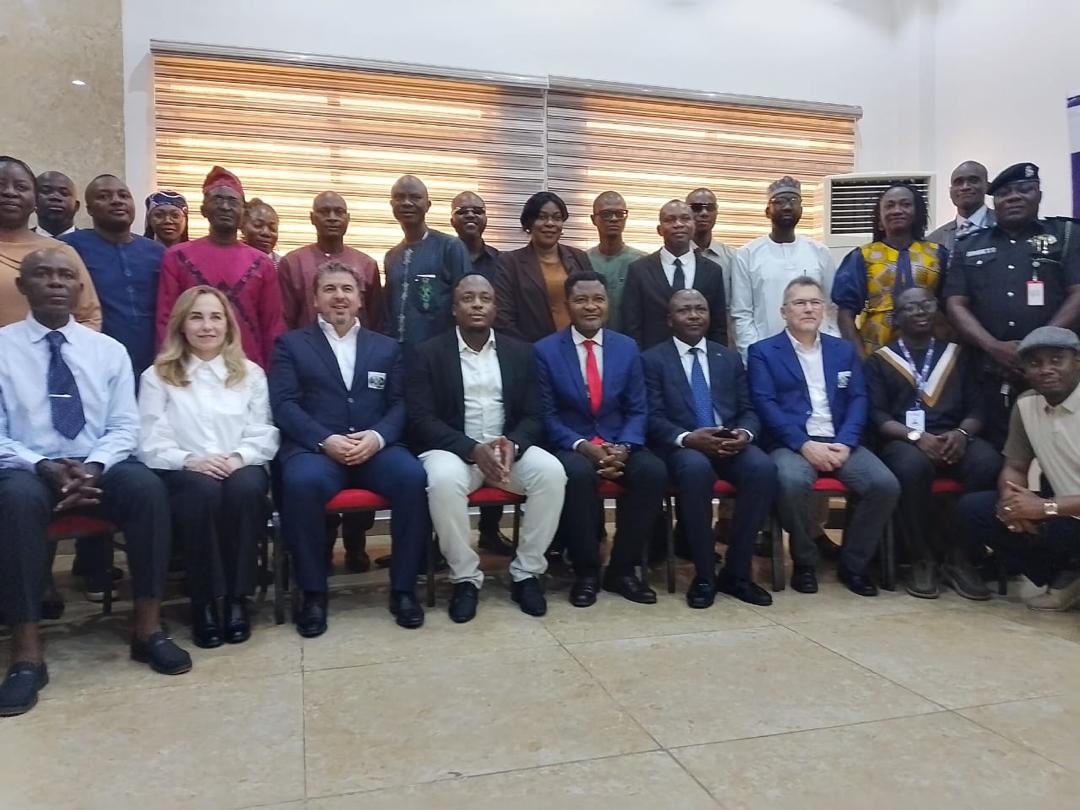

The Federal Government has stepped up efforts to institutionalise gender-responsive planning and budgeting across ministries, departments and agencies, with the 2027 national budget expected to reflect the new approach
Permanent Secretary, Federal Ministry of Budget and Economic Planning, Dr. Deborah Odoh, disclosed this at a capacity-building programme on gender-responsive planning and budgeting, stressing that gender considerations must be embedded throughout the national planning and budgeting cycle.
Odoh said the Budget Office of the Federation had already included gender-responsive planning and budgeting in the guidelines for the 2027 budget, but expressed concern over the low level of response from government institutions.
She said the training of Permanent Secretaries and other senior government officials was expected to improve implementation and ensure that the approach cascades to other levels of the civil service.
“We expect that the 2027 budget will be a reflection of all the things that we have done,” she said, adding that the government was seeking more practical results from the ongoing capacity-building efforts.
According to her, gender-responsive budgeting is critical to ensuring that public resources address the different needs and circumstances of women, men, girls and boys, while promoting equitable development outcomes.
She said the Federal Ministry of Budget and Economic Planning, with support from UN Women and other development partners, had developed a gender-responsive planning and budgeting framework to guide MDAs in identifying gender gaps, designing appropriate interventions, aligning resources with priorities and establishing measurable indicators.
Odoh stressed that gender-responsive budgeting should not be treated as a standalone initiative but integrated into the entire planning and budgeting process, from policy formulation through monitoring, evaluation and reporting.
She also disclosed that the Federal Government had recently conducted a Renewed Hope Ward Development Survey covering all 8,809 wards across the country.
She said the findings, which are expected to be formally released soon, would help identify development potentials and needs at the ward level and support efforts to ensure that citizens benefit more equitably from public resources.
The Permanent Secretary further called for stronger institutional collaboration, noting that successful implementation could not be achieved by budget or gender departments alone.
She urged planning, budgeting, finance, statistics, programme, monitoring and evaluation units to work together to ensure that gender considerations are reflected in government programmes and expenditure.
Also speaking, UN Women Country Representative to Nigeria and ECOWAS, Ms. Beatrice Eyong, said the organisation was working with the Nigerian civil service to institutionalise gender-responsive planning and budgeting.
Eyong said UN Women had signed a memorandum of understanding with the civil service to promote gender-responsive budgeting and an inclusive working environment.
She disclosed that Permanent Secretaries from nearly all ministries, alongside representatives of the Accountant-General and National Bureau of Statistics, had already undergone training, with the initiative now being extended to directors and other civil servants.
According to her, the programme would also be taken to the state level to broaden technical capacity for implementing gender-responsive budgeting.
Eyong said implementation would be monitored under a five-year plan, adding that an “Agenda Report” would provide visibility on ministries, departments and agencies implementing gender-responsive planning and budgeting.
She said the framework also contained monitoring and accountability mechanisms designed to hold government institutions accountable for their commitments.
Eyong explained that the initiative was necessary because many Nigerians remain below the poverty line and public resources must therefore be allocated deliberately according to the different needs and circumstances of citizens.
She said gender-responsive budgeting would help ensure that development benefits were distributed more equitably and that no segment of the population was left behind.
Odoh, who formally declared the two-day capacity-building programme open, urged participating MDAs to use the training to strengthen their capacity to apply gender-disaggregated data, design responsive programmes, link activities to budgetary provisions, establish measurable targets and monitor both expenditure and development outcomes.
She also commended UN Women, the African Development Bank and other development partners for supporting Nigeria’s efforts to strengthen gender-responsive planning and budgeting.
