
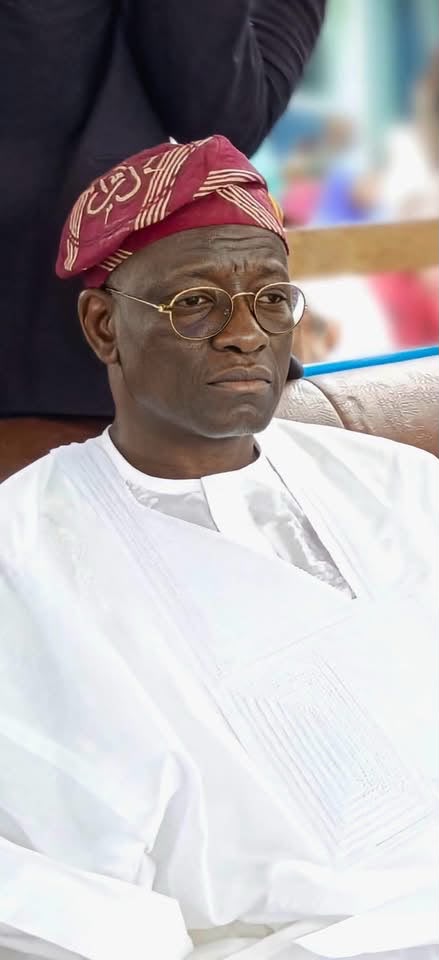

By Sam Israel
As Nasarawa State approaches the 2027 governorship election, one of the most important questions before the electorate is not simply who is seeking the Government House, but what each aspirant has done before asking for the opportunity to lead the state. In the case of Senator Ahmed Wadada Aliyu, the relevant record stretches back more than two decades, from his election to the House of Representatives in 2003 to his current tenure in the Senate.
Wadada first entered the National Assembly in 2003, representing the Keffi/Karu/Kokona Federal Constituency in the House of Representatives. He served there for two terms, from 2003 to 2011, before returning to the National Assembly as Senator for Nasarawa West in 2023. The National Assembly’s official profile confirms his continuous parliamentary association beginning in 2003. (National Assembly of Nigeria)
His House of Representatives years established the foundation of his legislative career. Contemporary accounts of that period attribute to him sponsorship or participation in legislation covering tobacco control, the Federal Capital Territory Development Agency, capital-market regulation and the Investments and Securities Tribunal, among others. Motions attributed to him also addressed matters including financial-market transactions, petroleum-sector issues and security concerns affecting communities in his constituency. (TheCable)
Beyond legislation, reports from his House years describe constituency interventions in roads, bridges, culverts, drainage, water supply and education. One contemporary account reported substantial personal and constituency spending on water and road-related projects, as well as classroom construction and the distribution of educational materials in Keffi, Karu and Kokona. These claims are part of the historical record attributed to his representation and should be assessed alongside available project documentation. (TheCable)
Education has remained one of the recurring themes in Wadada’s public interventions. His earlier constituency record included classroom projects and educational materials, while his later Senate interventions have included legislative proposals aimed at expanding tertiary and specialised education in Nasarawa. The Senate Order Paper, for example, records his sponsorship of a bill seeking to establish a Federal College of Fisheries and Aquatic Sciences at Umaisha in Toto Local Government Area. (PLACNG)
His return to the National Assembly in 2023 also produced a new legislative chapter. During the 10th Senate, Wadada sponsored proposals dealing with agriculture and fisheries, auditing, investment promotion, education, infrastructure and regional development. Parliamentary records list, among other proposals, the Agricultural Research Council of Nigeria Amendment Bill concerning the proposed Federal College of Fisheries and Aquatic Sciences at Umaisha. (PLACNG)
His Senate record has also included a focus on institutional accountability. As Chairman of the Senate Committee on Public Accounts, Wadada has occupied a committee position directly connected with scrutiny of public expenditure and government accounts. In a 2024 interview, he linked some of his legislative initiatives to lessons arising from his work on public accounts. (Blueprint Newspapers Limited)
Perhaps the most visible dimension of his recent representation has been constituency intervention. Reports published in 2024–2026 describe projects involving water supply, solar street lighting, healthcare, education, empowerment and agricultural support across communities in Nasarawa West. One detailed account, for example, reported solar-powered water projects and street lights as well as a primary healthcare intervention. (Nasarawa Eye)
Healthcare is another area in which his reported interventions have been extensive. Contemporary reports attribute to his constituency programme the provision of medical equipment and support to health facilities, together with medical outreach programmes. Such interventions are particularly significant in rural communities where access to basic healthcare remains a central development concern. The reported figures and individual projects, however, are claims that should be matched with official project records when assessing their full impact. (Nasarawa Eye)
Agriculture and small-scale enterprise also feature prominently in the reported constituency interventions. Items attributed to the Senator Wadada Empowerment Scheme include sewing machines, welding machines, grinding machines, irrigation equipment, farm machinery and other productive assets. The stated objective has been to enable beneficiaries to establish or expand small businesses and agricultural activities rather than merely receive one-off cash assistance. (Nasarawa Eye)
Infrastructure represents another important part of the record. The Keffi–Nasarawa–Toto road has featured prominently in reports concerning Wadada’s federal advocacy, with accounts crediting him with using his position to pursue federal attention to the corridor. Other reported legislative advocacy has included calls relating to transportation infrastructure in Keffi and the location of major federal development institutions in Nasarawa. (The Nation)
What makes the record relevant to a 2027 governorship discussion is the breadth of the experience accumulated across different levels of public representation. A representative in the House operates primarily within constituency representation and federal legislation; a senator combines constituency responsibilities with national legislation, oversight and committee work. Wadada’s career has therefore given him experience across both chambers of the National Assembly.
Yet a governorship election is ultimately a different test. A governor is responsible for the administration of an entire state, including its internally generated revenue, civil service, education system, healthcare institutions, roads, security coordination, agriculture, investment promotion and relationships with local governments and the federal government. Consequently, a legislative scorecard cannot by itself answer every question about executive capacity.
That distinction makes the 2027 conversation particularly important. The appropriate question for Nasarawa voters is how Wadada’s legislative and constituency record translates into his proposed programme for the whole state. His publicly presented HEARTS Agenda has identified areas including human-capital development, energy and mineral resources, agriculture, rural and urban development, trade and security. (The Nation)
There is therefore a clear continuum in his public career: representation in the House of Representatives, return to national politics through the Senate, legislative sponsorship, committee oversight and constituency interventions. Whether those experiences amount to the kind of executive leadership Nasarawa requires in 2027 is a question that ultimately belongs to the electorate and should be answered by comparing his record, plans, qualifications and accountability commitments with those of the other candidates.
For Senator Ahmed Wadada Aliyu, the strongest argument available to public scrutiny is consequently not merely what he promises to do tomorrow, but what can be documented from what he has attempted, sponsored, facilitated and delivered since entering elective politics. His record provides substantial material for that examination, from the Green Chamber to the Red Chamber and from legislative proposals to community-level interventions.
The 2027 election will provide Nasarawa voters with an opportunity to examine that record alongside the records and programmes of all contenders. The central issue should be evidence: what has been done, what has been achieved, what remains unfinished, what can be independently verified, and what each candidate proposes to do differently or better for the entire state.
In the final analysis, political leadership is ultimately judged not by the volume of campaign promises but by the relationship between past performance, present accountability and future plans. Senator Wadada’s more than two decades of public service give Nasarawa voters a substantial record to examine. The task now is to scrutinise that record carefully—and to place it side by side with the records and programmes of every candidate seeking the mandate to govern Nasarawa State in 2027.
By far Wadada stands tall among all other candidates.
Israel JP is the Senior Special Assistant on media to Senator Ahmed Wadada Aliyu.
