
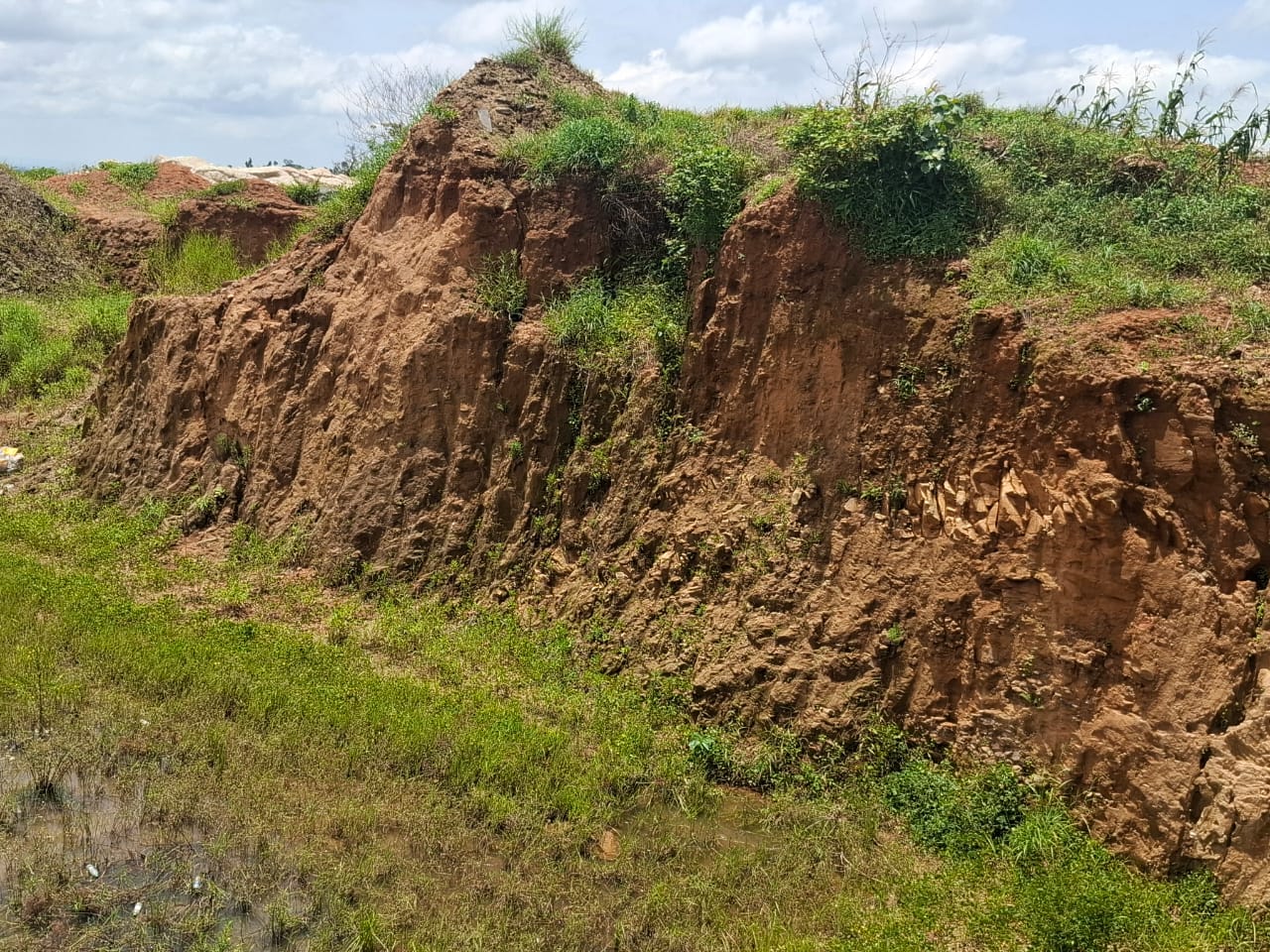

The exposed earth in this photograph tells a story that extends far beyond a single eroded landscape.
Across Africa, land degradation, vegetation loss, poorly managed excavation, changing rainfall patterns and rapid urban development are creating interconnected environmental and development risks. Erosion can remove fertile topsoil, damage infrastructure and alter drainage pathways, while degraded landscapes can become more vulnerable to intense rainfall and flooding.
Mining adds another layer to the challenge. Mineral extraction can contribute to local economies, but excavation and associated land disturbance can leave soil exposed and ecosystems degraded when environmental management and rehabilitation are inadequate. The United Nations Environment Programme has identified unsustainable activities, including mining, as contributors to ecosystem and land degradation.
The challenge, therefore, is not simply how to respond after a flood or landslide occurs. It is how to reduce the underlying risk before a hazard becomes a disaster.
From response to prevention
Africa is already making progress in strengthening disaster preparedness. The UN Office for Disaster Risk Reduction (UNDRR) reports that the number of African countries reporting multi-hazard early warning systems increased from 14 in 2015 to 41 in 2026. However, important gaps remain, particularly in reaching vulnerable communities with warnings and connecting warnings to early action.
For communities exposed to erosion and flooding, solutions need to combine environmental protection with better planning.
These include:
Restoring vegetation on degraded slopes and watersheds to reduce runoff and soil loss.
Responsible mining should include not only what is extracted from the ground, but also what is left behind.
Protecting wetlands and natural drainage systems, which can help regulate excess water.
Rehabilitating mined and excavated land after extraction.
Improving drainage and flood-control infrastructure in vulnerable settlements.
Using climate and disaster-risk information in land-use and infrastructure planning.
Strengthening community-based early warning and early action, so people have time to protect lives, livelihoods and property.
Enforcing environmental standards while involving affected communities in monitoring and decision-making.
Nature-based approaches can complement conventional infrastructure. UNDRR notes that natural systems such as forests, grasslands, wetlands, watersheds and healthy soils can help regulate water, reduce flood peaks and limit erosion.
The wider lesson is important: environmental risk often develops gradually, long before it becomes a disaster.
An eroded slope may appear to be an isolated environmental problem. But when combined with intense rainfall, blocked drainage, settlement expansion or degraded watersheds, the consequences can extend to farms, roads, homes, businesses and livelihoods.
Africa’s climate resilience agenda must therefore move beyond emergency response.
It must connect responsible mining, land restoration, ecosystem protection, climate-smart development, risk-informed planning and early warning systems.
The question should not only be what will we do when the flood comes?
It should also be:
What can we change today to reduce the damage tomorrow?
That is where development, climate and solutions journalism can contribute — by documenting environmental risks, examining their human and development consequences, and bringing evidence-based solutions into public conversation.
Photos: Eroded landscape showing exposed soil at a mining site
Photo credit: Ahmed Ali
Nigeria-based Multimedia Journalist | Field Producer | Fixer | Peace, Climate & Development Storyteller.
Phone: +2348067360971
Email: ahmedkaafy@gmail.com
